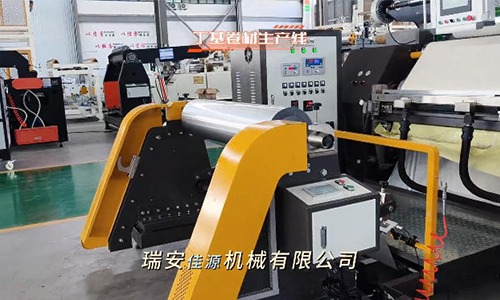
As a waterproofing and repair material that has flourished in recent years, butyl rubber tape has seen its application areas greatly expanded. Initially used for cap treatment, its use has extended to seam treatment, structural bonding treatment, and more. The prices of butyl rubber tape products on the market vary widely, and product quality is inconsistent. Many repair and construction personnel only know that this material is good, but they do not understand why it is good or how to apply it with the proper techniques to achieve the best results. This is the issue that this科普 (educational guide) aims to address.
1. What is butyl rubber tape, and what types are available?
Butyl rubber tape is primarily composed of butyl rubber and polyisobutylene, combined with a reinforcing layer, a facing material, or a release liner.
Butyl rubber and polyisobutylene form the core layer. The reinforcing layer generally consists of various base fabrics and serves to control extensibility. The release liner is typically a PE film, which needs to be removed during application. The facing layer comes in various types, including aluminum foil, polymer film, and fluorocarbon film.
Based on size, butyl rubber tape can be divided into individual rolls with widths of 50 mm, 75 mm, 100 mm, and 150 mm. It can also be made into large rolls with widths of 1 m or 2 m. The production processes for large rolls and individual rolls differ. The coating integrity of the butyl rubber on large rolls is relatively inferior to that of individual rolls. For large rolls, a small area of defect in the adhesive layer within the middle is not considered a major issue, but if such a defect occurs in an individual roll, it can affect the overall application result. It is not recommended to cut large rolls into smaller rolls for use.
Based on the facing/release liner configuration, butyl rubber tape can be classified as single-sided or double-sided. Single-sided butyl rubber tape refers to a tape where the butyl rubber material has a facing layer on one side and a release liner on the other. Double-sided butyl rubber tape refers to a tape where the butyl rubber material has release liners on both sides.
2. What is the bonding mechanism of butyl rubber tape, and where is it generally used?
The bonding mechanism of butyl rubber tape is a form of polymer-based adhesion, similar to VAE (vinyl acetate ethylene) powder used in dry-mix mortars. It differs from the "key-lock" connection mechanism of cement. Butyl rubber tape cannot penetrate into the bonded substrate.
The effective thickness of butyl rubber tape is very thin. If the substrate has poor flatness or poor surface strength, the bonding effect will be compromised. Poor flatness reduces the effective bonding area, while poor surface strength makes the substrate prone to delamination ("peeling") when the tape is applied.
Butyl rubber tape is generally used at joints as a form of flexible connection. It is often used at the interface between two different materials, such as: around window frames; connections between concrete and steel; various joints in steel structure roofs; and locations where concrete structures must be divided due to various requirements.

 HOT LINE: 086-13967771389