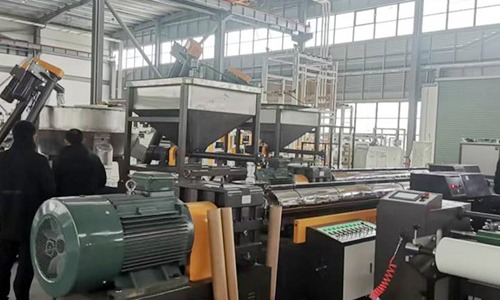
Butyl damping adhesive, as a high-performance viscoelastic material, has been widely used in the automotive, home appliance, construction, and industrial sectors due to its excellent vibration damping, noise reduction, and sealing properties. This article will delve into common issues in the industry, provide a detailed explanation of how to select low-molecular-weight polyisobutylene, review globally renowned manufacturers and clients, and look ahead to future technological development directions and trends.
Common Industry Issues
While the butyl damping adhesive industry is rapidly developing, it also faces several shared challenges:
Environmental and Safety Concerns:
In the past, asphalt-based damping materials were widely used due to their low cost. However, they are prone to decomposition at high temperatures, releasing carcinogenic substances that pose risks to human health and the environment. As a result, environmentally friendly and non-toxic butyl rubber damping sheets have become an important alternative to asphalt. Nevertheless, some manufacturers may add excessive fillers or use recycled materials to reduce costs, leading to strong odors and excessive VOC (volatile organic compound) emissions. This compromises indoor air quality, particularly in vehicles, and affects user health.
Stability and Durability of Product Performance:
The performance of butyl damping adhesive is significantly influenced by its formulation and production processes. Ensuring stable damping performance, adhesive strength, and aging resistance under varying temperature and humidity conditions remains a major challenge for manufacturers. This is especially critical in automotive applications, where materials must endure harsh temperature cycles and long-term vibration tests.
Balancing Cost and Performance:
Pure butyl rubber is relatively expensive, so many products incorporate fillers, plasticizers, or other additives to reduce costs. Striking a balance between maintaining core performance (such as damping coefficient and adhesion) and effectively controlling costs is a key challenge for companies competing in the market.
Ease and Reliability of Application:
The application performance of butyl damping adhesive is equally important. The product must be easy to cut and apply, adhere well to substrates (such as automotive metal sheets), and avoid issues like peeling or edge lifting during long-term use.
How to Choose Low-Molecular-Weight Polyisobutylene
Low-molecular-weight polyisobutylene (LMW PIB) is a critical component in butyl damping adhesive formulations, typically serving as a plasticizer and tackifier. The selection of its molecular weight directly impacts the final product's performance:
Impact of Molecular Weight:
Low Molecular Weight (e.g., below 1000):
Low viscosity and good fluidity help reduce the overall viscosity of the adhesive, facilitating processing. It also provides excellent initial tack, enabling damping sheets to adhere quickly to substrates. However, excessively low molecular weight may cause the material to soften or flow at high temperatures and migrate to the surface, affecting appearance and long-term adhesive performance.
Medium Molecular Weight (e.g., 1000–3000):
Strikes a good balance between adhesion, cohesive strength, and processability. This range is commonly used in butyl damping adhesive formulations, ensuring moderate viscosity and effective damping performance.
High Molecular Weight (e.g., above 3000):
Significantly enhances cohesive strength and resistance to creep at high temperatures but increases adhesive viscosity, demanding more advanced processing equipment and techniques. Its tackifying effect is relatively weaker.
Selection Criteria:
Application Scenario:
For applications requiring high initial tack and ease of application, lower molecular weight PIB is suitable. For applications requiring shape stability and adhesive strength at higher temperatures, higher molecular weight PIB or a blend of different molecular weights is recommended.
Performance Requirements:
Damping Performance: PIB can adjust the material's glass transition temperature, influencing its damping efficiency within specific temperature ranges. By fine-tuning the molecular weight and dosage of PIB, the damping effect can be optimized for the target operating temperature range.
Adhesive Performance: Both initial tack and long-term adhesion must be considered. Lower molecular weight PIB improves initial tack, while higher molecular weight PIB enhances cohesive strength and durability.
Processing Performance: The viscosity of PIB should align with the capabilities of mixing, extrusion, and coating equipment to ensure smooth production and consistent product quality.
Global Renowned Clients and Manufacturers
The primary market for butyl damping adhesive is the automotive manufacturing industry, making global automotive original equipment manufacturers (OEMs) and their Tier-1 suppliers the core clients of this industry. Additionally, home appliance manufacturers, construction companies, and specialized industrial sectors are significant buyers.
Automotive Industry: Butyl damping sheets are extensively used in NVH (Noise, Vibration, and Harshness) solutions for vehicles.
Home Appliance Industry: Products such as air conditioners, refrigerators, and washing machines utilize butyl damping materials to reduce operational noise.
Construction Industry: Used for sound insulation and vibration damping in pipes, walls, and ceilings.
Renowned Manufacturers:
International Brands:
Leading global manufacturers include established companies known for their advanced materials and technologies in the field.
Future Technological Development Directions and Trends
As global environmental regulations tighten and performance requirements continue to rise, the butyl damping adhesive industry is evolving in the following directions:
Greener and More Environmentally Friendly:
Developing entirely asphalt-free, low-VOC, and odorless formulations. Emphasis is also placed on improving the recyclability and biodegradability of materials to meet circular economy demands.
High-Performance and Multifunctionality:
Research focuses on enhancing damping efficiency across broader temperature and frequency ranges. There is also a trend toward integrating multiple functions, such as combining flame retardancy, thermal insulation, and electromagnetic shielding.
Intelligent and Customized Solutions:
Leveraging digital design and simulation tools to optimize formulations and structural designs for specific application scenarios. Additionally, intelligent manufacturing technologies are being adopted to improve production precision and consistency.
Fusion with New Materials:
Exploring the incorporation of novel nanomaterials, such as carbon nanotubes and graphene, into butyl rubber matrices to significantly enhance damping performance at the molecular level.
Expansion into New Application Areas:
New Energy Vehicles: As new energy vehicles become more popular, the demand for in-cabin quietness is increasing.

 HOT LINE: 086-13967771389