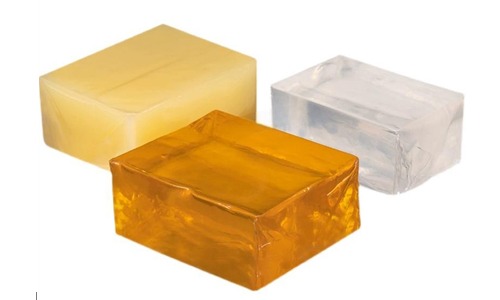
Hot Melt Adhesives, abbreviated as HMAs, are a key category in the adhesive industry. They play an indispensable role in numerous sectors including packaging, woodworking, automobiles, construction, furniture, printing and bookbinding, shoemaking, and apparel. Generally defined as solid at room temperature, HMAs melt into a viscous liquid when heated to a specific temperature. After being applied to and wetting the adherends, they are pressed together and cooled back to room temperature, completing the bonding process within a few seconds.
Formulated from base resins such as EVA (ethylene-vinyl acetate), PA (polyamide), PO (polyolefin), and synthetic rubber, HMAs are further blended with tackifying resins, thinners, antioxidants, and other additives. They are manufactured through specific production processes involving heating, melting, and thorough mixing to achieve homogeneity. Owing to their versatile properties, HMAs are widely used in automotive manufacturing, construction, packaging, printing and bookbinding, labeling and taping, and hygiene products, among other industries. It can be said that hot melt adhesives have permeated every aspect of people's production and daily life, making significant contributions to food packaging, clothing manufacturing, housing construction, daily necessities, transportation, and leisure products.
HMAs come in a diverse range of forms and colors. The physical forms include sticks, pellets, sheets, columns, powders, films, nets, spheres, and pillow-shaped blocks, while the color options cover red, white, black, cyan, blue, purple, pink, and more. Functionally, they are classified into pressure-sensitive and non-pressure-sensitive types, as well as thermoplastic and reactive (non-thermoplastic) variants. Based on the base resin, common types of HMAs include EVA-based, PA-based, PE (polyester)-based, PO-based, SBC (styrene block copolymer)-based pressure-sensitive hot melt adhesives, TPU (thermoplastic polyurethane) hot melt adhesives, and PUR (polyurethane reactive) hot melt adhesives. Each type has its own unique characteristics, advantages, and limitations: for instance, EVA-based HMAs, the most widely used variety, have obvious limitations in high-temperature resistance; PUR-based HMAs, which offer the strongest bonding strength, are not thermoplastic and thus cannot be reused, additionally featuring higher costs and requiring specialized, high-value adhesive application equipment for compatibility.

 HOT LINE: 086-13967771389