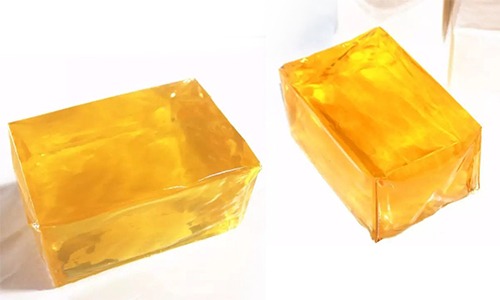
Hot Melt Adhesive Stringing: Causes and Solutions
Hot melt adhesive is a thermoplastic adhesive whose physical properties change with temperature within a certain range. During application, stringing is a common issue that not only reduces construction efficiency and impairs product appearance but may also compromise bonding performance.
1. Low Temperature Setting on the Hot Melt Applicator
A low temperature setting increases the adhesive's viscosity, leading to stringing. Identify the recommended application temperature for the specific hot melt adhesive and adjust the machine temperature upward accordingly.
2. Excessive Cohesion of the Hot Melt Adhesive
Hot melt adhesives with high cohesion resist deformation more effectively and are less likely to break during application, resulting in severe stringing. Conversely, adhesives with lower cohesion break more easily and produce fewer strings.
Under the premise of meeting bonding strength requirements, select adhesives with lower cohesion to reduce stringing.
Alternatively, raise the application temperature to improve fluidity and minimize stringing.
3. Rheological Properties of the Molten Adhesive
At high temperatures, the adhesive flows, a property determined by raw material selection and formulation. Adhesives with shorter curing times stop flowing more quickly and are less prone to stringing.
Where process conditions allow, choosing adhesives with shorter curing times helps reduce stringing.
4. Cohesive Failure of the Hot Melt Adhesive
Under prolonged high temperatures, the adhesive undergoes cohesive failure: its macromolecular structure gradually breaks down into smaller molecules, increasing fluidity and extending curing time. This allows the adhesive to stretch into long filaments, causing stringing.
If adhesive degradation is confirmed, clean the glue tank and replace with fresh adhesive to resolve the issue.
5. Curing Time of the Hot Melt Adhesive
Curing time is critical to stringing. Generally, adhesives with shorter curing times have a lower stringing tendency. Thin filaments formed as the adhesive exits the nozzle cure rapidly, preventing further stretching and breaking easily—sometimes making the stringing barely noticeable.
6. Influence of Machine Temperature
Low machine temperature increases the adhesive's viscosity, directly causing stringing

 HOT LINE: 086-13967771389