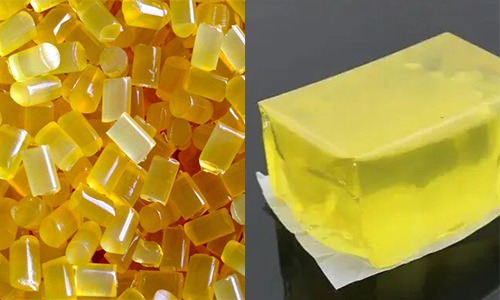
In the future, under the trend of globalization in the Hot Melt Adhesive industry, demand will become more diversified. Meanwhile, hot melt adhesive enterprises, which are gradually scaling up, will possess sufficient capability to conduct fundamental research, thereby gaining an advantage in a market plagued by severe product homogenization. Therefore, technological advancement is almost inevitable.
1. High-Strength Hot Melt Adhesives
Bonding strength is the core property of an adhesive. For hot melt adhesives to be applied in scenarios requiring extremely high strength, especially those involving significant structural stress, enhancing bonding strength is essential.
Strong polarity and good wettability are often characteristics of adhesives that achieve high bonding strength. Due to the absence of solvent, hot melt adhesives have inherent shortcomings in fluidity and wettability. Therefore, improving the bonding strength of hot melt adhesives should primarily focus on enhancing their polarity and wettability.
2. High-Speed Hot Melt Adhesives
The high efficiency of hot melt adhesives is widely recognized, as bonding is achieved simply upon cooling and solidification. Examples include cigarette filter tip bonding reaching 20,000 pieces/minute, bookbinding at 18,000 books/hour, and diaper production at 1,000 pieces/minute.
In the future, efforts will likely focus on further increasing the application speed of hot melt adhesives to expand this advantage. This can be achieved mainly by accelerating the solidification rate, improving hot tack strength, reducing the specific heat capacity of materials, and optimizing equipment.
3. Low-Temperature Hot Melt Adhesives
The application temperature is one of the most concerning issues for materials engineers. A lower application temperature can not only reduce material damage, extend equipment lifespan, and save energy consumption but also has the public benefit effect of reducing carbon emissions. Consequently, low-temperature hot melt adhesives are bound to be a promising research direction.
4. Low-Density Hot Melt Adhesives
In many applications, reducing material density to achieve lightweighting offers numerous advantages, such as lowering energy consumption and conserving resources. The bonding strength of adhesives relies more on the bonding area rather than the weight of the adhesive itself. This makes low-density hot melt adhesives a viable research direction.
Achieving low density can be realized not only by using lower-density materials (e.g., polyolefin-based raw materials) but also through manufacturing processes, such as foamed hot melt adhesives.
5. Odorless Hot Melt Adhesives
With increasing public attention to health, especially in industries like automotive, hygiene products, food, toys, and furniture, odorless hot melt adhesives are the best products to alleviate end-consumer concerns.
Achieving odorlessness requires improvements in raw materials, minimizing small-molecule substances, and adopting low-odor or even odorless raw materials, such as hydrogenated rosin esters.
6. Materialized Hot Melt Adhesives
Using special molding processes to form hot melt adhesives into film-like, mesh-like, tape-like, or thread-like materials will become a development trend. Currently, markets for hot melt adhesive films, webs, tapes, and threads are growing rapidly. Such hot melt adhesive materials, when combined with other materials, are more conducive to downstream enterprises achieving large-scale and clean production.
7. Degradable Hot Melt Adhesives
Environmental protection is a major trend, and it is also a relative concept. While hot melt adhesives are considered environmentally friendly, this currently refers to being harmless to human health, not necessarily in terms of recyclability or biodegradability. In the future, if hot melt adhesive products that are easy to recycle or can naturally degrade are developed, they will undoubtedly have promising prospects.

 HOT LINE: 086-13967771389