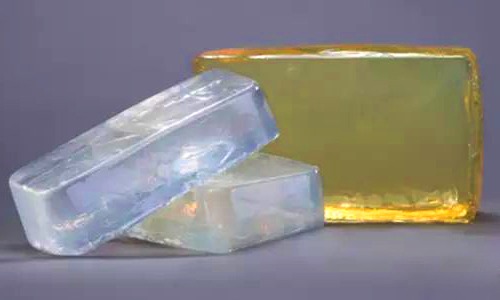
The adhesive (glue) of self-adhesive labels is a key factor determining label performance, directly impacting application results, durability, and suitability for different scenarios. Different adhesive types are suitable for different materials, environments, and purposes.
This article introduces the types and characteristics of adhesives for self-adhesive labels, as well as the factors to consider when selecting an adhesive.
I. Common Adhesive Materials
In the field of self-adhesive labels, Hot Melt Adhesive, water-based adhesive, and solvent-based adhesive are three common types. Each possesses unique performance characteristics to meet diverse application needs.
1. Hot Melt Adhesive
Hot melt adhesive is a rubber-based adhesive with strong fluidity and high viscosity, suitable for use in low-temperature environments (approximately -5°C to 10°C). It performs better than water-based adhesives when the substrate surface has minor traces of oil or moisture.
Characteristics:
Solvent-free, non-toxic, odorless, meeting environmental requirements.
High bonding strength and fast setting speed.
Suitable for low-temperature labeling; not resistant to high temperatures.
Poor repositionability; overall repositionability is inferior to water-based adhesives.
Generally not suitable for application on PVC materials.
2. Water-Based Adhesive (Water Glue)
Water-based adhesive is an environmentally friendly, cost-effective adhesive with good initial tack, suitable for various materials and environments. Although sensitive to humidity and with a relatively slow curing speed, its environmental benefits and cost advantages make it one of the commonly used adhesives for self-adhesive labels.
Characteristics:
Non-toxic, odorless, meeting environmental requirements.
Good initial tack, quickly forming preliminary adhesion with the substrate surface.
Relatively good temperature resistance; some products can withstand temperatures up to 150°C.
Stable adhesion, with bonding strength gradually increasing over time.
Not suitable for humid environments; adhesion is compromised if the substrate surface has water or oil stains.
3. Solvent-Based Adhesive (Oil Glue)
Solvent-based adhesive uses organic solvents (such as toluene, ethyl acetate) as the medium. It features high viscosity, heat resistance, and chemical resistance, making it suitable for special industrial applications.
Characteristics:
High viscosity, less prone to adhesive ooze (bleeding).
Heat resistant, suitable for outdoor labeling.
Applicable to various materials and complex environments.
Capable of fast and strong bonding with multiple substrates.
Short curing time, suitable for rapid application.
Certain water resistance, maintaining adhesion in humid environments.
II. Adhesive Classification by Tack
Adhesives for self-adhesive labels can be classified into two main categories based on tack: permanent adhesives and removable adhesives.
Selection should be based on a comprehensive consideration of specific application scenarios, material requirements, usage environment, and other factors. Key comparisons and selection suggestions are as follows:
1. Permanent Adhesive
Labels using permanent adhesive have strong tack, are difficult to remove once applied, and are suitable for scenarios requiring long-term fixation.
Characteristics:
Difficult to remove completely after application; forced removal may damage the label or substrate surface.
Resistant to detachment during long-term use, with strong resilience against environmental factors (e.g., high temperature, humidity, oil).
May leave adhesive residue upon removal, requiring solvent for cleaning.
Suitable Applications:
Ideal for situations requiring long-term, non-changeable fixation, such as electronic labels, product packaging, and industrial identification. Due to their strong tack, they are suitable for maintaining stability in various environments.
2. Removable Adhesive
Self-adhesive labels using removable adhesive employ specially formulated adhesives with moderate tack, allowing for easy removal without leaving residue on the substrate surface.
Characteristics:
Easy to peel off after application without leaving residue or damaging the surface.
Tack may weaken over time; not suitable for long-term exposure to harsh environments.
Repositionable (some types allow limited adjustments).
Suitable Applications:
Suitable for occasions requiring frequent changes or adjustments, commonly used in food, personal care products, etc., such as office stickers, wet wipe labels, home decor, and temporary markings.
III. Factors to Consider When Selecting Adhesive
Substrate Material: Choose the appropriate adhesive based on the material of the item to be labeled (e.g., glass, metal, plastic). For instance, metal surfaces may require adhesives with stronger bonding properties.
Surface Treatment: Ensure the substrate surface is clean, dry, and free of oil and dust. Different labeling surfaces affect adhesive performance; rough surfaces may require stronger adhesives.
Environmental Factors: Consider the usage environment, such as outdoors, high temperatures, humidity, exposure to UV light, or proximity to heat sources like car engines. These factors influence adhesive performance and longevity.
Duration of Use:
For temporary use (e.g., promotional labels, trial labels), choose removable adhesives for easy replacement.
For long-term fixation (e.g., product identification, asset labels), choose permanent adhesives.
Environmental Requirements: If labels are for industries with high environmental standards (e.g., food, pharmaceuticals), prioritize environmentally friendly adhesives like water-based or hot melt adhesives.
Surface Shape of Substrate: Labeling surfaces can be flat or curved. If the surface has a certain curvature (e.g., medicine bottles with a diameter less than 3 cm), it may require facestock with good conformability or a stronger adhesive, as well as materials with better flexibility and stretch resistance.
The selection of self-adhesive label adhesive requires comprehensive consideration of factors such as the usage environment, substrate material, label lifespan, environmental requirements, cost budget, removal needs, appearance requirements, processing techniques, chemical resistance, and aging resistance.

 HOT LINE: 086-13967771389