In modern manufacturing, a material is quietly transforming our lives—it enables the integrated design of smartphones, makes book binding firmer and flatter, and endows functional apparel with both water resistance and breathability. This material is PUR Hot Melt Adhesive, an innovative bonding material that achieves ultra-strong adhesion through moisture curing.
Understanding PUR: More Than Just a "Glue"
PUR, short for Polyurethane Reactive hot melt adhesive, is a moisture-curing reactive polyurethane adhesive whose main component is isocyanate-terminated polyurethane prepolymer. Unlike traditional adhesives, PUR features a unique curing mechanism, along with outstanding performance and eco-friendly safety properties that set it apart in numerous industries:
One-component moisture curing: As a solvent-free, one-component hot melt adhesive, PUR melts when heated and undergoes a cross-linking reaction with water molecules in the air to form a permanent bonding effect. This curing mechanism eliminates the need for complex mixing and only requires heating for application.
Exceptional performance: Once fully cross-linked, PUR boasts fast curing speed, high bonding strength, and excellent heat, water and chemical resistance.
Eco-friendliness and safety: As a solvent-free adhesive, PUR requires no treatment of waste water or liquid, causing no pollution or harm. It has passed Japan's JISF (highest grade) environmental certification, making it friendly to processing workers, consumers and the environment alike.
Why Choose PUR? Advantages Over Traditional Adhesives
PUR demonstrates all-round advantages over traditional EVA hot melt adhesives:
Superior bonding strength: Cured PUR hot melt adhesive delivers excellent bonding strength thanks to its unique curing mechanism—it forms chemical bond adhesion with substrates, creating an inseparable integrated structure.
Outstanding weather resistance: PUR hot melt adhesive resists high/low temperatures, solvent corrosion and salt spray, offering a wider range of applications.
High construction efficiency: PUR combines the benefits of fast bonding and high initial strength. Unlike conventional hot melt adhesives that require long-term curing in a thermal curing oven, PUR undergoes self-cross-linking with water molecules after melt coating, effectively simplifying production processes and boosting efficiency.
Less adhesive consumption: With its excellent bonding power, PUR hot melt adhesive uses approximately 50% or even less adhesive compared to traditional EVA hot melt adhesives.
Ubiquitous Applications: Diverse Scenarios for PUR
Electronics Industry
With the development of smart electronic products, many are moving toward integration and screw-free design, driving the growing application of PUR hot melt adhesive in this field.
In smartphone manufacturing, fully automatic dispensing equipment equipped with PUR technology enables micron-level precision bonding. Fixing a smartphone's TP touch screen to its metal frame requires a dispensing robotic arm with a high-precision temperature control system to extrude a 0.3mm adhesive line at a melting temperature of 115℃, ensuring a perfect fit without adhesive overflow.
On TWS earphone production lines, rotary coating equipment completes 360° sealing in micro-cavities via a multi-axis linkage system. PUR's sweat corrosion resistance ensures product reliability in extreme environments.
Textile and Footwear Industry
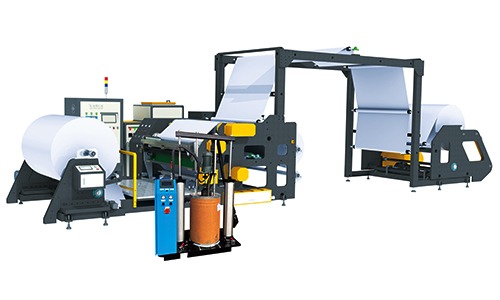
PUR hot melt adhesive lamination machines deliver exceptional performance on functional fabric production lines. Equipped with a precision roll coating system, these machines can laminate breathable films with textile substrates at a speed of 20 meters per minute and an operating temperature of 180℃.
Eco-friendly PUR lamination is widely used in manufacturing functional products. Functional jackets made with PUR-laminated materials adapt to diverse environmental conditions, offering moisture permeability, breathability, thermal insulation, wind resistance and water resistance as needed.
Beyond a VOC-free green production process, PUR lamination technology keeps the finished products soft to the touch after laminating woven/knitted fabrics with functional films, and preserves the elasticity of stretch fabrics after bonding.
Book Binding Industry
In the printing and packaging industry, PUR hot melt adhesive is used for book binding, plastic-plastic and paper-plastic lamination, and plastic box manufacturing.
Compared with traditional EVA hot melt adhesive, PUR offers advantages such as fast curing, easy operation, low application temperature, impact and fatigue resistance, excellent lay-flat performance, durability, high bonding strength and eco-friendliness. Its soft adhesive layer enables easy flipping and folding of books, and as a network cross-linked compound, it exhibits outstanding impact, vibration and fatigue resistance.
Building Materials and Home Furnishing Industry
In interior decoration, PUR hot melt adhesive is suitable for laminating melamine wood-based panels, MDF, carbon crystal panels, calcium silicate panels, magnesium oxide boards, aluminum panels, wood-plastic panels, stone-plastic panels with PET/PVC films and other materials.
Automobile assembly plants adopt PUR hot melt adhesive automatic coating systems. In the dashboard lamination process, a six-degree-of-freedom robotic arm paired with an infrared heating module can complete permanent bonding of leather and ABS substrates in just 30 seconds.
For new energy vehicle battery pack sealing, equipment injects PUR adhesive into honeycomb structures via a vacuum potting process, creating an innovative solution with both cushioning and sealing functions.
Application Guide: Key Construction Points for PUR Hot Melt Adhesive
To fully leverage the performance of PUR hot melt adhesive, the following key points must be noted:
Storage conditions: PUR is sensitive to moisture and should be stored in a cool, dry place protected from moisture and direct sunlight.
Application temperature: Different PUR products have specific temperature requirements for application. For instance, DIC's TYFORCE NH-141C features low viscosity and short curing time, making it suitable for high-speed processing.
Equipment maintenance: When using PUR hot melt adhesive, the preheating and melting tank should be protected with nitrogen. The equipment must be equipped with a well-designed ventilation system to handle small amounts of potentially harmful and irritating gases (isocyanates) that may be generated.

 HOT LINE: 086-13967771389