Production Process and Performance Optimisation of Polymer Waterproofing Membranes
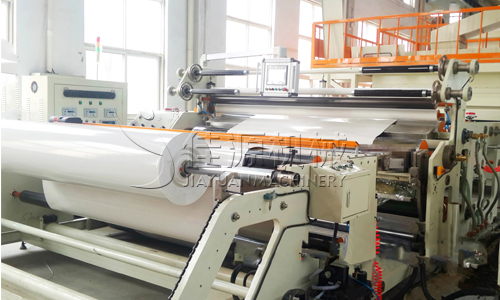
The production process for polymer waterproofing membranes primarily comprises the following steps:
01 Raw material preparation: Synthetic rubber, synthetic resin or a blend of both is selected as the base material, to which an appropriate amount of chemical additives and fillers is added. The selection of these raw materials has a significant impact on the performance of the waterproofing membranes.
02 Internal Mixing: The prepared raw materials are fed into an internal mixer to ensure thorough and uniform blending, resulting in a homogeneous compound.
03 Extrusion Moulding: The mixed compound is extruded through an extruder to form a continuous sheet-like semi-finished product. During extrusion, the compound undergoes shearing, mixing and compression, resulting in a waterproof membrane with a uniform texture and dense structure.
04 Calendering: For certain polymer waterproofing membranes, the extruded semi-finished product must be further calendered using a calender to produce a thinner sheet, thereby meeting specific application requirements.
05 Cooling and Cutting: The extruded or calendered waterproofing membrane is cooled and then cut to the required width and length.
06 Inspection and Packaging: The produced waterproofing membrane undergoes quality inspection to ensure that product performance meets standard requirements. Once inspection is passed, the products are packaged and stored.
To enhance the performance of polymer waterproofing membranes, optimisation can be achieved through the following aspects:
01 Raw Material Selection and Formulation: Select high-performance base materials such as synthetic rubber and synthetic resins, and carefully control the proportions of various raw materials. By adjusting the types and ratios of raw materials, key performance indicators such as tensile strength, elongation at break, heat resistance and low-temperature resistance can be significantly improved.
02 Improvement of production processes: Optimise the parameters of forming processes such as extrusion and calendering—including temperature, pressure and speed—to enhance the density and uniformity of the waterproofing membranes. At the same time, strengthen quality control and testing during production to ensure the stability and consistency of product performance.
03 Addition of Modifiers: During the production of waterproofing membranes, appropriate amounts of modifiers—such as antioxidants, UV stabilisers and plasticisers—can be added to further enhance the membranes' resistance to ageing, flexibility and processability.
04 Surface Treatment Techniques: Treating the surface of waterproofing membranes—for example, by applying release liners or reinforcing layers—improves their waterproofing performance, durability and ease of installation.
05 Product Structure Optimisation: The product structure of the waterproofing membrane is optimised based on application requirements and environmental conditions. For example, adding reinforcement layers or adopting multi-layer composite structures can improve the membrane's tensile strength, tear resistance and waterproofing performance.

 HOT LINE: 086-13967771389