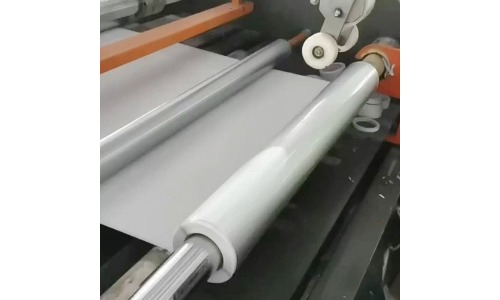
The most common building waterproofing materials currently available on the market include modified bitumen waterproofing membranes, polymer waterproofing membranes and waterproofing coatings. Among these, modified bitumen waterproofing membranes are the most widely used; however, they are characterised by high production costs, significant pollution during the manufacturing process, and safety hazards associated with hot-melt application methods. The structure of the commonly used modifier SBS (styrene-butadiene-styrene) results in poor adhesion to polar materials; it is also susceptible to ozone oxidation and has relatively poor ageing resistance. In high-temperature and humid environments, the bond strength of self-adhesive membranes decreases over time, further limiting their application. Polymer waterproofing membranes, as a new type of waterproofing material, are manufactured through multiple processes using synthetic polymers as the main component, with the addition of appropriate additives. Common types include polyvinyl chloride (PVC) waterproofing membranes, thermoplastic polyolefin (TPO) waterproofing membranes, and ethylene propylene diene monomer (EPDM) waterproofing membranes.
1. Polyvinyl Chloride (PVC) Waterproofing Membranes PVC waterproofing membranes are manufactured using PVC resin as the primary raw material, combined with plasticisers and other additives. The raw materials are widely available, facilitating large-scale production. PVC offers good compatibility, and its ageing resistance can be enhanced by adding stabilisers. Installation is carried out using hot-air welding, which is safe and environmentally friendly. This material also offers advantages such as strong impermeability, good flexibility at low temperatures and resistance to chemical corrosion, and is widely used for waterproofing in basements and on metal roofs. However, PVC waterproofing membranes have poor thermal stability and may release toxic gases at high temperatures. Whilst plasticisers improve adhesion and ageing resistance, they also carry a risk of migration, which may lead to a reduction in the membrane's flexibility or even rupture. In practical use, issues such as blistering and edge lifting are common. To address these issues, non-volatile plasticisers are commonly used overseas to ensure long-term performance. For example, Sika Sarnafil's polyester-reinforced self-adhesive PVC membrane supports on-site hot-welding and can be installed at temperatures as low as 10°C. 2. Thermoplastic Polyolefin (TPO) Waterproofing Membranes TPO waterproofing membranes are manufactured using thermoplastic polyolefin resin as the matrix, combined with antioxidants and other additives. Through block copolymer structure design, they retain the advantages of PVC membranes whilst offering superior stability at both high and low temperatures.
TPO membranes contain no plasticisers, exhibit minimal shrinkage and deformation, are recyclable, easy to repair, and offer efficient and environmentally friendly installation; they are widely used in various roof waterproofing projects. However, TPO material is inherently flammable and releases significant heat upon combustion; therefore, flame retardants must be added during production to ensure safety in use. As a material commonly used for roofing, its thermal ageing performance is a key indicator. 3. Ethylene Propylene Diene Monomer (EPDM) Waterproofing Membranes EPDM waterproofing membranes are manufactured using ethylene propylene diene monomer rubber as the main component, combined with various additives. Their polymer structure is stable, ensuring they maintain good waterproofing performance even after long-term use. This material exhibits minimal dimensional change at high temperatures and possesses excellent elongation properties, enabling it to accommodate building expansion and temperature fluctuations. With a wide operating temperature range, it is suitable for both traditional roofing applications and large-scale projects, such as the single-layer roof waterproofing of the Speed Skating Oval at the
2022 Beijing Winter Olympics. Although EPDM has a stable chemical structure, external factors may still lead to issues such as a decline in mechanical properties, plasticiser migration, and polymer cross-linking degradation. The volatilisation of plasticisers leads to volume shrinkage and increased internal stress, accelerating the ageing process. Therefore, researching its ageing patterns is of great significance. 4. Non-bitumen-based polymer (HDPE) self-adhesive membrane waterproofing sheets are manufactured using a low-pressure solution process. The resulting HDPE material possesses excellent mechanical properties, resistance to acid and alkali corrosion, and good chemical stability, whilst also offering the advantages of being environmentally friendly and easy to process and form, making it suitable for the manufacture of waterproofing membranes. HDPE waterproofing membranes use homogeneous high-density polyethylene sheets as the substrate, coated with a self-adhesive layer. These membranes react with cement slurry to form a seamless waterproof layer on concrete surfaces, thereby enhancing waterproofing reliability. They are commonly used in underground tunnels, bridge decks and other pre-applied waterproofing projects. However, the regular molecular structure and high density of HDPE result in issues such as flammability and poor thermal stability, which may compromise waterproofing performance.
Development Trends: With the state's growing emphasis on environmental protection and sustainable development, driving the green transformation of building waterproofing materials and contributing to the achievement of the 'dual carbon' goals has become an industry consensus. In the future, polymer waterproofing membranes will evolve towards being more environmentally friendly and offering more stable performance. TPO waterproofing membranes meet environmental requirements in both production and application, and possess significant development potential. Although China did not start late in this field, development has been relatively slow due to high technical barriers. In 2019, the country's first TPO production line came on stream, gradually reducing reliance on imported high-performance products. It is anticipated that in the future, the cost-effectiveness of TPO membranes will improve significantly, leading to a further increase in market share, with particularly widespread application in prefabricated roofing and single-ply roofing systems.

 HOT LINE: 086-13967771389