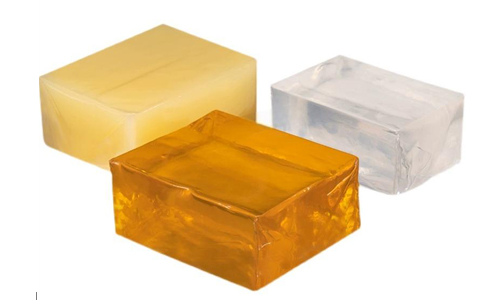
The core principle of hot-melt adhesive coating involves heating solid hot-melt adhesive until it melts, then using a specific coating device to apply it evenly onto the surface of the substrate, where it cools and cures to form a stable adhesive layer. Due to the diversity of production requirements, a variety of different coating processes have emerged, each with its own unique structural design and operational logic, tailored to different substrates, adhesive types and production scenarios. As a specialist manufacturer with extensive experience in the Hot Melt Adhesive coating equipment sector, Ruian Jiayuan Machinery Co., Ltd. possesses profound technical expertise regarding the key elements and application logic of various coating processes, built upon years of industry experience and technical refinement. The equipment it produces not only precisely accommodates a wide range of mainstream coating processes but also, through meticulous control of process details, provides customers with stable and efficient coating production solutions, demonstrating the technical prowess of a professional manufacturer.
The first mainstream process is roller coating, which is the most widely used and fundamental method in hot-melt adhesive application. Its core principle involves transferring molten hot-melt adhesive onto the substrate surface through the rotation of a coating roller to achieve uniform coverage. The key advantages of roller coating lie in its high application efficiency, enabling continuous production, and consistent coating thickness, making it suitable for large-area, continuous coating requirements.
The second common process is spray coating. Unlike the contact-based application of roller coating, spray coating is a non-contact process. Its core mechanism involves atomising the molten hot-melt adhesive through a nozzle and spraying it onto the substrate surface in a mist-like form to create a uniform adhesive layer. The key advantage of the spray coating process lies in its high flexibility, as it can adapt to irregularly shaped and uneven substrates. It also allows for localised application, reducing hot-melt adhesive consumption and lowering production costs.
The third process is the squeegee coating process, also known as the blade coating process. This method utilises the gap between the squeegee and the substrate to spread the molten hot-melt adhesive into a uniform, thin layer, thereby achieving precise coating. The greatest advantage of the knife coating process is its high application precision, allowing for precise control of the adhesive layer thickness. It is suitable for production scenarios with strict requirements for adhesive layer thickness, and is particularly well-suited to high-precision, small-batch coating needs.
The fourth process is the extrusion coating process, which works by using a screw extrusion system to pressurise the molten hot-melt adhesive and extrude it directly through a slotted die onto the substrate surface, forming a continuous adhesive layer or bead. The key advantage of the extrusion coating process is its ability to apply thick adhesive layers. Furthermore, depending on the die design, it can produce various shapes—such as strips, mesh patterns or sheets—offering a high degree of controllability.
The fifth process is the curtain coating process, which is a type of non-contact coating. The core of this process involves passing molten hot-melt adhesive through a curtain die to form a uniform curtain of adhesive, which falls vertically and covers the surface of the substrate, achieving full-surface coating. The key advantages of the curtain coating process lie in its high coating speed, uniform adhesive layer, and the fact that it does not damage the substrate; it is suitable for substrates with low heat resistance, fragile surfaces, or uneven surfaces.

 HOT LINE: 086-13967771389