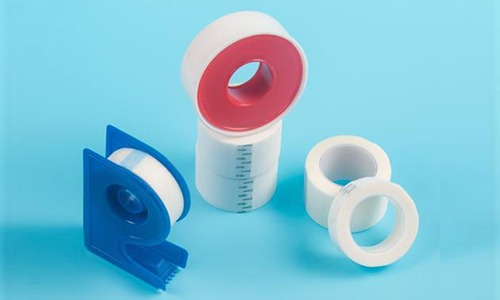
I. Common Types and Characteristics of Medical Adhesive Tapes
1. Non-woven Medical Adhesive Tape
This is the most common type, featuring a soft non-woven fabric backing combined with a mild acrylic pressure-sensitive adhesive.
Advantages: Good breathability; suitable for securing gauze during routine dressing changes; low skin sensitization rate.
Characteristics: Lightweight and thin; causes minimal pain when removed; suitable for infants, young children, or those with sensitive skin. Applications: Short-term use scenarios such as superficial wound care and securing IV needles. 2. Transparent PE Medical Tape: Features a polyethylene (PE) film backing with a transparent, uniform adhesive layer. Advantages: Strong and stable adhesion, suitable for securing catheters, drainage bags, and other applications requiring a firm bond. Note: Breathability is slightly lower; monitor for skin redness or swelling during long-term use. Typical applications: securing surgical instruments in the operating room and managing tubing in intensive care units. 3. Tension-reducing tape (wound tension-reducing tape) is a functional tape specifically designed for wound healing: Core function: Applies uniform tension through an elastic fiber base to bring wound edges together, reducing scar formation; Material characteristics: Contains medical-grade elastic materials; some products have healing-promoting ingredients added to the adhesive layer; Indications: Superficial lacerations (e.g., cuts) and cesarean section incision care—scenarios requiring tension relief. 4. Waterproof Medical Tape: Base material specially treated for water resistance: Technical Highlights: Utilizes PU film or aluminum foil composite materials; adhesive layer is water-resistant; Applications: Wound protection during bathing; waterproof bandaging for outdoor work; Precautions: Waterproof ≠ breathable; recommended to change daily. II. How to Determine Which Is “Better to Use”? It All Comes Down to Matching Your Needs 1. Select Based on Wound Type Superficial abrasions: Prioritize non-woven tape for its gentle, non-irritating properties; Laceration repair: Suture-free tape reduces tension to promote healing and minimize scarring risk; Moist environments: Waterproof tape blocks moisture penetration, making it suitable for wounds on the hands and feet. 2. Choose based on duration of use: Short-term fixation (<24 hours): Non-woven or transparent PE tape is sufficient; Long-term use (5–7 days): Surgical tape offers longer-lasting adhesion and reduces the frequency of dressing changes. 3. Choose based on skin sensitivity: For those with sensitive skin, select products labeled “hypoallergenic” or “latex-free,” such as non-woven tape or certain high-end surgical tapes, which feature a gentler adhesive formulation.

 HOT LINE: 086-13967771389