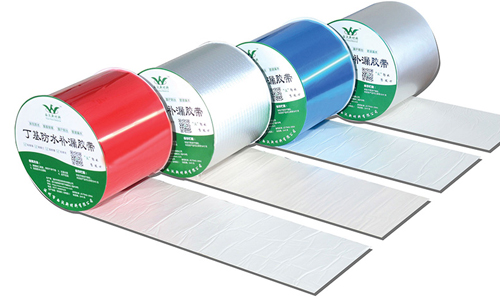
Butyl rubber (IIR) is a synthetic rubber formed by copolymerizing isobutylene with a small amount of isoprene. It offers excellent gas impermeability, heat resistance, and chemical stability, making it widely used in tire inner tubes, sealing materials, vibration-damping products, and other fields. However, during the production and processing of butyl rubber products, bubble formation is relatively common, which affects product quality and performance.
I. Relationship Between Butyl Rubber Characteristics and Bubble Formation
Low Unsaturation
The molecular chains of butyl rubber contain very few double bonds, giving it excellent gas barrier properties. However, this characteristic leads to a slower curing rate. If the curing process is uneven, unreacted gases can remain and form bubbles.
High Adsorption Capacity
Butyl rubber easily adsorbs volatile components or moisture from compounding agents. These substances can convert into gases during curing under heat.
Temperature Sensitivity
Butyl rubber has a narrow processing temperature window. Excessively high temperatures can cause decomposition, releasing low-molecular-weight gases and forming bubbles.
II. Specific Causes of Bubble Formation in Butyl Rubber Products
Raw Material Issues
Insufficient purity of raw materials: Impurities or volatile components (such as unreacted monomers) remaining in butyl rubber decompose under heat during curing, generating gases.
Moisture absorption by compounding agents: Fillers with strong hygroscopicity (e.g., silica) that are not adequately dried before processing release steam when heated.
Improper Mixing and Processing
Non-uniform mixing: Uneven distribution of compounding agents can lead to excessive localized gas release, forming bubbles.
Inadequate degassing: Failure to completely remove gases or inclusions during mixing leaves residual gases that expand during subsequent curing.
Curing Process Issues
Excessive curing temperature: Butyl rubber is prone to decomposition at high temperatures, producing small-molecule gases.
Insufficient curing time: Incompletely cured rubber compounds may retain unreacted chemical components that release gases later.
Volatility of the curing system: The use of highly volatile curing agents or accelerators (such as certain amine-based accelerators) releases gases during heating.
Mold Design and Forming Issues
Poor mold venting: Unreasonable mold design or insufficient venting grooves prevent air from being completely expelled.
Inadequate injection or compression molding: Insufficient injection pressure or poorly set venting procedures can leave air trapped in the mold cavity.
Environmental and Storage Conditions
High humidity environments: Butyl rubber and compounding agents absorb moisture in high humidity, and improper storage conditions can worsen this issue.
External contaminants: Raw materials contaminated during storage (e.g., by dust or residual organic solvents) may release gases during processing.
III. Measures to Address Bubble Issues in Butyl Rubber Products
To address the above problems, the following aspects can be optimized in terms of raw materials, processes, and equipment to reduce the probability of bubble formation.
Raw Material Treatment
Purification of raw materials: Ensure the purity of butyl rubber raw materials to reduce the content of unreacted monomers or low-molecular-weight impurities.
Drying of compounding agents: Thoroughly dry hygroscopic compounding agents (e.g., carbon black, silica, zinc oxide), preferably using an oven at around 120°C for at least 2 hours.
Use of low-volatility chemicals: Select curing agents, accelerators, and softeners with low volatility to minimize the generation of volatile gases.
Optimization of Mixing Process
Improve mixing uniformity: Adopt reasonable mixing processes to ensure uniform dispersion of compounding agents in butyl rubber, avoiding localized volatilization.
Enhance degassing: Add degassing steps during mixing and appropriately reduce roll temperatures to minimize gas inclusion.
Adjustments to Curing Process
Optimize curing temperature and time: Reasonably control the curing temperature, generally recommended between 160°C and 180°C, to avoid decomposition at excessively high temperatures.
Stepwise heating: Implement a stepwise heating curve during curing to allow residual gases to escape gradually.
Adjust the curing system: Use a low-volatility curing system suitable for butyl rubber, optimizing the amounts of curing agents and types of accelerators.
Mold Design and Forming Adjustments
Improve mold venting design: Add venting grooves or optimize mold cavity design to allow air to escape smoothly.
Set appropriate injection pressure: Increase injection pressure to ensure gases in the mold cavity are expelled.
Stepwise forming: For complex products, adopt multiple mold-opening steps for venting to reduce gas retention.
Environmental and Storage Control
Dry storage environment: Store butyl rubber and compounding agents in low-humidity conditions to prevent moisture absorption.
Regular monitoring of environmental humidity: Maintain humidity below 50% in storage and processing areas, especially during rainy seasons or in high-humidity environments.
Bubble issues in butyl rubber primarily stem from its inherent characteristics, improper raw material handling, and defects in process design. By reasonably controlling raw material purity, mixing uniformity, curing temperature, and mold venting design, bubble formation can be effectively reduced. At the same time, enterprises should continuously optimize production processes based on product characteristics and process requirements to improve the quality and performance of butyl rubber products.

 HOT LINE: 086-13967771389