Cleaning the Coating Head: Methods, Solvents, and Best Practices for Slot-Die, Gravure, and Roll Heads
The coating head is the most critical component of a coating line, and its cleanliness directly affects coating quality. Dried adhesive, pigment agglomerates, and dust can accumulate on the die lip, gravure cells, or roll surfaces, leading to streaks, skips, and other defects. Regular cleaning—daily, between product changes, or when a defect is observed—is mandatory. The cleaning method and solvent depend on the adhesive type (solvent-based, water-based, hot-melt) and the head material (stainless steel, chrome, ceramic, rubber). For slot-die coating heads, the most common cleaning procedure involves disassembling the die, removing the shim, and soaking the die halves in a solvent bath. For solvent-based acrylics, toluene or ethyl acetate is effective; for water-based, warm water with a mild detergent may suffice. For hot-melt, the die must be heated to melt the adhesive, then flushed with a cleaning compound (e.g., polyethylene wax) or disassembled and soaked in a hot oil bath. The die halves are then scrubbed with a soft brush or non-abrasive pad; never use metal scrapers that can scratch the lip. After cleaning, the die is dried with oil-free compressed air. The shim is wiped clean and inspected for flatness; if warped, it is discarded. The die is then reassembled, with the bolts torqued to specification. The entire process should be documented. Safety precautions: use appropriate PPE (gloves, chemical-resistant apron, goggles), work in a well-ventilated area, and use explosion-proof equipment for flammable solvents.
For gravure coating heads, the cleaning procedure focuses on the engraved cylinder and the doctor blade. The cylinder is cleaned by rotating it slowly while wiping with a soft cloth and a solvent that dissolves the adhesive without attacking the chrome or ceramic coating. For stubborn residue, a specialized gravure cylinder cleaning solution can be used; it is applied with a brush, allowed to soak, and then wiped off. The cells must be free of dried residue; a magnifying glass or microscope is used to inspect. If the cells are plugged, an ultrasonic cleaner may be used to loosen the residue. The doctor blade must be removed and cleaned; if worn or nicked, it is replaced. The blade holder is cleaned of any adhesive residue. The impression roll (rubber) is cleaned with a mild detergent and water; avoid solvents that swell the rubber. After cleaning, the cylinder is dried and inspected; any chrome wear indicates the need for re-engraving. The cleaning frequency for gravure heads is typically every shift or when a pattern defect is observed. In summary, gravure cleaning requires careful handling to avoid damaging the delicate engraved cells and the chrome surface.
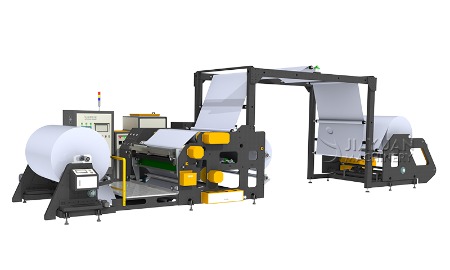
Adhesive coating machine
For roll coating heads, the rolls (applicator, metering, and backing) must be cleaned regularly. For chrome-plated steel rolls, use a solvent-soaked cloth to wipe the surface; for rubber-covered rolls, use a mild soap solution and a soft brush to avoid damaging the rubber. For stubborn adhesive, a plastic scraper may be used gently; never use metal. The roll surface is inspected for scratches, pits, or flat spots; if damaged, the roll must be re-ground or re-covered. The coating pan is drained, cleaned, and dried; the filter screens are changed. The doctor blade (if present) is cleaned or replaced. After cleaning, the rolls are dried and lightly oiled (for steel rolls) to prevent rust. The nip pressure is checked and recalibrated. The cleaning procedure should be performed at the end of each shift or when changing products. The choice of cleaning agent must be compatible with the roll covering; for rubber, avoid petroleum-based solvents that cause swelling; for chrome, avoid acidic cleaners that corrode. Safety is paramount: use proper ventilation and PPE. In summary, roll head cleaning is a routine but critical task that ensures uniform coating and extends roll life.
Best practices for cleaning any coating head include: always use the mildest solvent that effectively removes the adhesive; test the solvent on a small, inconspicuous area first; use lint-free wipes to avoid leaving fibers; inspect the head with a magnifying glass after cleaning; document the cleaning date and the person who performed it; and train all operators on the standard cleaning procedure. In addition, implement a cleaning schedule based on the production schedule; for high-volume lines with long runs, clean at the end of each day; for short runs, clean between each product change. The use of automated cleaning systems, such as a solvent flush for slot-dies or a rotating brush for gravure cylinders, can reduce manual labor and improve consistency. However, manual verification is still recommended. In summary, proper cleaning of the coating head is a fundamental practice that prevents defects, maintains quality, and extends the life of the coating head. By following the specific procedures for each head type, using appropriate solvents, and adhering to safety protocols, coating operators can ensure that the coating head is always in optimal condition, ready to produce high-quality coated products.