Coating Filter: Selection, Filtration Efficiency, and Maintenance for Defect-Free Coating
Coating filters are installed in the fluid delivery system to remove solid contaminants that can cause defects in the coated film. These contaminants include agglomerates of pigment or polymer, dust particles, undissolved solids, and gel particles. The size of the contaminants varies: some are visible (e.g., >50 µm), while others are micro-sized (1-10 µm) and can still cause visible defects in thin coatings. The filter's role is to capture these particles before they reach the coating head. Filtration efficiency is determined by the filter's micron rating—the size of particles that the filter retains. There are two types of ratings: (1) Absolute rating: the filter retains 99.9% of particles of a specified size; this is the more reliable rating. (2) Nominal rating: the filter retains a certain percentage (e.g., 90%) of particles of a specified size; this is less precise. For high-quality coatings, an absolute rating of 1-10 µm is recommended. The filter must also be chemically compatible with the coating fluid (solvent, water, or acid resistance). The filter housing should be made of stainless steel for corrosion resistance, and it should have easy access for cartridge or bag replacement. The filter is typically installed on the suction side of the pump (to protect the pump) and on the discharge side (to protect the coating head). A multi-stage filtration system is common: a coarse filter (e.g., 50 µm) on the suction side and a fine filter (e.g., 5 µm) on the discharge side. This arrangement extends the life of the fine filter and ensures maximum particle removal.
The main filter types used in coating are: (1) Cartridge filters: cylindrical elements with pleated or wound media; they offer high dirt-holding capacity and are available in various micron ratings. They are easy to replace and are the most common choice for coating applications. (2) Bag filters: fabric bags with a micron rating; they are used for high-flow, coarse filtration (e.g., >20 µm). They are less expensive than cartridges but have lower efficiency. (3) Screen filters: woven mesh screens, typically used for coarse filtration or as a strainer; they can be cleaned and reused. (4) Sintered metal filters: porous metal elements with absolute ratings; they are durable, cleanable, and resistant to high temperatures and aggressive solvents. They are used for hot-melt and high-viscosity applications. The choice of filter type depends on the required filtration efficiency, the fluid's viscosity, the flow rate, and the maintenance frequency. For high-precision coating (e.g., optical films), a 1 µm absolute cartridge filter is often used. For PSA tapes, a 5-10 µm filter is typical. The filter should be selected to provide the required particle removal without causing an excessive pressure drop. The pressure drop across the filter increases as the filter loads with contaminants; when the pressure drop reaches a certain limit (e.g., 2 bar), the filter must be replaced. In summary, selecting the right filter type and micron rating is the first step in ensuring a clean coating fluid and defect-free coating.
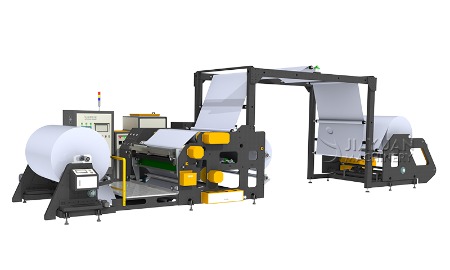
Adhesive coating machine
Installation and monitoring of
coating filters are crucial for effective operation. The filter housing should be installed in a location that is easily accessible for maintenance. The flow direction must be as indicated on the housing. A differential pressure gauge (or transmitter) should be installed across the filter to measure the pressure drop. The gauge provides real-time feedback on the filter's condition: a clean filter has a low pressure drop (e.g., 0.1-0.3 bar); as the filter loads, the pressure drop increases. The operator should monitor the pressure drop and replace the filter when it reaches the maximum allowable drop (specified by the manufacturer). The replacement interval is determined by the fluid's cleanliness and the production volume; in some lines, the filter is replaced daily; in others, weekly. The filter housing should also have a vent valve to bleed air during startup. The filter should be wetted with the fluid before applying full pressure to avoid trapping air. The gaskets and O-rings should be checked for leaks. In summary, proper installation and regular monitoring ensure that the filter performs effectively and that the operator knows when to replace it.
Filtration efficiency and cost are trade-offs. A finer filter (e.g., 1 µm) removes more particles but has a higher pressure drop and a shorter service life, leading to more frequent replacements and higher cost. A coarser filter (e.g., 10 µm) is cheaper and lasts longer but may not remove fine particles that could cause defects. The buyer should determine the acceptable defect rate and choose the filter accordingly. For expensive coatings (e.g., optical adhesives), a finer filter is justified; for commodity tapes, a coarser filter is sufficient. The total cost of filtration includes the cost of the filters, the labor for replacement, and the cost of downtime for maintenance. The buyer should perform a cost-benefit analysis. In addition, the filter's dirt-holding capacity—the total amount of particles it can hold before reaching the maximum pressure drop—varies among filters; high-capacity filters last longer and reduce maintenance frequency. The buyer should also consider using a "duplex" filter system, where two filters are installed in parallel: one is in service, and the other is standby. When the active filter needs replacement, the flow is switched to the standby filter, allowing the line to continue running while the used filter is replaced. This minimizes downtime. In summary, a strategic approach to filtration balances quality, cost, and operational efficiency.
Troubleshooting filter-related issues: (1) High pressure drop: the filter is loaded; replace it. If the pressure drop rises rapidly, it may indicate a high particle load in the fluid; check the upstream filtration and the fluid's quality. (2) Low pressure drop: the filter may be damaged or bypassing; inspect the housing seals and the filter element. (3) Coating defects (streaks, pinholes): the filter may not be capturing the particles; use a finer filter or check for leaks downstream of the filter. (4) Frequent filter replacements: the fluid has a high particle load; consider increasing the upstream filtration or changing the fluid's formulation. The buyer should keep a log of filter performance (pressure drop, replacement frequency, coating quality) to identify trends and optimize the filtration system. In conclusion, the coating filter is a vital component that protects the coating head and ensures product quality. By selecting the appropriate filter type and micron rating, installing it correctly, monitoring the pressure drop, and establishing a replacement schedule, the coating line can achieve consistent defect-free production, minimizing waste and maximizing customer satisfaction.