Coating Machine Maintenance: Cleaning Protocols, Lubrication, and Calibration Procedures
Cleaning is the most frequent maintenance task in coating operations. The coating head, whether slot-die, gravure, or roll, must be cleaned regularly to prevent dried adhesive buildup that causes streaks and defects. For slot-die cleaning, the die must be disassembled carefully: remove the shim, separate the two halves, and use a soft brush and compatible solvent (or water for water-based adhesives) to flush the internal manifold and the slot. For stubborn dried material, an ultrasonic cleaner with a mild detergent can be used; never use metal tools that could scratch the lip. The shim should be inspected for flatness on a granite surface plate; any distortion or burr requires replacement. The die bolts must be torqued to the manufacturer's specification when reassembling. For gravure coating, the engraved cylinder is cleaned with a soft brush and solvent; the cells must be free of dried residue. The doctor blade should be removed, cleaned, and inspected for wear; replace if nicked or worn. For roll coating, the rolls are cleaned with a lint-free cloth and solvent; for rubber-covered rolls, use a mild cleaning agent that does not attack the rubber. The cleaning frequency depends on the adhesive type; for high-viscosity pastes, daily cleaning may be required; for low-viscosity clear coatings, weekly cleaning may suffice. The cleaning protocols should be documented and include the type of solvent, the cleaning time, and the inspection checklist. Safety is paramount: use appropriate PPE (gloves, goggles, respirator) and ensure the area is well-ventilated; for solvent-based adhesives, use explosion-proof cleaning stations.
Lubrication is essential for bearings, gears, chains, and drives. The manufacturer's manual specifies the lubricant type (grease or oil) and the interval. Over-lubrication is as harmful as under-lubrication; it can cause overheating and attract dust. Use a grease gun with the correct grease for high-temperature bearings (in the oven section). For oil-lubricated gearboxes, check the oil level and quality regularly; oil analysis can detect water contamination or metal wear. The lubrication schedule should be part of the CMMS. For chains (e.g., drive chains), use a chain lubricant that does not drip onto the product. The lubrication points should be clearly labeled on the machine. Operators should be trained to recognize signs of inadequate lubrication: increased noise, vibration, or temperature. Regular lubrication not only extends bearing life but also reduces energy consumption. In addition, the drive belts and couplings should be inspected for tension and wear; replace them according to the schedule. The electrical motors should be kept free of dust; clean the ventilation grilles. In summary, lubrication is a simple but critical maintenance task that prevents many mechanical failures.
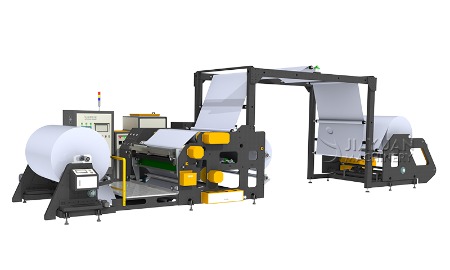
Adhesive coating machine
Calibration of sensors and gauges is necessary to maintain coating quality. Thickness gauges (beta, X-ray, NIR) must be calibrated using standard samples of known coat weight; the calibration should be verified daily or weekly. The zero and span adjustments should be performed according to the manufacturer's procedure. Temperature sensors (thermocouples, RTDs) should be checked against a certified reference thermometer; if they drift, they should be replaced or adjusted. Pressure sensors on the pump and die should be calibrated with a dead-weight tester. Tension load cells should be calibrated with a known weight applied to the roll. The calibration records should be maintained for audit purposes. The machine's control system (PLC) should have its I/O modules checked; any faulty module should be replaced. The vision inspection system (cameras) should be cleaned and its focus verified. Calibration is not a one-time event; it should be scheduled periodically and also performed after any major repair or replacement. Properly calibrated sensors ensure that the control system receives accurate feedback, leading to consistent coat weight and quality. In summary, calibration is the foundation of precision coating, and its importance cannot be overstated. By integrating cleaning, lubrication, and calibration into a structured maintenance program, coating machine operators can ensure high availability, consistent quality, and extended equipment life, ultimately reducing total cost of ownership.