Coating Machine Maintenance: Preventive, Predictive, and Corrective Strategies for Optimal Performance
Coating machines are complex electromechanical systems that operate under demanding conditions—high speeds, elevated temperatures, and aggressive chemicals. Without a disciplined maintenance program, they suffer from premature wear, performance degradation, and unplanned breakdowns. A robust maintenance strategy is built on three pillars: preventive maintenance (scheduled inspections and replacements), predictive maintenance (condition monitoring to forecast failures), and corrective maintenance (rapid repair after failure). The goal is to achieve high overall equipment effectiveness (OEE), typically above 85%. The maintenance plan begins with a thorough understanding of each component's wear life—rolls, bearings, seals, heaters, thermocouples, filters, and drives. For example, rubber-covered rolls may require re-grinding every 500-1000 hours; bearing lubrication intervals are specified by the manufacturer; and filter elements need replacement when differential pressure rises by 30%. All tasks should be documented in a Computerized Maintenance Management System (CMMS) that schedules work orders and tracks history. Daily maintenance includes cleaning the coating head, pans, and doctor blades, visual inspection of the web path for debris, checking fluid levels, and verifying safety interlocks. These simple actions prevent many common defects and are the first line of defense against downtime.
Weekly and monthly tasks are more in-depth. Weekly, the coating head should be inspected for wear on the die lip or blade; shims should be removed and measured for flatness; rolls should be checked for parallelism using a laser alignment tool; and the tension control system should be calibrated with a known weight. Monthly, the oven's airflow and temperature distribution should be mapped using anemometers and thermocouple arrays; fans and motors should be lubricated; and electrical connections tightened. The solvent recovery unit, if present, needs carbon bed inspection and regeneration scheduling. Also, the fluid delivery pump should be tested for flow accuracy and pulsation; seals replaced if leakage is observed. All maintenance activities must be logged, including the time taken, the parts replaced, and any abnormal findings. This log becomes a valuable database for reliability analysis. For critical components, a "bathtub curve" approach can be applied: failure rate is high initially (infant mortality), then low during useful life, then rising again as wear accumulates. By tracking the age of each component, maintenance can be scheduled to replace parts just before the end of their useful life, avoiding both premature replacement and unexpected failure. This proactive approach minimizes downtime and extends the machine's service life.
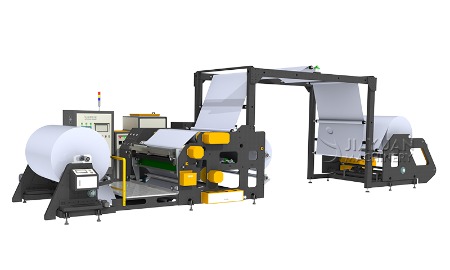
Adhesive coating machine
Predictive maintenance technologies are increasingly adopted. Vibration analysis on rotating equipment—rolls, motors, fans—can detect imbalance, misalignment, bearing wear, and gear tooth damage. Accelerometers mounted on critical roll bearings send continuous data to a diagnostic system; a rise in vibration amplitude or a shift in frequency indicates developing problems. Thermography (infrared cameras) identifies hot spots in ovens, electrical panels, and bearings, revealing poor connections, insulation breakdown, or overloading. Oil analysis of gearboxes and hydraulic systems detects metal particles indicating internal wear. These techniques allow maintenance to be performed "just in time," minimizing unnecessary interventions. For example, if vibration analysis shows a bearing's high-frequency energy rising, the bearing can be scheduled for replacement during the next planned shutdown rather than waiting for catastrophic failure. The investment in predictive instruments is justified by the reduction in unplanned downtime, which can cost tens of thousands of dollars per hour in lost production. Many equipment suppliers now offer condition monitoring as an optional package, with data accessible via cloud platforms for remote expert analysis. The integration of predictive maintenance with the plant's ERP system enables automated work order generation and spare parts reservation, streamlining the entire maintenance process.
Spare parts management is another critical element. Coating lines have hundreds of consumable and wear parts; running out of a critical part can halt production for days. A minimum stock level should be established for each high-wear item: shims, doctor blades, seals, filters, heating elements, thermocouples, belts, and sensors. The stock level should be based on the part's lead time and consumption rate. For parts with long lead times (e.g., custom-ground rolls, gearboxes), a backup unit may be stored or a refurbishment contract arranged. The CMMS should automatically generate reorder alerts when stock falls below the reorder point. Also, a parts manual with exploded views and part numbers is essential for quick identification. In addition to physical inventory, establishing a relationship with the equipment supplier for emergency support and loaner parts can be a safety net. Some operators use "critical spares" cabinets locked near the line, with clear labeling and usage logs. Training maintenance staff in proper handling and installation of parts (e.g., torque specifications for die bolts) prevents damage and ensures reliability. Regular reviews of maintenance and spare parts data can identify recurring failures that may indicate a design flaw or operational issue, prompting root cause analysis and potential upgrades.
Common failure modes in coating machines include: roll surface damage (scratches, pitting, flat spots) from abrasive fillers or mishandling; bearing seizure from lack of lubrication or contamination; die lip wear from abrasive fluids; oven heater burnout from power surges; pump seal leakage from chemical attack; and web breakage from tension spikes. Each failure mode has specific mitigation strategies: using ceramic-coated rolls for abrasive coatings; implementing automatic lubricators; using stainless steel dies with wear-resistant coatings; installing surge protectors; using diaphragm seals for aggressive fluids; and adding tension buffers. A failure mode and effects analysis (FMEA) can be conducted to prioritize risks. The maintenance plan should include regular training sessions for operators and technicians on proper cleaning, inspection, and adjustment techniques. Many defects can be avoided if operators understand the signs of impending failure—e.g., a slight change in motor sound or a rise in oven temperature variation. By fostering a culture of proactive maintenance and continuous learning, coating lines can achieve exceptional reliability. Ultimately, the cost of maintenance is far lower than the cost of downtime, and a well-maintained coating line not only runs longer but also produces higher-quality product with fewer rejects, making maintenance a strategic function rather than a mere expense.