Coating Machine Manufacturer: Capabilities, Innovation, and Quality Standards
Coating machine manufacturers are specialized engineering companies that design and build complex coating systems. Their capabilities span mechanical engineering, fluid dynamics, heat transfer, control systems, and materials science. A top-tier manufacturer has a multi-disciplinary engineering team with experience in various coating methods (slot-die, gravure, roll, comma) and industries (packaging, electronics, battery, medical). The manufacturer should offer both standard and custom solutions, with the ability to scale from lab pilot coaters to high-speed production lines. The engineering process typically includes concept design, 3D modeling, FEA/CFD simulations, and detailed drawings. The manufacturer should have a strong track record of delivering projects on time and within budget. The buyer should review the manufacturer's portfolio, including case studies and customer references. The manufacturer should also have a dedicated R&D department that continuously improves their designs and explores new technologies, such as advanced profile control, energy-efficient drying, and Industry 4.0 integration. In summary, the manufacturer's engineering capabilities are the foundation of a reliable, high-performance coating machine.
Manufacturing quality is a key differentiator. The manufacturer should have a well-equipped machine shop with CNC machining centers, grinding machines, and welding stations. The quality control process should include in-process inspections, dimensional checks, and non-destructive testing (NDT) of critical components. The manufacturer should be ISO 9001 certified, which ensures a documented quality management system. For medical and pharmaceutical applications, ISO 13485 certification is required. The manufacturer should also have a clean assembly area for precision components, such as slot-dies and gravure cylinders. The assembly process should follow a detailed procedure, and each machine should undergo a rigorous factory acceptance test (FAT) with the buyer's representative. The manufacturer should provide comprehensive documentation: operation manuals, maintenance guides, electrical schematics, and test reports. The buyer should also visit the manufacturer's facility to observe the manufacturing and quality practices firsthand. In summary, a manufacturer with robust quality standards produces machines that are reliable, durable, and safe.
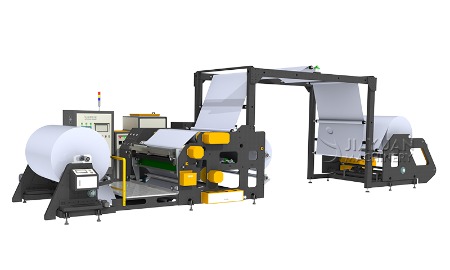
Adhesive coating machine
Innovation is a hallmark of a leading
coating machine manufacturer. The manufacturer should invest in R&D to develop new coating technologies and improve existing ones. Key areas of innovation include: (1) Precision coating heads: active gap control, thermal actuators, and advanced manifold designs that improve uniformity and reduce waste; (2) Drying and curing: energy-efficient ovens with heat recovery, UV-LED systems, and novel drying techniques; (3) Automation and Industry 4.0: smart sensors, predictive maintenance, MES integration, and digital twins; (4) Material handling: advanced tension control, edge guidance, and splicing systems. The manufacturer should have patents or proprietary technologies that differentiate them from competitors. They should also collaborate with research institutions and industry consortia to stay at the forefront of coating technology. The buyer should ask about the manufacturer's innovation pipeline and recent product releases. In summary, an innovative manufacturer provides machines that offer a competitive edge through higher efficiency, quality, and flexibility.
After-sales support is a critical part of the manufacturer's offering. The manufacturer should provide global service support, with a network of trained technicians and a responsive helpdesk. The support includes: (1) Installation and commissioning; (2) Operator and maintenance training; (3) Spare parts availability with fast delivery; (4) Remote diagnostics and troubleshooting; (5) Upgrades and retrofits to extend the machine's life; (6) Preventive maintenance contracts. The manufacturer's warranty should be comprehensive, covering parts and labor for a defined period. The buyer should also check the manufacturer's financial stability to ensure they will be in business for the long term to support the machine. The manufacturer's reputation in the industry, as reflected in customer reviews and industry awards, is a strong indicator of their reliability. In summary, a manufacturer that provides excellent after-sales support protects the buyer's investment and minimizes downtime.
Selecting the right coating machine manufacturer is a strategic decision that impacts production capabilities, product quality, and operational cost for many years. The buyer should use a structured evaluation process: (1) Define the technical requirements; (2) Shortlist manufacturers with relevant experience; (3) Request detailed proposals; (4) Visit the manufacturer's facility; (5) Check references; (6) Evaluate the total cost of ownership; (7) Negotiate the contract. The partnership should be based on trust and mutual benefit. The buyer should treat the manufacturer as a partner in achieving their production goals. In conclusion, a top-tier coating machine manufacturer combines strong engineering, high-quality manufacturing, continuous innovation, and robust after-sales support. By choosing such a manufacturer, the buyer gains a reliable, efficient, and future-proof coating machine that drives business success.