Coating Machine Price: Market Trends, Negotiation Strategies, and Financing Options
The price of coating machines is influenced by market conditions. Currently, the market is experiencing increased demand for coating equipment for battery electrodes and flexible electronics, driving prices up for high-precision coaters. Conversely, the demand for conventional packaging coaters is stable, with moderate price increases due to inflation and raw material costs. Supply chain disruptions, such as shortages of electronic components (chips, sensors) and steel, have led to longer lead times and higher prices. The buyer should be aware of these trends and time their purchase accordingly; buying during a market downturn can yield significant savings. The price of used machines has also risen due to the higher cost of new machines. The buyer should monitor the market and consider purchasing when the supplier's backlog is low, as suppliers may offer discounts to fill their capacity. The buyer should also consider the currency exchange rates if sourcing internationally; a strong local currency reduces the cost of imported machines. In summary, understanding market trends helps the buyer make a strategic purchase decision.
Negotiation strategies can significantly reduce the machine price and improve the terms. The buyer should: (1) Start with a clear requirement and a well-defined specification; this reduces the supplier's risk and may lower the quote. (2) Ask for a "best and final" quote from multiple suppliers to create competition. (3) Offer a larger down payment or a faster payment schedule in exchange for a discount. (4) Bundle the purchase of the coating machine with auxiliary equipment (e.g., a slitter) to get a package discount. (5) Ask for free spare parts or extended warranty instead of a price reduction, which may be easier for the supplier to grant. (6) Be prepared to walk away if the price is not acceptable; this often brings the supplier back with a better offer. (7) Use the market intelligence (e.g., competitor's prices) to justify your offer. (8) Negotiate the delivery timeline; a shorter delivery may justify a premium, but a longer one may lower the price. The negotiation should be conducted professionally, with a focus on a win-win outcome. The buyer should have a clear bottom line and should not compromise on essential specifications. In summary, effective negotiation can save 5-15% of the machine price.
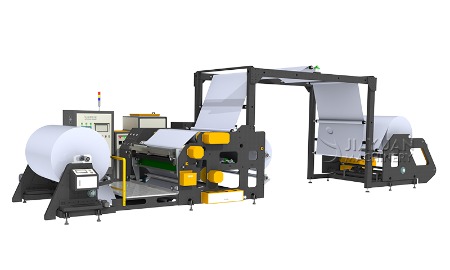
Adhesive coating machine
Financing options are available to spread the cost of a coating machine. Equipment loans from banks or specialized lenders: the buyer pays a fixed interest rate and repays the principal over a term (typically 3-7 years). The machine serves as collateral. Leasing: the buyer pays a monthly fee to use the machine for a fixed term (e.g., 5 years), with options to purchase at the end (finance lease) or to return it (operating lease). Leasing preserves working capital and may offer tax advantages. Vendor financing: the machine supplier may offer financing directly, often with competitive rates, to facilitate the sale. The buyer should compare the total cost of each option, including interest and fees. The buyer should also consider the tax implications: in many jurisdictions, equipment purchases can be depreciated, and leasing payments may be deductible as operating expenses. The buyer should consult with a financial advisor to choose the best option. In summary, financing enables the buyer to acquire the machine without a large upfront capital outlay, freeing up cash for other investments.
Return on investment (ROI) analysis is essential to justify the purchase. The ROI is calculated as: (Annual net profit from the machine) / (Total investment). The annual net profit includes: (1) Increased revenue from new products or higher production volume; (2) Cost savings from reduced waste, lower energy consumption, and lower labor costs; (3) Improved quality leading to higher selling prices or fewer returns. The total investment includes the machine price, installation, and any associated costs. A typical coating machine investment has an ROI of 20-40% and a payback period of 2.5-5 years. The buyer should also consider the intangible benefits, such as strategic positioning and customer satisfaction. The ROI analysis should be updated after the machine is in operation to validate the projections. In conclusion, a thorough financial analysis, including market trends, negotiation, and financing, ensures that the purchase of a coating machine is a sound investment that delivers long-term value and competitive advantage.