Coating Machine Spare Parts: Critical Inventory Management for Minimizing Downtime
Coating machines consist of hundreds of components, many of which are subject to wear, fatigue, or accidental damage. Having the right spare parts on hand can mean the difference between a short repair and days of costly downtime. The first step in spare parts management is to identify the critical spares—those parts whose failure would stop production and that cannot be quickly fabricated or sourced locally. Critical spares typically include: (1) Coating head components: slot-die shims, die lip inserts, doctor blades, gravure cylinders (or a spare engraved cylinder); (2) Pump parts: gear pump gears, seals, diaphragms, and pulsation dampeners; (3) Roll parts: bearings, rubber-covered rolls (or a spare roll assembly), chrome-plated rolls; (4) Drive components: drive belts, chains, gearboxes, servo motors, and encoders; (5) Electrical components: PLC modules, HMI screens, VFDs, power supplies, and sensors (thickness, temperature, pressure); (6) Oven parts: heating elements, thermocouples, fans, and burner controls; (7) Tension control: load cells, dancer potentiometers, and brakes; (8) Consumables: filters, O-rings, seals, and lubrication oils. The manufacturer usually provides a recommended spare parts list. The buyer should review this list and prioritize based on the part's lead time, cost, and the probability of failure. A good practice is to stock at least one set of all critical spares that have a lead time longer than a week.
The stocking levels for each spare part should be determined by a calculation that considers the part's consumption rate, the lead time to obtain a replacement, and the acceptable risk of stockout. The formula is: Reorder point = (Lead time in days) × (Average consumption per day) + Safety stock. For example, if a shim has a consumption of 1 per month (based on replacement frequency), a lead time of 30 days, and a safety stock of 2, the reorder point is (30/30)*1 + 2 = 3. When the inventory drops to 3, a new order is placed. The safety stock is set based on the variability of consumption and lead time; for critical items, a higher safety stock is justified. The buyer should use a computerized inventory management system (or a simple spreadsheet) to track stock levels and to generate reorder alerts. The system should also track the supplier's delivery performance and the part's shelf life (for items like seals and rubber parts that can degrade over time). Regular audits of the spare parts inventory should be conducted to ensure that the stock is accurate and that parts are not expired. In summary, scientific inventory management ensures that the right parts are available when needed, without tying up excessive capital in slow-moving inventory.
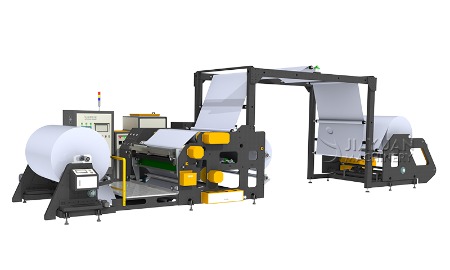
Adhesive coating machine
Supplier relationships are crucial for spare parts availability. The buyer should establish a direct relationship with the coating machine manufacturer and with the original component suppliers (e.g., bearing manufacturers, pump suppliers). The buyer should negotiate volume discounts and guaranteed delivery times. For parts with long lead times (e.g., custom-ground rolls, special dies), the buyer should consider a "consignment stock" agreement where the supplier holds the stock at the buyer's location, and the buyer pays only when they consume the parts. Alternatively, the buyer can use a "Just-in-Time" (JIT) approach with a local distributor who can deliver within hours. For obsolete parts (e.g., older PLCs), the buyer should identify alternative sources (e.g., refurbished units) or plan for an upgrade to a modern system. The buyer should also keep a digital library of the machine's parts manuals, with exploded views and part numbers, to aid in quick identification and ordering. Communication with the supplier should be proactive; regular reviews of the spare parts usage and lead times help to adjust the inventory levels. In summary, strong supplier partnerships ensure that the buyer receives genuine parts quickly and at a fair price, reducing the risk of extended downtime.
Storage and handling of spare parts are often overlooked. Parts should be stored in a clean, dry, temperature-controlled environment to prevent corrosion and degradation. Rubber parts (O-rings, seals, rubber rolls) should be stored away from sunlight and ozone sources; they should be rotated to prevent flat spots. Bearings should be kept in their original packaging to avoid contamination. Electronic components (PLCs, drives) should be stored in anti-static bags. The storage area should be organized with clear labeling and a layout that allows quick retrieval. The buyer should also maintain a "critical spares" cabinet near the machine, containing the parts most likely to fail (e.g., shims, filters, belts). This cabinet should have an inventory list and a sign-out log. Regular training of the maintenance staff on proper handling and storage is essential. In summary, proper storage extends the life of spare parts and ensures they are in good condition when needed.
Cost optimization of spare parts inventory involves balancing the cost of holding stock (capital tie-up, storage, insurance) against the cost of stockout (lost production). The buyer should perform a cost analysis: for each critical part, estimate the cost of a breakdown (lost production, labor, shipping) and compare it with the cost of holding a spare. If the breakdown cost exceeds the holding cost by a large margin, a higher stock level is justified. For parts that are expensive and have a low failure rate, the buyer may opt for a "consignment" or "shared stock" with other plants. The buyer should also consider the option of refurbishing worn parts (e.g., re-grinding rolls) as a lower-cost alternative to buying new ones. The spare parts budget should be reviewed annually and adjusted based on the machine's age and failure history. In conclusion, effective spare parts management is a strategic function that directly impacts the overall equipment effectiveness (OEE) and the profitability of the coating operation. By investing in a systematic approach to inventory management, supplier relations, and storage, the buyer can minimize downtime and ensure that the coating machine remains a reliable, productive asset throughout its service life.