Coating Machine Spare Parts: OEM vs. Aftermarket Parts, Quality, and Warranty Implications
Original Equipment Manufacturer (OEM) parts are components manufactured or authorized by the coating machine's original builder. These parts are designed to the exact specifications of the machine, ensuring a perfect fit, proper function, and consistent performance. OEM parts are typically made from the same materials and with the same manufacturing processes as the original components. They come with a warranty from the OEM, and using them generally maintains the machine's warranty (if still active). The main advantages of OEM parts are reliability, guaranteed compatibility, and full technical support from the manufacturer. The disadvantages are higher cost and potentially longer lead times, especially if the part is not in stock. For critical components such as slot-die shims, gravure cylinders, PLC modules, and precision gears, OEM parts are strongly recommended to avoid compromising coating quality or machine safety. The buyer should also consider that the OEM has access to the latest engineering updates, so OEM parts may incorporate improvements over the original design. In summary, OEM parts are the gold standard for quality and reliability, making them the preferred choice for mission-critical components.
Aftermarket parts are components produced by third-party manufacturers who are not the original builder. These parts are often designed to be functionally equivalent to the OEM parts but may be made from different materials or with different manufacturing tolerances. The main advantage of aftermarket parts is lower cost—often 20-50% less than OEM parts. They may also be more readily available, as many aftermarket suppliers carry a wide stock. However, the quality and performance of aftermarket parts can vary widely. Some aftermarket suppliers produce high-quality parts that are virtually indistinguishable from OEM, while others may use inferior materials that lead to premature failure. The buyer should thoroughly research the aftermarket supplier's reputation, request samples, and test them in non-critical applications first. The buyer should also verify that the aftermarket part does not void the machine's warranty; typically, using aftermarket parts does not void the entire warranty, but it may void coverage for the specific component if the aftermarket part causes damage. In summary, aftermarket parts offer cost savings but carry a risk of quality variability; they are best used for non-critical, consumable items such as filters, belts, and general hardware.
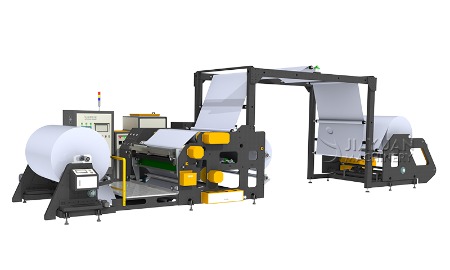
Adhesive coating machine
Performance comparison between OEM and aftermarket parts is essential. For parts that affect coating quality—such as die lips, shims, and gravure cylinders—the tolerances and surface finish are critical. OEM parts are manufactured to the exact specifications with verified quality control. Aftermarket parts may not achieve the same level of precision, leading to streaks, non-uniform coating, or edge bead. For mechanical parts like bearings and seals, aftermarket parts from reputable brands (e.g., SKF, Timken) are often of equivalent quality to OEM and are widely used. For electrical components (sensors, drives), aftermarket parts may be compatible but may require configuration changes; the buyer should verify compatibility with the control system. The buyer should also consider the total cost of ownership: a cheaper aftermarket part that fails sooner may cost more in downtime and rework than the more expensive OEM part. A risk-based approach is recommended: for parts whose failure would cause significant quality issues or downtime, OEM parts are justified; for parts whose failure is easily remedied, aftermarket parts may be acceptable.
Warranty implications are a critical consideration. If the coating machine is still under the manufacturer's warranty, using aftermarket parts may void the warranty if the aftermarket part causes a failure. The Magnuson-Moss Warranty Act (in the US) allows the use of aftermarket parts if they do not cause damage, but the burden of proof is on the buyer. To avoid disputes, the buyer should consult with the OEM before using aftermarket parts. If the machine is out of warranty, the buyer has more flexibility. However, using aftermarket parts may affect any extended warranty or service contract; the buyer should check the terms. The buyer should also ensure that the aftermarket supplier provides a warranty for their parts, which can be a fallback if the part fails. In summary, the buyer should carefully weigh the cost savings against the potential warranty and performance risks, and make a documented decision.
Practical guidelines for choosing between OEM and aftermarket parts: (1) Always use OEM parts for the coating head (die, shims, gravure cylinder) and the control system (PLC, HMI, drives). (2) Use OEM or high-quality branded aftermarket parts for bearings, seals, and belts—choose reputable brands. (3) For consumables (filters, O-rings, lubricants), aftermarket parts are usually acceptable if they meet the specifications. (4) For custom-made parts (e.g., special rolls), OEM is the only option. (5) Establish a relationship with a trusted aftermarket supplier who provides certificates of conformance and test reports. (6) Keep a record of all parts used, including source and batch number, for traceability. (7) Periodically review the performance of aftermarket parts; if they cause issues, switch back to OEM. In conclusion, the OEM vs. aftermarket decision is not a simple binary; it requires a thoughtful assessment of the part's criticality, the quality of the aftermarket supplier, and the warranty status. By applying these guidelines, the buyer can optimize the balance between cost and reliability, ensuring the coating machine operates efficiently and profitably.