Coating Pump System: Fluid Rheology, Cavitation Prevention, and Cleaning Protocols
The performance of a coating pump is highly dependent on the rheological properties of the fluid. Viscosity is the most important factor; it affects the pressure drop, the pump's volumetric efficiency, and the power consumption. For a gear pump, the slip (backflow) increases with lower viscosity and higher pressure, reducing the effective flow rate. Therefore, for low-viscosity fluids (e.g., <100 cP), a gear pump with tight clearances is needed, and the speed should be high enough to minimize slip. For high-viscosity fluids (e.g., >10,000 cP), a gear pump with larger clearances is used to reduce shear heating and to allow the fluid to flow. Shear-thinning fluids (viscosity decreases with shear rate) are common in coating; the pump imparts shear, which can reduce the viscosity at the pump outlet, affecting the downstream flow behavior. The pump speed and the internal clearances determine the shear rate; higher speed and tighter clearances increase shear. The pump system should be designed to provide a consistent shear history to the fluid, ensuring that the viscosity entering the coating head is stable. Temperature control is also critical; viscosity decreases with temperature, so the pump and the supply lines should be temperature-controlled to maintain a constant viscosity. The fluid's temperature should be measured at the pump inlet and outlet; if the temperature rises significantly, it indicates excessive shear heating. In summary, the pump system must be matched to the fluid's rheology to deliver a stable, predictable flow.
Cavitation is a destructive phenomenon that occurs when the pressure in the suction line drops below the fluid's vapor pressure, causing bubbles to form and then collapse in the pump. Cavitation results in noise, vibration, and erosion of the pump's internal surfaces, leading to reduced performance and eventual failure. To prevent cavitation, the net positive suction head (NPSH) available must be greater than the NPSH required by the pump. The available NPSH is increased by: (1) Elevating the fluid tank to provide a gravity head; (2) Using a larger diameter suction pipe to reduce friction losses; (3) Keeping the suction line short and free of bends; (4) Maintaining the fluid temperature below its vapor pressure (cooling the fluid). For high-viscosity fluids, the NPSH requirement is higher, so the suction line must be very short. The pump speed should not exceed the maximum speed specified for the fluid; higher speeds increase the risk of cavitation. A pressure gauge on the suction side can indicate the pressure; if it approaches the vapor pressure, the pump is cavitating. The buyer should calculate the NPSH margin and, if necessary, install a booster pump on the suction side. In summary, cavitation prevention is essential for long pump life and consistent flow.
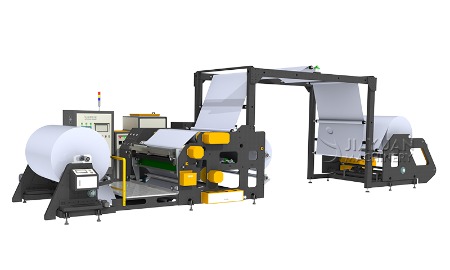
Adhesive coating machine
Shear sensitivity is a concern for many coating fluids, especially polymer solutions, emulsions, and bio-based adhesives. High shear can degrade the polymer chains, reduce the molecular weight, and alter the rheology, leading to changes in coating properties. The pump should be selected to minimize shear: peristaltic and diaphragm pumps are inherently low-shear, while gear pumps impose moderate shear, and piston pumps impose high shear. For shear-sensitive fluids, the pump speed should be kept low, and the internal clearances should be generous. The pump system should also avoid sharp bends, sudden restrictions, and high-velocity flow, which can cause additional shear. The buyer should consult the fluid supplier for the allowable shear rate and design the pump system accordingly. In summary, shear-sensitive fluids require careful pump selection and system design to preserve their properties.
Cleaning protocols for the
coating pump system are essential for product changeovers and for preventing cross-contamination. The pump and its associated piping, filters, and dampener must be thoroughly cleaned to remove all traces of the previous fluid. The cleaning method depends on the fluid type: for solvent-based fluids, a solvent flush is effective; for water-based, a water flush with a detergent; for hot-melt, a hot oil flush or a specialized cleaning compound. Many pump systems are designed for Cleaning-in-Place (CIP): the cleaning fluid is circulated through the system without disassembling the pump. The CIP process involves: (1) Draining the old fluid; (2) Rinsing with a compatible solvent; (3) Circulating the cleaning solution for a set time at a controlled temperature; (4) Rinsing again; (5) Drying with air or nitrogen. The CIP system should have a bypass loop that allows the cleaning fluid to circulate without passing through the coating head. The cleaning effectiveness is verified by visual inspection or by swabbing and testing. The cleaning protocol should be documented, and the operators should be trained. In summary, a well-designed cleaning protocol minimizes downtime and ensures that no residue remains to contaminate the next product.
Practical tips for pump system operation: (1) Always prime the pump before starting to avoid dry running. (2) Start the pump at a low speed and gradually increase to the operating speed to avoid pressure spikes. (3) Monitor the pressure and flow rate; any deviation indicates a problem. (4) Change the filters according to the schedule or when the differential pressure increases. (5) For gear pumps, periodically check the gear backlash and the bearing play. (6) For peristaltic pumps, keep spare tubes in stock and replace them before they fail. (7) For diaphragm pumps, inspect the diaphragms for cracks or fatigue. (8) Maintain a log of pump operation, including speed, pressure, flow, and temperature. (9) Train operators to recognize the signs of cavitation, wear, and leakage. In conclusion, the coating pump system is a sophisticated subsystem that requires a deep understanding of fluid rheology, pump mechanics, and cleaning procedures. By addressing these aspects comprehensively, the coating line can achieve reliable, high-quality production with minimal interruptions and consistent product performance.