Coating Troubleshooting: Systematic Approach to Identifying and Resolving Coating Defects
Coating troubleshooting is a critical skill that combines technical knowledge, practical experience, and systematic analysis. When a defect appears—such as a streak, pinhole, or thickness variation—the first step is to observe and characterize the defect precisely: its location (transverse, longitudinal), pattern (continuous, intermittent, periodic), appearance (color, shape), and size. The defect is then classified (e.g., streak, pinhole, edge bead, orange peel, blister, mottle). Next, the process parameters at the time of the defect are reviewed: temperature, speed, pressure, coat weight, tension, and fluid viscosity. This data is obtained from the machine's control system logs. The 4M analysis (Machine, Material, Method, Man) is then applied: Machine: check the coating head (die lip, shim, doctor blade, rolls) for wear, damage, or contamination; check the pump for pulsation; check the oven for temperature uniformity; check the tension control system. Material: verify the adhesive's viscosity, solids content, particle size, and temperature; check the substrate's surface energy, thickness, and cleanliness; check the liner's release force. Method: review the process settings (gap, pressure, speed) and compare with the standard recipe; check the startup and shutdown procedures. Man: ask the operator if any deviations or unusual observations were noted; check if the operator followed the standard operating procedure. The most likely root cause is hypothesized and tested by making a small, targeted change. If the defect disappears, the root cause is confirmed; if not, the next hypothesis is tested. This iterative process is efficient and avoids trial-and-error.
For continuous streaks, the most likely cause is mechanical damage to the die lip, a dirty shim, or a particle lodged in the slot. The first action is to clean the die and inspect the lip under a magnifying glass. If the streak is intermittent, it may be due to pump pulsation or a loose particle that breaks off occasionally; checking the pump dampener and filtering the fluid are the first steps. For pinholes, the cause is usually air bubbles in the fluid or air entrainment at the bead. Degassing the fluid, increasing the vacuum, or reducing the die-to-web gap are the corrective actions. Edge bead is typically due to surface tension; using a tapered shim, edge vacuum, or air knife solves it. Orange peel indicates poor leveling; increasing the temperature (to reduce viscosity) or adding a leveling agent helps. Blistering is caused by trapped solvent; reducing the drying ramp rate or increasing the oven temperature gradually prevents it. Mottling (cloudy appearance) is due to non-uniform solids or poor wetting; improving the mixing and substrate treatment (corona) are the solutions. The troubleshooting process should be documented in a defect log that includes: date, time, defect description, suspected cause, corrective action taken, and verification. This log becomes a valuable reference for future issues. In summary, a systematic approach to troubleshooting, combined with a defect log, reduces downtime and improves quality.
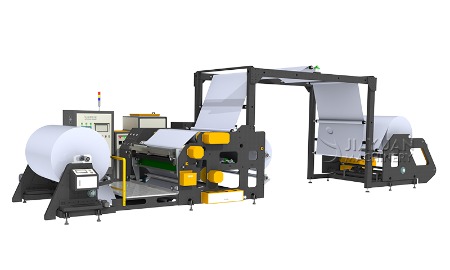
Adhesive coating machine
Advanced troubleshooting techniques include the use of inline inspection systems to detect defects early, and the use of data analytics to correlate defects with process parameters. For example, if pinholes are more frequent when the humidity is above 60%, the cause may be moisture absorption in the fluid. Using a machine learning model, the system can predict the defect likelihood based on the current parameters and suggest preventive adjustments. Another advanced technique is root cause analysis using fishbone diagrams and the 5 Whys method. For example, a streak is observed; why? because the die lip is dirty; why? because the cleaning procedure was not followed; why? because the operator was not trained; why? because the training schedule was skipped; why? because the supervisor was on leave. The root cause is a training gap, which is corrected by scheduling refresher training. This method prevents superficial fixes. The use of design of experiments (DOE) to systematically study the effect of variables on defects is also valuable; for example, a DOE can determine the optimal combination of temperature, speed, and gap that minimizes edge bead. In summary, advanced techniques enhance the efficiency and effectiveness of troubleshooting, leading to faster resolution and fewer recurring defects.
Practical checklists for
coating troubleshooting include: (1) Visual inspection of the coating head; (2) Verification of fluid temperature and viscosity; (3) Check of the filter pressure; (4) Measurement of the coat weight; (5) Inspection of the substrate surface; (6) Verification of the oven temperature profile; (7) Check of the tension settings; (8) Review of the speed and pump calibration; (9) Operator interview; (10) Running a test with a known good batch. This checklist ensures that no potential cause is overlooked. The operator should be trained to use the checklist. In conclusion, coating troubleshooting is a structured process that combines observation, data analysis, and corrective actions. By following a systematic methodology, using checklists, and maintaining a defect log, coating lines can quickly resolve defects, minimize waste, and achieve consistent quality. This capability is a key differentiator for high-performance coating operations.