Continuous Coating: Changeover, Cleaning, and Start-Up/Shut-Down Procedures
Start-up of a continuous coating line is a critical phase; the initial meters of coated product are usually off-spec and must be diverted to waste. The start-up procedure should be standardized: (1) Ensure all utilities (power, air, water, exhaust) are available. (2) Set the fluid temperature to the operating setpoint and circulate the fluid for 10-15 minutes to stabilize the temperature. (3) Thread the web through the line and set the initial tension. (4) Start the line at a low speed (e.g., 10% of nominal) and engage the coating head. (5) Observe the coating bead or the roll pattern; adjust the gap or pressure to achieve a stable bead. (6) Gradually increase the speed to the nominal value while monitoring the coat weight; adjust the pump speed or the die gap to maintain the target. (7) Once the coat weight is stable, the diverter valve is switched from waste to the product rewind. The start-up time—from the first coating to the good product—should be minimized; using a "warm start" (keeping the die and the fluid heated during idle time) can reduce it. The operator should follow the start-up checklist and document the parameters. In summary, a well-defined start-up procedure reduces waste and ensures a smooth transition to steady-state.
Shut-down is the reverse of start-up. The line speed is reduced, the coating is diverted to waste, the coating head is disengaged, and the fluid system is flushed. The shut-down procedure should also include a purge of the coating head and the lines to prevent the fluid from drying and clogging the system. For hot-melt systems, the heater is turned off, and the adhesive is allowed to solidify; the system should be purged with a cleaning compound before shut-down. For solvent-based systems, the lines are flushed with solvent, and the coating head is removed and cleaned. The shut-down time should be as short as possible to maximize uptime. The operator should follow the shut-down checklist and document any issues. In summary, a proper shut-down prevents equipment damage and prepares the line for the next start-up.
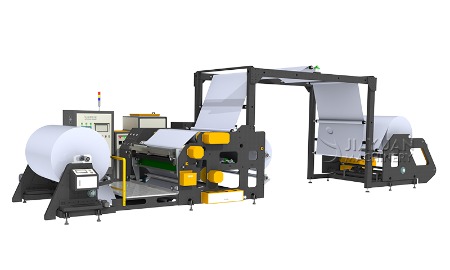
Adhesive coating machine
Changeover between products is a major source of downtime. The time required to change the product includes: stopping the line, cleaning the coating head and the fluid system, changing the shim or the gravure cylinder, adjusting the die gap or the roll settings, and re-starting the line. To reduce changeover time, the buyer should invest in quick-change die systems, pre-heated spare parts, and a dedicated cleaning station. The changeover procedure should be standardized: (1) Run a cleaning batch (e.g., a purge compound) to remove the old fluid. (2) Disassemble the coating head and clean all wetted parts with the appropriate solvent. (3) Install the new shim or cylinder. (4) Reassemble and align the head. (5) Load the new fluid and circulate it to purge the air. (6) Start the line and adjust the parameters. The changeover time can be reduced from hours to minutes with the use of modular heads and automated cleaning systems. The buyer should also consider using a "product changeover" team that specializes in these tasks. In summary, efficient changeover is a competitive advantage, especially for lines that run many different products.
Cleaning-in-place (CIP) systems are widely used to clean the fluid delivery lines and the coating head without disassembly. A CIP system circulates a cleaning solution (solvent or detergent) through the system, followed by a rinse and a drying step. The CIP reduces manual labor and ensures consistent cleaning. However, CIP may not remove all dried residue from the die lip; manual cleaning is still needed. The CIP system should be designed with the same material compatibility as the coating fluid. The cleaning cycle should be validated to ensure that no residue remains; this is done by sampling the rinse solution. In summary, CIP systems improve efficiency and reduce operator exposure to hazardous solvents.
Practical tips for minimizing downtime: (1) Use a "scheduling" approach: group similar products together to reduce the number of changeovers. (2) Use "buffer" stocks: prepare the next product's fluid and shim while the line is still running. (3) Train operators in "SMED" (Single-Minute Exchange of Die) principles to reduce changeover time. (4) Keep spare parts and cleaning supplies close to the line. (5) Use a computerized maintenance management system (CMMS) to schedule cleaning and maintenance during planned stoppages. In conclusion,
continuous coating lines can achieve high uptime with efficient start-up, shut-down, changeover, and cleaning procedures. By standardizing these procedures and investing in quick-change equipment, the manufacturer can minimize downtime, increase production capacity, and improve overall profitability.