Custom Coating Machine: Application Examples, Cost-Benefit Analysis, and Project Management
Custom coating machines are deployed in a wide range of advanced applications. Example 1: Battery Electrode Coating. A manufacturer of lithium-ion batteries needed a coater that could apply a high-viscosity (50,000 cP) aqueous slurry onto a 1.5 m wide aluminum foil at 50 m/min, with a coat weight of 150 gsm and ±1.5% uniformity. The custom machine featured a heavy-duty comma coater with a deflection-compensated roll, a long multi-zone oven with low-temperature drying to prevent cracking, and a precision tension control system to handle the thin foil. The machine also included an edge trim recycling system to reduce waste. Example 2: Optical Film Coating. A company producing anti-reflective films for displays required a slot-die coater that could apply a UV-curable coating with a thickness of 2 µm and a tolerance of ±0.05 µm on a 2 m wide PET film at 30 m/min in a Class 100 cleanroom. The custom machine had an ultra-precision die with thermal actuators for active profile control, an advanced degassing system to eliminate bubbles, and a UV LED curing system with uniform intensity. Example 3: Medical Tape Coating. A medical device company needed a line for coating a silicone PSA on a breathable nonwoven substrate at 20 m/min, with a coat weight of 20 gsm and strict biocompatibility requirements. The custom machine was designed with stainless steel wetted parts, a HEPA-filtered enclosure, and a validation-ready control system with full data logging. These examples illustrate the diversity of custom coating machines and the specific engineering challenges addressed.
Cost-benefit analysis for a custom coating machine must consider both quantitative and qualitative factors. The quantitative costs include: (1) Engineering and design fees ($50,000-200,000); (2) Manufacturing and assembly ($500,000-5 million); (3) Shipping, installation, and commissioning ($50,000-200,000); (4) Ongoing maintenance and spare parts ($10,000-50,000/year). The benefits include: (1) Increased production capacity (higher speed or wider width); (2) Improved quality (lower waste, better uniformity, higher yield); (3) New product capabilities (enabling entry into new markets); (4) Reduced labor costs (automation); (5) Lower energy costs (efficient drying/curing). The payback period is calculated as: (Capital Cost) / (Annual Benefit). For a typical custom machine, the payback period is 2-4 years. The qualitative benefits, such as enhanced brand reputation and customer satisfaction, are harder to quantify but equally important. The buyer should also consider the residual value of the machine; custom machines may have lower resale value, but if they are used for a proprietary process, they are not intended for resale. In summary, a thorough cost-benefit analysis, including a sensitivity analysis for key variables, is essential to justify the investment.
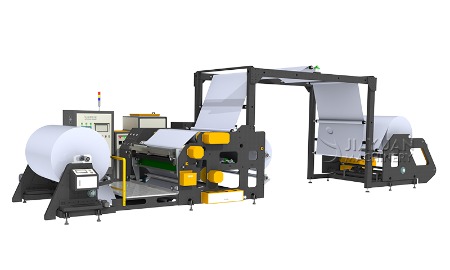
Adhesive coating machine
Project management for a
custom coating machine requires a structured approach. The project manager (PM) from the buyer's side coordinates with the machine builder's PM to ensure that all milestones are met. The project plan includes: (1) Feasibility study and conceptual design (2-3 months); (2) Detailed engineering (2-4 months); (3) Manufacturing and factory acceptance (4-8 months); (4) Shipping and site preparation (1-2 months); (5) Installation and commissioning (1-2 months); (6) Training and final acceptance (1 month). The total project timeline is typically 12-18 months. The PM must manage the budget, track progress, and mitigate risks. Regular progress meetings (weekly or bi-weekly) are essential to address issues early. The buyer should also assign a technical lead who can make decisions on specifications and design changes. The project plan should include contingency time and budget (10-20%) for unexpected delays or changes. The PM should also manage the communication between the buyer's stakeholders (production, quality, maintenance) and the machine builder. In summary, effective project management is critical to delivering the custom machine on time, within budget, and to the required specifications.
Risks in custom machine projects include: (1) Scope creep: additional features requested during the project; (2) Technical challenges: unforeseen issues in fluid behavior or substrate handling; (3) Supplier delays: components not arriving on time; (4) Site readiness: the buyer's facility not ready for installation; (5) Budget overruns. To mitigate these risks, the buyer should: (1) Define the scope clearly and use a change control process; (2) Conduct pilot testing to validate the design; (3) Select suppliers with proven lead times; (4) Start site preparation early; (5) Include a contingency fund. The buyer should also have a clear acceptance criteria and a holdback payment (e.g., 10%) that is released only after successful final acceptance. In conclusion, a custom coating machine is a major capital project that requires careful planning, close collaboration, and rigorous project management. When executed well, it provides a unique competitive advantage and a strong return on investment. The buyer should treat the machine builder as a strategic partner and invest the necessary time and resources to ensure a successful outcome.