Gravure Coating Machine: Cylinder Maintenance, Engraving Life, and Process Optimization
Maintaining gravure cylinders is essential to ensure consistent coating quality and to maximize the return on investment. Cylinders are typically made of steel, copper-plated for engraving, and then chrome-plated for hardness. The engraving is done on the copper layer, and the chrome layer (5-15 µm thick) protects the cells from abrasion. Over time, the chrome wears off, exposing the softer copper, leading to rapid cell degradation. The wear rate depends on the coating's abrasiveness, doctor blade pressure, and operating speed. Abrasive fillers like titanium dioxide or silica accelerate wear; for such coatings, ceramic cylinders (tungsten carbide or chromium oxide) are preferred, offering three to five times longer life. Regular inspection of the cylinder surface with a microscope or a profilometer helps detect early wear. A drop in cell volume—measured by a cell volume tester—indicates wear; when volume falls below 90% of the original, the cylinder should be re-engraved. Typically, high-quality cylinders last for 100-500 hours of production, depending on conditions.
Cleaning the cylinder is a delicate task. After each run, the cylinder should be cleaned with a soft brush and a solvent that does not attack the chrome. Never use metal scrapers or abrasive pads. Some plants use ultrasonic cleaning tanks for deep cleaning of the cells. The cylinder must be dried immediately to prevent rust. If the coating is water-based, a rust inhibitor may be applied. Storage of cylinders requires a dust-free, temperature-controlled environment; they should be wrapped in protective film and stored vertically. Rotation of cylinders—using multiple cylinders and rotating them through a re-engraving schedule—is a common practice to distribute wear and avoid production delays. A typical schedule is: engrave new cylinder, run for 80% of expected life, then re-engrave and use as a backup. This ensures that a good cylinder is always available.
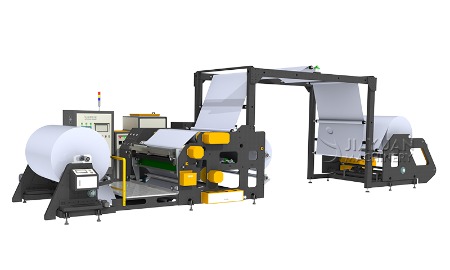
Adhesive coating machine
Doctor blade management directly affects cylinder life. A worn or damaged blade creates localized pressure points that accelerate chrome wear. The blade should be inspected every shift and replaced if any nicks or burrs are found. The blade pressure should be adjusted to the minimum necessary to wipe the cylinder clean; excessive pressure not only wears the cylinder but also consumes more energy. The blade angle should be optimized; a shallower angle (e.g., 30 degrees) applies less pressure than a steeper angle. Some advanced machines have blade pressure sensors that provide feedback to the control system, maintaining constant pressure as the blade wears. Additionally, the fluid itself must be filtered to remove abrasive particles; a 10-20 micron filter is recommended. If particles are present, they can embed in the blade and score the cylinder. Pre-filtering the coating before it enters the pan is a best practice. Also, maintaining the fluid's temperature prevents viscosity spikes that increase doctoring forces.
Process optimization can extend cylinder life without sacrificing quality. One strategy is to operate at the lowest possible speed that meets production targets, because wear increases exponentially with speed due to higher friction. Another is to use a smaller cell volume to reduce the amount of fluid that must be doctored, thereby reducing blade pressure. However, this may limit the coating weight range. The substrate's cleanliness is also important; dust on the web acts as an abrasive against the cylinder. Installing anti-static bars and vacuum cleaners upstream of the coater removes loose particles. The impression roll should be cleaned regularly to prevent transfer of debris back to the cylinder. In addition, the use of ceramic cylinders with diamond-like carbon coatings is an emerging technology that offers ultra-low friction and extreme wear resistance, extending life by up to ten times. Though expensive, they are cost-effective for long-running products.
When a cylinder eventually requires re-engraving, the old chrome and copper layers are stripped off, and the base steel is inspected for damage. Then a new copper layer is plated, engraved, and chrome-plated. The re-engraving cost is typically 30-50% of a new cylinder, so re-engraving is economical if the cylinder's mechanical integrity is intact. However, repeated re-engraving reduces the cylinder diameter, which may affect the machine's geometry; after a certain number of re-engravings (usually 3-5), the cylinder must be replaced. Keeping detailed records of each cylinder's production hours, coating types, and re-engraving history is essential for lifecycle management. By combining careful maintenance, smart process settings, and timely re-engraving,
gravure coating machine operators can achieve excellent coating quality at minimal consumable cost, making this method economically attractive for high-volume applications. Regular training of operators on cylinder handling and wear indicators further enhances the effectiveness of these practices.