Industrial Coating Machine Supplier: Global Sourcing, Logistics, and Risk Management
Global sourcing of industrial coating machines offers access to a wider range of technologies and competitive pricing, but it also introduces complexities in logistics, customs, and risk management. The buyer must first identify potential suppliers in different regions—Europe (Germany, Switzerland, Italy), Asia (Japan, South Korea, China), and North America (USA, Canada). Each region has its strengths: European suppliers are known for high precision and quality; Asian suppliers for cost-effectiveness and fast delivery; North American suppliers for robust, heavy-duty designs. The buyer should evaluate the total landed cost, which includes the purchase price, shipping, insurance, import duties, taxes, and installation costs. Shipping a large coating line (often >40 feet container) requires specialized freight forwarders with experience in handling heavy machinery. The buyer should obtain multiple shipping quotes and choose a freight forwarder that offers door-to-door service with tracking. The shipping method—sea freight (cheaper but slower) or air freight (faster but expensive)—depends on the urgency. The buyer should also consider the machine's dimensions and weight to ensure it fits within the shipping container and the receiving facility's loading dock. The seller should provide a detailed packing list and a shipment schedule. The buyer should also arrange for insurance to cover damage or loss during transit; this is typically 1-3% of the machine's value.
Customs and import regulations are a critical aspect of international procurement. The buyer must determine the correct Harmonized System (HS) code for the coating machine and check the applicable import duties and taxes in their country. Some countries offer duty exemptions for machinery used in certain industries (e.g., renewable energy, medical devices); the buyer should consult a customs broker to navigate these exemptions. The buyer must also ensure that the machine complies with local safety and electrical standards (e.g., CE for Europe, UL for North America). The supplier may need to provide a certificate of conformity and technical documentation for customs clearance. The buyer should also be aware of export controls; some countries restrict the export of advanced coating technologies that could be used for military or dual-use applications. The buyer should obtain an export license from the supplier's country, if required. The entire customs process can take days to weeks, so the buyer should plan the installation schedule accordingly. A delay in customs can cause significant project delays. The buyer should work with a licensed customs broker who is familiar with the specific equipment and can handle the paperwork efficiently. In summary, customs and regulatory compliance require careful planning and the expertise of a professional customs broker.
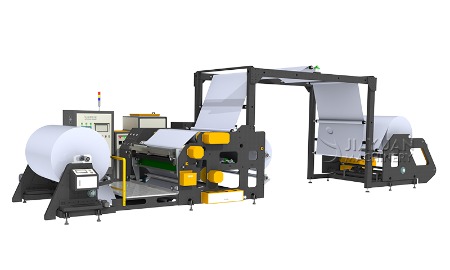
Adhesive coating machine
Risk management in global sourcing addresses several potential issues. Currency fluctuation risk: the purchase price is often quoted in the supplier's currency (e.g., EUR, USD, JPY); a currency shift between the contract signing and payment can increase the cost by 5-10%. To mitigate this, the buyer can use forward contracts or currency hedging. Delivery delay risk: shipping delays due to weather, port congestion, or supplier production issues can delay the project; the buyer should include a penalty clause in the contract (e.g., 0.5% of the purchase price per week of delay) and maintain regular communication with the supplier. Quality risk: the machine may not meet the specifications due to manufacturing errors or shipping damage; the buyer should arrange for a pre-shipment inspection by a third-party inspector (e.g., SGS, Bureau Veritas) to verify that the machine is built according to the specifications and is properly packed. The buyer should also have a clear acceptance test procedure in the contract: the machine must pass the test at the supplier's factory before shipment, and then a final acceptance test at the buyer's site after installation. Intellectual property risk: the supplier may use proprietary technology; the contract should include confidentiality and non-disclosure clauses. Political risk: changes in trade policies, tariffs, or sanctions can affect the transaction; the buyer should monitor the political environment and consider alternative suppliers. In summary, a comprehensive risk management plan is essential for a successful global sourcing project.
Installation and commissioning of an imported machine require coordination between the supplier's engineers, the buyer's local contractors, and the customs authorities. The buyer must prepare the site: ensure the floor is level and strong enough, provide the required utilities (power, compressed air, exhaust), and arrange for lifting equipment (cranes, forklifts). The supplier's engineers should arrive on-site to supervise the installation and commissioning. The buyer should provide translation services if the supplier's engineers do not speak the local language. The commissioning should follow a detailed protocol with performance tests; the buyer should document all results. The buyer should also ensure that the operator training is conducted before the supplier's engineers leave. After commissioning, the buyer should perform a final acceptance test (FAT) to verify that the line meets all specifications; if it does, the final payment is released. The buyer should also establish a local maintenance team and secure a stock of critical spare parts from the supplier. The lead time for spare parts from overseas can be 2-4 weeks, so a local stock is advisable. In conclusion, global sourcing of an industrial coating machine is a complex but feasible endeavor. By carefully managing logistics, customs, risk, and installation, the buyer can successfully acquire a high-quality machine at a competitive price, expanding their production capabilities. The key is to work with experienced partners—freight forwarders, customs brokers, and inspection agencies—and to maintain clear, proactive communication with the supplier throughout the process.