Packaging Adhesive Coater: Troubleshooting Common Defects, Quality Control, and Future Trends
Defects in packaging adhesive coating can significantly impact the final package's integrity and appearance. Poor adhesion, where the adhesive does not bond the substrates, is often due to low coat weight, low surface energy of the substrate, or contamination. Increasing the coat weight, corona-treating the substrate, or cleaning the surface solves this. Adhesive splatter (small droplets of adhesive outside the intended pattern) is common in spray and roll coating; it is caused by excessive pressure or high temperature. Reducing the pressure or temperature, and using a finer atomizing air, can eliminate splatter. Inconsistent coat weight across the width is due to non-uniform die gap or roll nip pressure; adjusting the die bolts or the roll crown corrects this. Stringing (fine threads of adhesive) occurs in hot-melt spray; lowering the temperature or increasing the air pressure breaks the threads. Delamination of laminated packaging after storage is caused by incomplete curing or residual solvent; extending the drying time or increasing the temperature prevents it. Edge ooze, where adhesive squeezes out at the edges, is managed by using edge dams or reducing the coat weight near the edges. The troubleshooting process should follow a structured approach: define the defect, check the process parameters, inspect the coating head, verify the adhesive quality, and test the substrate. A defect log helps to identify recurring issues and track corrective actions. Preventive maintenance, including regular cleaning of nozzles and dies, filter replacement, and sensor calibration, reduces defect occurrence. Operators should be trained to identify and correct minor issues before they cause scrap.
Quality control for packaging adhesive coatings involves both in-line and off-line tests. In-line, the coat weight is monitored by a gauge; the adhesive pattern is inspected by a camera. The web's tension and speed are continuously checked. Off-line, the bond strength is tested by peel tests (T-peel or 180° peel) on laminated samples; the peel force must be within the specification. For carton sealing, the seal strength is tested by pulling the seal apart. The adhesive's heat resistance is tested by exposing the sealed package to high temperature; the bond should not fail. The package's aging resistance is tested by storing samples at elevated temperature and humidity and then re-testing. The adhesive's compliance with food contact regulations (e.g., FDA 21 CFR) is verified by the supplier. The quality data is recorded and analyzed using SPC charts. If the bond strength drops, the process is investigated; causes may include a change in adhesive batch, a drift in temperature, or a change in substrate. The corrective action is documented. The quality management system must ensure traceability; each batch of adhesive and substrate is logged, and the process parameters are recorded. In summary, rigorous quality control ensures that the packaging adhesive coating meets the product's performance and safety requirements, protecting the packaged goods and the consumer.
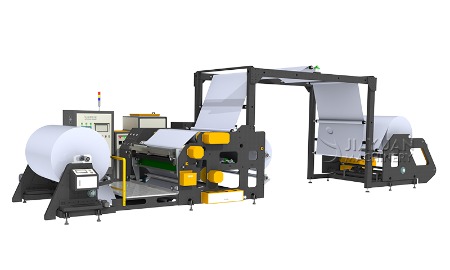
Adhesive coating machine
Future trends in packaging adhesive coating are driven by sustainability and efficiency. Bio-based hot-melt adhesives, derived from renewable resources, are gaining traction; they have lower carbon emissions and are sometimes biodegradable. However, they may have lower thermal stability; the coating process must be adjusted to lower temperatures and slower speeds. Recyclable packaging, where the adhesive is compatible with the substrate's recycling stream, is a major trend; for example, using adhesives that can be removed in the recycling process. The reduction of adhesive coat weight through advanced application techniques (e.g., micro-fiber spray) saves material and reduces waste. Low-temperature hot-melt adhesives (applied at 100-130°C) save energy and reduce substrate heating, allowing the use of thinner, more heat-sensitive films. The use of inline monitoring and machine learning to predict defects and optimize parameters is increasing; smart coaters can adjust settings in real-time based on the quality data. The
packaging adhesive coater of the future will be more connected, more automated, and more sustainable, capable of handling a wide range of bio-based and recycled materials with minimal waste and energy consumption. In conclusion, packaging adhesive coating is evolving to meet the challenges of a circular economy, and coating machine manufacturers are at the forefront of this transformation, developing innovative systems that balance performance, cost, and environmental impact.