Streak-Free Coating: Inline Inspection, Statistical Process Control, and Continuous Improvement
Inline inspection systems are indispensable for streak-free coating. These systems use line-scan or area-scan cameras with appropriate lighting to capture high-resolution images of the coated web. The images are processed by sophisticated algorithms that detect linear anomalies—streaks—based on contrast, texture, and geometric features. The sensitivity can be set to detect streaks as narrow as 0.1 mm or as faint as a 2% thickness variation. The system records the transverse and longitudinal coordinates of each streak, creating a streak map for each roll. This map allows the operator to see if streaks are localized to a specific region of the die or if they appear randomly. Modern systems also classify streaks by type: "dark" streaks (thinner coating), "light" streaks (thicker coating), or "scratches" (physical damage). The inspection data is displayed on a dashboard, and if the streak density exceeds a preset threshold, an alarm is triggered. Some systems are integrated with the line's control logic; if a streak is detected, the system can automatically mark the defective section with a flag or even divert it to a reject bin. The data is stored in a database for long-term trend analysis. Inline inspection not only catches defects before they reach the customer but also provides immediate feedback for process adjustment. For example, if a streak appears, the operator can check the die lip at that location and clean it, preventing further defective output.
Statistical process control (SPC) is a powerful tool for managing streak frequency. The number of streaks per unit area (e.g., per 1000 m²) is monitored using a control chart (typically a u-chart for count data). The control limits are calculated from historical data; if the streak count exceeds the upper control limit, it indicates a process shift that requires investigation. The chart also reveals trends: a gradual increase in streak count may signal die wear or fluid degradation, allowing preventive maintenance before a major problem occurs. The SPC data is used to calculate the process capability for streaks—a measure of how well the process produces streak-free material. A high Cpk for streak-free area indicates a robust process. SPC charts are reviewed in daily quality meetings, and any out-of-control point triggers a root cause analysis. This data-driven approach ensures that streak issues are addressed systematically rather than reactively. Over time, the control limits narrow as improvements are made, reflecting continuous improvement. The SPC system can also be integrated with the inline inspection system to automatically update the chart in real-time, providing immediate visibility to the operators and management.
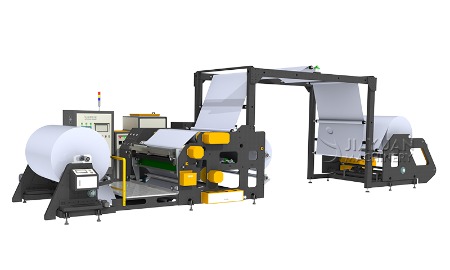
Adhesive coating machine
Continuous improvement (CI) programs for streak reduction involve cross-functional teams—operators, engineers, maintenance, and quality—meeting regularly to analyze streak data, identify recurring patterns, and implement corrective and preventive actions. The CI process starts with a Pareto analysis to determine the most frequent streak types and their locations. Then, a detailed investigation is conducted using the 5 Whys and fishbone diagrams to find the root cause. Corrective actions are implemented, and their effectiveness is verified by monitoring the streak count over the next few runs. Successful actions are documented and incorporated into standard operating procedures. For example, if streaks are consistently found at the same die lip position, the team may decide to increase the cleaning frequency of that section or to change the shim material. The CI program also includes operator training: operators are taught to recognize early signs of streak formation, such as a slight change in the coating's appearance or a minor pressure variation. Empowering operators to stop the line and inspect the die when a streak is suspected reduces the amount of defective material. The CI culture is supported by management commitment and recognition of achievements. Many plants set a goal of zero streaks per roll, and they track the "streak-free run length" as a key performance indicator. This metric motivates the team and provides a clear measure of progress.
Advanced analytics and machine learning are increasingly used to predict streak occurrence. By training a model on historical data—including process parameters (temperature, speed, pressure, viscosity), maintenance records, and inspection results—the model can identify conditions that are precursors to streaks. For example, the model may learn that a combination of low temperature and high pump speed correlates with a higher streak probability. The model then alerts the operator to adjust the temperature before a streak forms. This predictive capability moves beyond reactive detection to proactive prevention. The model can also suggest optimal die cleaning intervals based on the rate of particle accumulation, balancing quality and downtime. The implementation of predictive analytics requires a robust data infrastructure and close collaboration with IT. However, the payoff is significant: a 50% reduction in streak defects is achievable. In summary, achieving streak-free coating is a multi-faceted endeavor that combines advanced inspection, rigorous SPC, systematic improvement, and predictive analytics. By integrating these elements, coating lines can approach the goal of zero defects, delivering products that meet the highest quality standards and satisfy customer expectations. This not only reduces waste and cost but also enhances the company's reputation as a reliable supplier.