Tape Coating Machine: Design, Coating Methods, and Process Parameters for Pressure-Sensitive Adhesives
Tape coating machines are a distinct category of coating equipment optimized for the production of PSA tapes. The typical tape consists of a backing (substrate), an adhesive layer, and often a release liner (for double-sided tapes) or a low-adhesion backsize (LAB) coating. The coating line includes an unwinder for the backing, a corona treater (if needed), a coating head (slot-die, gravure, or roll), a drying oven (for solvent/water-based) or cooling section (for hot-melt), a laminating station (for transfer coating or liner application), and a rewinder. The coating head is the central component; for high-performance acrylic PSA tapes, slot-die coating is preferred due to its pre-metered accuracy and excellent uniformity (typically ±1%). For rubber-based hot-melt PSA tapes, a slot-die or a roll coater with heated applicator rolls is used. For masking tapes, which are often low-coat-weight, gravure coating is common. The backing materials include polypropylene (BOPP), polyethylene (PET), PVC, paper, and cloth. Each backing has different surface energy and heat resistance, requiring specific coating and drying conditions. The backing width is typically 1-3 meters, and line speeds range from 50 to 500 m/min, depending on the adhesive and drying capacity. The tape coating machine must also handle the application of a release liner for double-sided tapes, which involves a separate unwinder and laminating nip. The machine's control system must synchronize all drives and maintain precise tension from unwinding to rewinding.
The coating method for tape PSA depends on the adhesive chemistry and the required coat weight. Slot-die coating is the most versatile, handling a wide viscosity range (100-100,000 cP) and providing excellent thickness control. It is the preferred choice for high-value specialty tapes. Gravure coating is used for thin adhesive layers (5-15 gsm) and high speeds; it is common for packaging tapes and masking tapes. However, gravure coat weight is limited by the cell volume and may show a pattern. Roll coating (two-roll or reverse roll) is used for simple, low-cost tapes where ±5% uniformity is acceptable. Hot-melt coating is solvent-free and applied at elevated temperatures; it is used for rubber-based PSAs and requires a heated slot-die or roll coater, followed by a chill roll to cool and solidify the adhesive. The coat weight for PSA tapes typically ranges from 10 to 50 gsm, depending on the tape's application (e.g., packaging tape: 20-25 gsm; double-sided tape: 30-50 gsm). The coat weight must be precisely controlled because it directly affects the peel adhesion, tack, and shear resistance. The adhesive flow rate is set by the pump, and the coating gap or cell volume is selected accordingly. The drying or cooling section must be matched to the coating method; solvent-based tapes require long ovens with solvent recovery; water-based tapes need high-humidity ovens; hot-melt tapes need chill rolls. The drying profile is critical to avoid skinning and to ensure complete solvent removal. The release liner (if used) is laminated after the adhesive is dried/cooled; the liner is typically a siliconized paper or PET film that provides a controlled release force. The lamination nip pressure must be sufficient to bond the liner to the adhesive without squeezing out the adhesive.
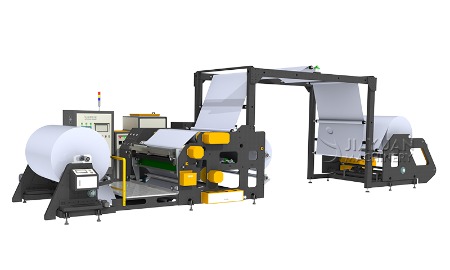
Adhesive coating machine
Critical process parameters for tape coating include: coat weight, drying temperature profile, line speed, web tension, and release liner properties. Coat weight is the primary determinant of tape performance; it must be within the specification. The drying profile must be optimized to remove solvent without damaging the backing or the adhesive. For solvent-based acrylics, the oven temperature is typically 60-120°C, with a residence time of 20-60 seconds. The line speed is set to achieve the desired throughput, but it is limited by the drying capacity and the coating window. Web tension must be controlled to prevent stretching of the backing, which can cause width reduction and coating non-uniformity. The release liner must have a consistent release force (usually 5-20 g/in); if the release is too high, the liner may not peel cleanly; if too low, it may release prematurely. The release force is measured by a peel test. The tape's performance is tested by peel adhesion (to steel), tack (loop tack or rolling ball), shear (static or dynamic), and aging (heat and humidity). The process parameters are adjusted based on these test results. For example, if the peel adhesion is low, the coat weight may be increased, or the drying temperature adjusted to improve crosslinking. The
tape coating machine's control system stores recipes for each tape type, ensuring consistency. The machine's maintenance includes cleaning the coating head, inspecting the oven's air filters, and checking the nip rolls. In summary, tape coating machines are sophisticated systems that integrate coating, drying, and laminating. Their design and operation must be tailored to the specific adhesive and backing to produce high-quality tapes that meet stringent performance standards.