Turnkey Coating Line: Project Phases, Performance Guarantees, and Integration Challenges
The lifecycle of a turnkey coating line project typically spans 12 to 24 months and consists of well-defined phases. Phase 1: Proposal and Quotation. The buyer issues a request for proposal (RFP) with detailed specifications. The supplier responds with a technical proposal, a project schedule, and a fixed-price quotation. The proposal includes a preliminary layout, a list of equipment, and a performance specification. Phase 2: Engineering and Design. Upon contract signing, the supplier's engineering team develops the detailed design, including 3D models, electrical schematics, and software architecture. The buyer reviews and approves the design. Regular design reviews ensure alignment. Phase 3: Manufacturing and Factory Acceptance. The supplier manufactures the line and performs a Factory Acceptance Test (FAT) with the buyer's representatives. The FAT verifies that the line meets the mechanical and electrical specifications and the agreed performance parameters (coating uniformity, speed, temperature stability). If the line passes, it is disassembled and packed for shipping. Phase 4: Shipping and Site Preparation. The line is shipped to the buyer's site. The buyer prepares the site: reinforced floor, utilities (power, air, water, exhaust), and any necessary environmental controls. Phase 5: Installation and Commissioning. The supplier's team installs and aligns the machine, connects utilities, and performs a dry run. Then, a wet run with surrogate materials, followed by a production run with the actual materials. During commissioning, the process parameters are optimized. Phase 6: Training. The supplier trains the buyer's operators and maintenance personnel. Phase 7: Final Acceptance and Handover. A Site Acceptance Test (SAT) is conducted, using the buyer's materials, to verify that the line meets the performance guarantee. Upon successful SAT, the buyer issues the final acceptance certificate, and the warranty period begins. Each phase has clear deliverables and milestones, ensuring transparency and accountability.
Performance guarantees are a cornerstone of the turnkey contract. The supplier commits to specific metrics, such as: (1) Coat weight uniformity: e.g., ±1.5% across the width; (2) Maximum line speed: e.g., 300 m/min for a given coat weight; (3) Production yield: e.g., >95% first-pass yield; (4) Energy consumption: e.g., <0.5 kWh per square meter; (5) Defect rate: e.g., <1 defect per 1000 m². These guarantees are tested during the FAT and SAT. If the line fails to meet the guarantees, the supplier is obligated to make modifications at their own expense until the guarantees are met, or to provide financial compensation. The performance guarantee gives the buyer confidence that the line will deliver the expected performance. The buyer should ensure that the guarantee conditions (substrate, adhesive, ambient conditions) are clearly defined and are realistic. The supplier should provide a detailed test protocol for the SAT, outlining the test conditions, measurement methods, and acceptable tolerances. In summary, performance guarantees protect the buyer's investment and motivate the supplier to deliver a high-quality solution.
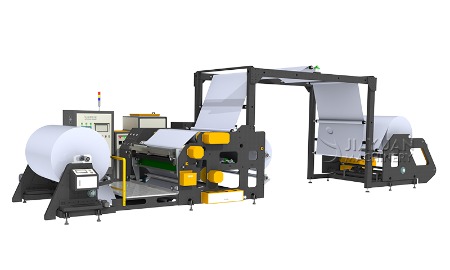
Adhesive coating machine
Integration challenges in turnkey lines often arise from the interaction between different subsystems. For example, the coating head's flow control must be synchronized with the oven's temperature control to avoid under-drying or over-drying. The tension control must be coordinated across the unwinder, coater, and rewinder to prevent web breaks. The control system must integrate the various sensors (thickness, temperature, tension) and actuators (pumps, brakes, drives) seamlessly. To address these challenges, the supplier performs extensive integration testing during the FAT, simulating the entire process. The supplier also develops a detailed "system integration plan" that defines the communication protocols, data mapping, and fault handling. The buyer should be involved in the integration testing to ensure that the system meets their operational requirements. In addition, the buyer should provide input on the HMI design to ensure that the operators can easily monitor and control the line. In summary, integration challenges are mitigated through thorough engineering, testing, and collaboration between the supplier and the buyer.
The cost of a turnkey line is typically 20-30% higher than the sum of the individual components, reflecting the supplier's integration and project management effort. However, the buyer saves the cost of in-house engineering, procurement, and management. The total cost of ownership is often lower because the turnkey line is optimized for efficiency and reliability. The buyer should also consider the cost of production losses during the project; a turnkey line reduces the time to reach full production, minimizing lost revenue. The ROI analysis should include the value of faster time-to-market. In conclusion, a
turnkey coating line is a comprehensive, high-value solution for manufacturers who want a complete, ready-to-run coating system with minimal internal effort. The structured project phases, performance guarantees, and rigorous integration testing ensure that the line meets the buyer's specifications and delivers a quick return on investment. The partnership between the buyer and the supplier is key; clear communication, mutual respect, and a shared commitment to quality are the hallmarks of a successful turnkey project. With proper planning and execution, the turnkey coating line provides a long-term competitive advantage in the coating industry.