Used Adhesive Coater: Comprehensive Evaluation Guide for Second-Hand Coating Equipment
A used adhesive coater can offer significant capital savings—typically 30-60% less than a new machine—but it also carries inherent risks such as hidden wear, obsolete controls, and undocumented modifications. The key to a successful purchase is a thorough, multi-stage evaluation. The process begins with a clear definition of the buyer's production requirements: substrate width (e.g., 1.0-2.5 m), coating method (slot-die, gravure, roll, comma), adhesive type (solvent-based, water-based, hot-melt), coat weight range (5-100 gsm), and line speed (50-500 m/min). These parameters determine whether the used machine is technically suitable. The next step is to gather all available documentation from the seller: original manuals, electrical schematics, maintenance logs, modification records, and any previous inspection reports. The absence of documentation is a red flag, as it complicates future maintenance and troubleshooting. The buyer should also request a list of spare parts that will be included and verify the availability of critical components (e.g., rolls, dies, pumps) from third-party suppliers. Finally, the buyer must consider the age of the machine; coating lines older than 20 years may have obsolete control systems that are expensive to replace. A balanced approach—combining technical assessment, cost analysis, and risk management—is essential for a sound investment.
The mechanical inspection is the most critical step. The inspection team should include a mechanical engineer familiar with coating equipment. The following checklist should be used: (1) Rolls: inspect all applicator, metering, backup, and idler rolls for surface damage (scratches, pitting, flat spots), measure runout (should be < 0.02 mm), and check parallelism using a laser alignment tool. For rubber-covered rolls, measure the Shore A hardness (should be within 5 points of the original spec) and check for swelling or cracking. (2) Coating head: for slot-die, inspect the die lip for nicks or wear, check the shim for flatness, and verify the bolt torque pattern. For gravure, inspect the engraved cylinder for cell wear and chrome integrity; measure the cell volume with a dedicated tester. For roll coaters, check the doctor blade holder and the nip pressure mechanism. (3) Drive system: inspect motors, gearboxes, belts, and chains for wear; listen for unusual noises during operation; measure the motor current draw and compare to the rated value. (4) Oven: check the heating elements or burners, fans, and thermocouples; measure the temperature uniformity across the width (should be within ±3°C); inspect the insulation for damage and the exhaust duct for leaks. (5) Web handling: check the unwinder and rewinder chucks, brakes, and tension sensors; inspect the dancer rolls for freedom of movement. The inspection should be performed with the line running (if possible) to observe web tracking and tension stability.
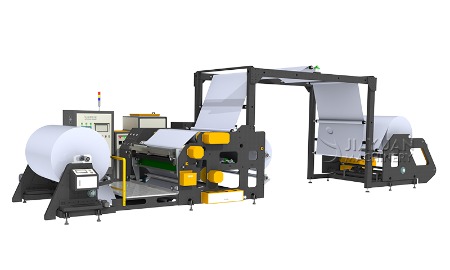
Adhesive coating machine
The electrical and control system inspection is equally important. The team should evaluate the PLC (make, model, age) and its compatibility with modern systems; older PLCs (e.g., S5 series) may be obsolete and difficult to program. Check the HMI for screen burn and responsiveness. Inspect the VFDs (variable frequency drives) for overheating and capacitor wear. Verify the condition of sensors: thickness gauges (beta, X-ray, or NIR) should be calibrated and tested with known samples; temperature and pressure sensors should be checked for drift. The wiring should be inspected for damage, loose connections, and proper labeling. Safety systems—emergency stops, light curtains, LEL monitors, fire suppression—must be tested for functionality. The control system's software backups and recipes should be included in the sale. If the control system is outdated, the buyer should budget for an upgrade (typically $20,000-50,000). The seller should allow a trial run with the buyer's adhesive and substrate to verify coat weight control and defect rate; this trial is the ultimate test of the line's process capability. The cost of the trial materials should be shared or borne by the seller if the line fails to meet specifications.
Refurbishment options and costs must be estimated. Based on the inspection findings, the buyer should prepare a refurbishment plan: (1) Roll re-grinding and re-chroming or re-covering: typically $2,000-10,000 per roll; (2) Die lip re-machining or replacement: $5,000-20,000; (3) Oven upgrade (new burners, thermocouples, insulation): $10,000-40,000; (4) Control system upgrade (new PLC, HMI, sensors): $20,000-60,000; (5) General cleaning, alignment, and calibration: $10,000-20,000. The total refurbishment cost can be 20-50% of the purchase price. The buyer should also include a contingency of 20% for unforeseen issues. The refurbishment should be performed by a qualified engineering firm with experience in the specific machine type. After refurbishment, the line should be commissioned with the same rigor as a new line. The total investment (purchase price + refurbishment + commissioning) must be compared to the price of a new equivalent line to calculate the savings. If the savings are less than 30%, the used line may not be worthwhile. In summary, refurbishment can restore a used line to near-new condition, but it requires careful planning and budgeting.
Risk mitigation strategies include: (1) Include a condition-based warranty in the contract (e.g., 90 days on major components); (2) Escrow a portion of the payment until the line is successfully commissioned; (3) Obtain a third-party inspection report to avoid bias; (4) Verify that the line complies with current local safety and environmental regulations; non-compliance can lead to costly retrofits; (5) Ensure that the seller provides all technical documentation and software backups; (6) Negotiate the price based on the inspection findings—deduct the estimated refurbishment cost from the asking price. In addition, the buyer should consider the line's compatibility with future needs; a line that can be upgraded (e.g., adding a second coating head) offers better long-term value. The buyer should also assess the seller's reputation and financial stability. In conclusion, a
used adhesive coater can be a valuable asset if the buyer conducts a thorough evaluation, plans for refurbishment, and mitigates risks effectively. With due diligence, the buyer can acquire a reliable machine at a fraction of the cost of a new one, enabling competitive production and faster market entry.