coating curing
Coating curing is the process of chemically or physically hardening a wet coating layer to achieve its final performance properties. Unlike simple drying, which only removes solvents, curing involves crosslinking reactions, polymerization, or fusion of particles. Common curing methods include thermal curing (using ovens or infrared), ultraviolet (UV) curing, electron beam curing, and moisture curing. Thermal curing is widely used for epoxy, polyester, and acrylic coatings, requiring precise temperature profiles and dwell times to reach full crosslink density. UV curing offers instant hardening with photoinitiators, ideal for high-speed lines and heat-sensitive substrates. The curing process directly impacts adhesion, scratch resistance, chemical resistance, flexibility, and gloss. Insufficient curing results in soft, tacky films that fail in service, while overcuring can cause brittleness, yellowing, or substrate damage. Key parameters to control are temperature, exposure time, UV intensity (for UV), and oxygen inhibition (for radical curing). Online monitoring tools like differential scanning calorimetry or infrared spectroscopy can check cure degree. Proper ventilation is required to remove volatile byproducts. Curing ovens should have uniform air distribution and zone control for gradient curing. After curing, the coated web often needs cooling before winding to prevent blocking. Maintenance includes cleaning reflectors, replacing UV lamps, and calibrating thermocouples. Operator training on curing recipes and safety (UV protection, hot surfaces) is essential. Optimized curing enhances durability, reduces rejects, and enables faster production speeds.
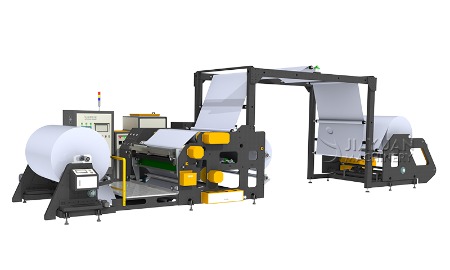
Adhesive coating machine
Vietnamese: Quá trình đóng rắn lớp phủ là quá trình làm cứng hóa học hoặc vật lý lớp phủ ướt để đạt được các tính chất hiệu suất cuối cùng. Không giống như sấy đơn thuần chỉ loại bỏ dung môi, đóng rắn bao gồm các phản ứng liên kết ngang, trùng hợp hoặc kết hợp các hạt. Các phương pháp phổ biến bao gồm đóng rắn nhiệt (sử dụng lò hoặc hồng ngoại), đóng rắn bằng tia cực tím (UV), đóng rắn bằng chùm tia điện tử và đóng rắn bằng độ ẩm. Đóng rắn nhiệt được sử dụng rộng rãi cho lớp phủ epoxy, polyester và acrylic, yêu cầu hồ sơ nhiệt độ chính xác và thời gian lưu để đạt mật độ liên kết ngang đầy đủ. Đóng rắn UV cung cấp đông cứng tức thì với chất khởi tạo quang, lý tưởng cho dây chuyền tốc độ cao và chất nền nhạy nhiệt. Quá trình đóng rắn ảnh hưởng trực tiếp đến độ bám dính, độ chống trầy xước, kháng hóa chất, tính linh hoạt và độ bóng. Đóng rắn không đủ tạo ra màng mềm, dính, hỏng trong sử dụng, trong khi đóng rắn quá mức có thể gây giòn, ố vàng hoặc hư hỏng chất nền. Các thông số then chốt cần kiểm soát là nhiệt độ, thời gian tiếp xúc, cường độ UV (đối với UV) và ức chế oxy (đối với đóng rắn gốc tự do). Các công cụ giám sát trực tuyến như nhiệt lượng quét vi sai hoặc quang phổ hồng ngoại có thể kiểm tra mức độ đóng rắn. Cần thông gió thích hợp để loại bỏ sản phẩm phụ bay hơi. Lò đóng rắn phải có phân phối không khí đồng đều và điều khiển vùng để đóng rắn gradient. Sau khi đóng rắn, bề mặt được phủ thường cần làm mát trước khi cuốn để tránh dính khối. Bảo trì bao gồm làm sạch gương phản xạ, thay bóng đèn UV và hiệu chỉnh cặp nhiệt điện. Đào tạo người vận hành về công thức đóng rắn và an toàn (bảo vệ UV, bề mặt nóng) là cần thiết. Đóng rắn tối ưu nâng cao độ bền, giảm phế phẩm và cho phép tốc độ sản xuất nhanh hơn.
Dutch: Coatinguitharding is het proces van chemisch of fysisch uitharden van een natte coatinglaag om de uiteindelijke prestatie-eigenschappen te bereiken. In tegenstelling tot eenvoudig drogen, dat alleen oplosmiddelen verwijdert, omvat uitharding verknopingsreacties, polymerisatie of versmelting van deeltjes. Veel voorkomende methoden zijn thermische uitharding (met ovens of infrarood), UV-uitharding, elektronenstraaluitharding en vochtuitharding. Thermische uitharding wordt veel gebruikt voor epoxy-, polyester- en acrylcoatings en vereist nauwkeurige temperatuurprofielen en verblijftijden om een volledige verknopingsdichtheid te bereiken. UV-uitharding biedt onmiddellijke uitharding met foto-initiatoren, ideaal voor hogesnelheidslijnen en warmtegevoelige substraten. Het uithardingsproces heeft rechtstreeks invloed op hechting, krasbestendigheid, chemische bestendigheid, flexibiliteit en glans. Onvoldoende uitharding resulteert in zachte, plakkerige films die in de praktijk falen, terwijl overmatige uitharding brosheid, vergeling of substraatschade kan veroorzaken. Belangrijke parameters om te regelen zijn temperatuur, blootstellingstijd, UV-intensiteit (voor UV) en zuurstofremming (voor radicalaire uitharding). Online bewakingsinstrumenten zoals differentiële scanningcalorimetrie of infraroodspectroscopie kunnen de uithardingsgraad controleren. Goede ventilatie is vereist om vluchtige bijproducten te verwijderen. Uithardingsovens moeten een gelijkmatige luchtverdeling en zonecontrole hebben voor gradiëntuitharding. Na uitharding moet de gecoate baan vaak worden gekoeld voordat wordt opgewonden om blokkering te voorkomen. Onderhoud omvat het reinigen van reflectoren, het vervangen van UV-lampen en het kalibreren van thermokoppels. Operator training over uithardingsrecepten en veiligheid (UV-bescherming, hete oppervlakken) is essentieel. Geoptimaliseerde uitharding verbetert de duurzaamheid, vermindert afkeuringen en maakt hogere productsnelheden mogelijk.
Bengali: কোটিং কিউরিং হল ভেজা কোটিং স্তরকে রাসায়নিক বা শারীরিকভাবে শক্তিশালী করে তার চূড়ান্ত কর্মক্ষমতা বৈশিষ্ট্য অর্জনের প্রক্রিয়া। সাধারণ শুকানোর বিপরীতে, যা শুধুমাত্র দ্রাবক অপসারণ করে, কিউরিং ক্রস-লিংকিং বিক্রিয়া, পলিমারাইজেশন বা কণার সংযোজন জড়িত। সাধারণ পদ্ধতিগুলির মধ্যে রয়েছে তাপীয় কিউরিং (ওভেন বা ইনফ্রারেড ব্যবহার করে), অতিবেগুনী (ইউভি) কিউরিং, ইলেকট্রন বিম কিউরিং এবং আর্দ্রতা কিউরিং। তাপীয় কিউরিং ইপক্সি, পলিয়েস্টার এবং এক্রাইলিক কোটিংয়ের জন্য ব্যাপকভাবে ব্যবহৃত হয়, যার জন্য সম্পূর্ণ ক্রস-লিংক ঘনত্ব অর্জনে সুনির্দিষ্ট তাপমাত্রা প্রোফাইল এবং ধরে রাখার সময় প্রয়োজন। ইউভি কিউরিং ফটোইনিশিয়েটরের সাথে তাৎক্ষণিক শক্তকরণ সরবরাহ করে, উচ্চ-গতির লাইন এবং তাপ-সংবেদনশীল সাবস্ট্রেটের জন্য আদর্শ। কিউরিং প্রক্রিয়া সরাসরি আঠালোতা, স্ক্র্যাচ প্রতিরোধ, রাসায়নিক প্রতিরোধ, নমনীয়তা এবং চকচকে প্রভাবিত করে। অপর্যাপ্ত কিউরিং নরম, আঠালো ফিল্ম তৈরি করে যা ব্যবহারে ব্যর্থ হয়, অন্যদিকে অতিরিক্ত কিউরিং ভঙ্গুরতা, হলুদ হয়ে যাওয়া বা সাবস্ট্রেটের ক্ষতি করতে পারে। নিয়ন্ত্রণ করার মূল পরামিতিগুলি হল তাপমাত্রা, এক্সপোজার সময়, ইউভি তীব্রতা (ইউভির জন্য) এবং অক্সিজেন বাধা (মূলক কিউরিংয়ের জন্য)। অনলাইন পর্যবেক্ষণ সরঞ্জাম যেমন ডিফারেনশিয়াল স্ক্যানিং ক্যালোরিমেট্রি বা ইনফ্রারেড স্পেকট্রোস্কোপি কিউরিং ডিগ্রী পরীক্ষা করতে পারে। উদ্বায়ী উপজাত অপসারণের জন্য সঠিক বায়ুচলাচল প্রয়োজন। কিউরিং ওভেনে অভিন্ন বায়ু বিতরণ এবং গ্রেডিয়েন্ট কিউরিংয়ের জন্য জোন নিয়ন্ত্রণ থাকা উচিত। কিউরিংয়ের পরে, কোটেড ওয়েবকে ব্লকিং রোধ করতে উইন্ডিংয়ের আগে প্রায়শই শীতল করতে হয়। রক্ষণাবেক্ষণের মধ্যে রয়েছে রিফ্লেক্টর পরিষ্কার করা, ইউভি ল্যাম্প প্রতিস্থাপন এবং থার্মোকপল ক্রমাঙ্কন। কিউরিং রেসিপি এবং সুরক্ষা (ইউভি সুরক্ষা, গরম পৃষ্ঠ) সম্পর্কে অপারেটর প্রশিক্ষণ অপরিহার্য। অপ্টিমাইজড কিউরিং স্থায়িত্ব বাড়ায়, প্রত্যাখ্যান হ্রাস করে এবং দ্রুত উৎপাদন গতি সক্ষম করে।