coating line for sale
A coating line for sale represents a significant capital investment opportunity for manufacturers looking to expand production capacity, enter new markets, or replace aging equipment. The market for both new and used coating lines is diverse, ranging from simple laboratory coaters to high-speed web lines with drying ovens, metering rollers, gravure or slot-die heads, and unwind/rewind stations. This article provides a comprehensive market overview and selection guide for buyers considering the purchase of a coating line, covering equipment types, key specifications, condition assessment, and purchasing considerations.
Coating lines are available in a wide range of configurations to suit different adhesive types, substrates, and production requirements. Hot melt adhesive coating lines are the most common for PSA tape and label production, offering compact footprints (15-30 meters), high speeds (200-600 m/min), and solvent-free operation. Solvent-based coating lines are longer (30-60 meters) and include drying ovens and solvent recovery systems, making them more expensive to operate but necessary for certain high-performance coatings. Water-based coating lines fall between the two, with moderate speeds (50-200 m/min) and lower VOC emissions. Other specialized lines include silicone release coating lines, gravure coating lines, and multi-purpose lines that can handle multiple coating methods. Buyers must carefully match the line configuration to their specific adhesive chemistry, substrate, and product requirements.
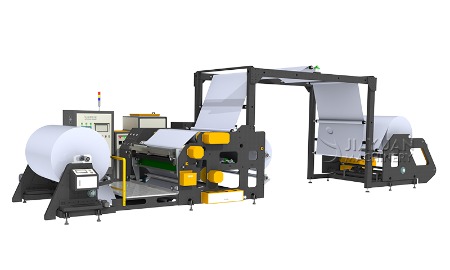
Adhesive coating machine
Key specifications to evaluate when considering a coating line for sale include coating width, line speed, coat weight range, coating method, and drying/curing capability. Coating width typically ranges from 300 mm for specialty products to over 2000 mm for high-volume packaging and label production. Line speed varies from 10-50 m/min for precision laboratory coaters to over 600 m/min for high-speed hot melt lines. The coat weight range determines the types of products that can be produced; hot melt lines typically handle 2-200 gsm, while solvent-based lines can achieve 0.5-50 gsm. The coating method—slot die, comma blade, gravure, or roll—determines the precision and versatility of the line. The drying or curing system must be matched to the adhesive type; hot melt lines require chill rolls, while solvent and water-based lines require ovens with appropriate temperature control and solvent recovery. Additional features to consider include tension control systems, edge guides, lamination stations, slitting stations, and inspection systems.
The used coating line market offers opportunities for cost savings, but buyers must conduct thorough due diligence. Used lines are available from various sources including machinery dealers, online marketplaces (Machinio, Perry Equipment, etc.), and plant liquidations. Examples of used lines for sale include a 2018 hot melt adhesive coating line with 550 mm coating width and 40-50 m/min operating speed, a complete high-precision thermal transfer and water-based adhesive coating line built around a 1650 mm coater, and various multi-functional adhesive paper coating machines. When evaluating a used line, buyers should request a full equipment history, including maintenance records, hours of operation, and any repairs or modifications. A physical inspection is essential to assess the condition of critical components: the coating head (die lips, rolls, blades), the drying oven (heating elements, fans, insulation), the drive system (motors, gearboxes, belts), and the control system (PLC, sensors, wiring). Running a trial with the buyer's adhesive and substrate is recommended to verify performance.
Purchasing considerations for a coating line extend beyond the initial price. Total cost of ownership includes installation, commissioning, training, spare parts, energy consumption, and maintenance. For solvent-based lines, the cost of solvent recovery or thermal oxidation systems can be substantial. For hot melt lines, the energy savings (typically $40,000-80,000 per year versus $400,000-640,000 for solvent-based lines of similar width) can offset the purchase price over time. Buyers should also consider the availability of technical support and spare parts from the manufacturer. For used lines, the availability of documentation (electrical schematics, mechanical drawings, PLC programs) is critical for future maintenance and troubleshooting. Financing options, including leasing and equipment loans, are available from various financial institutions. Finally, buyers should consider the future scalability of the line: can it be upgraded with additional features (e.g., lamination, slitting, inspection) as production needs evolve? Can it handle new adhesive formulations or substrates? A well-chosen coating line is a long-term asset that should provide 15-20 years of reliable service with proper maintenance. The market for coating lines continues to evolve with trends toward automation, energy efficiency, and sustainable materials, making it an exciting time for manufacturers to invest in new or upgraded coating equipment.