coating machine exporter
A coating machine exporter is a company that sells and ships coating equipment across international borders, providing access to global markets for manufacturers who need advanced or cost-effective machinery. The role of an exporter extends beyond mere sales; it involves navigating complex logistics, customs regulations, international standards, and providing support across time zones and languages. This article provides a comprehensive technical overview of coating machine export, including market dynamics, export documentation, shipping considerations, installation support, and challenges in cross-border transactions.
Coating machine exporters are often based in manufacturing hubs such as Germany, Italy, the USA, Japan, China, and South Korea, but they serve customers worldwide. The export market is driven by demand from developing countries expanding their industrial base, as well as developed nations seeking specialized or high-speed equipment not available locally. Exporters must comply with both their own country's export controls and the import regulations of the destination country. They must provide machinery that meets local electrical standards (voltage, frequency, plug types), safety regulations (CE, UL, EAC), and environmental requirements. Many exporters offer multilingual documentation and on-site translation support during commissioning. The export process typically begins with a sales inquiry, followed by a technical proposal, commercial quotation, and then a contract with defined incoterms (e.g., FOB, CIF, DAP). The choice of incoterm determines responsibilities for freight, insurance, and customs clearance.
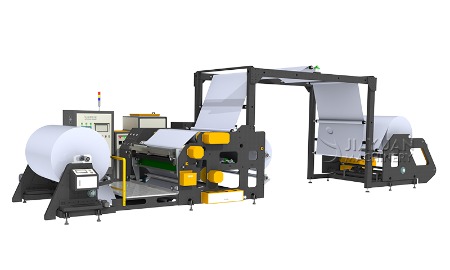
Adhesive coating machine
Export documentation is a critical part of the transaction. Essential documents include the commercial invoice, packing list, bill of lading or airway bill, certificate of origin (for tariff purposes), and any required customs declarations. For machinery, additional documents may include CE certificate of conformity, electrical schematics, and installation manuals translated into the destination language. The exporter must also provide the importer with the EORI number or customs broker details for the destination country. Some countries require pre-shipment inspection or certification by designated agencies. The exporter should also provide detailed instructions for unpacking and assembly, as the machine is usually shipped in multiple crates. A typical large coating line is shipped in 20-40 foot containers, sometimes flat-rack or open-top for oversized components. Proper crating and waterproofing are essential to prevent damage from moisture and handling. Shipping insurance is strongly recommended to cover damage or loss during transit.
Logistics for coating machine export requires careful planning. The machine must be disassembled into manageable modules for shipping, with each module labeled and documented. The exporter coordinates with freight forwarders to book shipping space, arrange inland transportation from the factory to the port, and handle customs clearance for export. For large lines, special transport permits may be required for oversized loads. The shipping time varies: by sea, typically 30-60 days from port to port, depending on the route; by air, only possible for small components. During the sea voyage, the equipment may be exposed to humidity and temperature variations; proper desiccants and vapor corrosion inhibitors should be included. Upon arrival at the destination port, the importer arranges customs clearance, pays duties and taxes, and arranges inland transport to their facility. Some exporters offer door-to-door delivery, handling all logistics from factory to the buyer's site. The exporter typically provides technical support for re-assembly and commissioning, with engineers traveling to the site after arrival.
Challenges in cross-border coating machine export include language barriers, differing technical standards, and varying levels of local infrastructure for installation. Exporters often work with local agents or representatives who can bridge cultural and technical gaps. They may also partner with local electrical and mechanical contractors for site preparation and installation. The exporter's warranty terms may vary by region, and service response times need to be agreed upon. Spare parts supply should be arranged through a local depot or expedited shipping. Intellectual property protection is another concern; exporters should ensure that their proprietary designs and control software are protected by patents and non-disclosure agreements. To mitigate these challenges, buyers should select exporters with proven international experience, positive references from customers in their region, and a clear service commitment. Many successful exporters have established local service centers in key markets. In summary, the coating machine exporter is a vital link in the global supply chain, enabling manufacturers to access the best available technology and achieve competitive advantage. A successful export transaction requires meticulous planning, clear communication, and collaboration between the exporter, freight forwarder, customs broker, and the buyer.