coating machine lease
A coating machine lease is a financial arrangement in which a manufacturer or equipment user obtains the use of a coating machine for a specified period (typically 3-10 years) in exchange for regular lease payments, without purchasing the equipment outright. Leasing offers an alternative to capital expenditure, preserving working capital and providing flexibility for businesses that may not want to commit to full ownership. This article provides a comprehensive technical overview of coating machine leasing, including lease types, terms, financial implications, and strategic considerations for manufacturers.
There are two primary types of leases for coating machines: operating leases and capital leases (also called finance leases). An operating lease is structured as a rental agreement where the lessor (the leasing company) retains ownership of the equipment, and the lessee (the user) pays for its use over a period that is typically shorter than the equipment's economic life. At the end of the lease term, the lessee can return the machine, renew the lease, or purchase it at fair market value. Operating leases are treated as operating expenses for accounting purposes, keeping the equipment off the balance sheet, which can improve financial ratios. A capital lease, on the other hand, transfers substantially all the risks and rewards of ownership to the lessee; it is treated as a purchase for accounting purposes, with the asset and liability recorded on the balance sheet. At the end of the lease term, the lessee typically has the option to purchase the machine for a nominal price (e.g., $1), effectively transferring ownership. The choice between lease types depends on the buyer's accounting treatment preferences, tax situation, and long-term plans for the equipment.
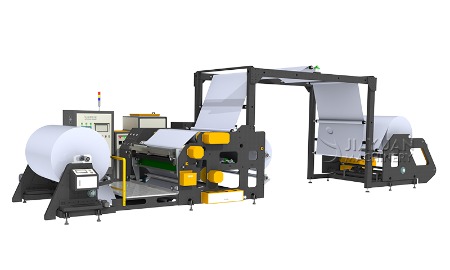
Adhesive coating machine
The key terms of a coating machine lease include the lease term (typically 3-7 years for standard coating equipment, up to 10 years for large custom lines), the monthly payment amount, the interest rate (or implicit rate), and any advance payment or security deposit required. The lease payments are calculated based on the machine's cost, the lease term, and the residual value (the estimated value of the machine at the end of the lease). For an operating lease, the residual value is significant because the lessor assumes the risk of the machine's future value. For a capital lease, the residual value is often low, reflecting the transfer of ownership. The lease may include maintenance and service provisions; some leasing companies offer "full-service" leases that cover preventive maintenance, repairs, and insurance, providing a predictable operating cost. The lessee must typically provide a personal or corporate guarantee, and may need to submit financial statements to qualify. The lease agreement also specifies conditions for early termination, equipment relocation, and any restrictions on modifications.
Leasing a coating machine offers several strategic benefits. It conserves working capital, as the lessee does not need to make a large upfront payment, freeing funds for other investments, such as raw materials, marketing, or R&D. Lease payments are often tax-deductible as operating expenses (for operating leases), reducing the effective cost. Leasing provides flexibility to upgrade to newer technology at the end of the lease term, which is particularly valuable in the rapidly evolving coating equipment market where new features (e.g., advanced automation, energy-efficient drying) are introduced regularly. It also helps manage obsolescence risk, as the lessor bears the residual value risk. Leasing can be structured with seasonal or variable payments to match the lessee's cash flow, making it easier for smaller or growing companies to acquire equipment. Furthermore, leasing may offer faster approval and implementation compared to traditional bank loans, as the equipment itself serves as collateral. However, leasing typically results in a higher total cost over the lease term compared to outright purchase, due to interest and fees. The lessee does not own the equipment at the end of an operating lease, so there is no equity buildup. Early termination fees can be substantial, reducing flexibility.
To decide whether to lease or buy a coating machine, manufacturers should perform a thorough financial analysis comparing the total cost of ownership (purchase price, financing costs, tax benefits, maintenance, and disposal) with the total cost of leasing (all payments, interest, and any purchase option). The analysis should consider the company's cost of capital, tax rate, and projected use of the equipment. If the machine is expected to be used for a long period (e.g., 10+ years) with stable technology, purchase may be more economical. If the machine may become obsolete or if the company has capital constraints, leasing is often advantageous. The lessee should also evaluate the reputation and terms of the lessor, including their willingness to customize lease terms. Many equipment manufacturers have captive finance companies that offer attractive leasing packages for their own equipment, streamlining the process. In summary, a coating machine lease is a powerful financial tool that can enable manufacturers to acquire essential production equipment with minimal upfront investment, preserve flexibility, and manage technological risk. Careful analysis of lease terms, total costs, and strategic fit is essential to make an informed decision that aligns with the company's financial and operational goals.