coating machine maintenance
Coating machine maintenance is a systematic program of inspections, cleaning, lubrication, and component replacement designed to ensure the reliable operation of coating equipment, extend its service life, and maintain consistent product quality. A well-executed maintenance program is essential for achieving high uptime (>95%), reducing scrap, and preventing costly unplanned downtime. This article provides a comprehensive technical overview of coating machine maintenance, including daily, weekly, monthly, and annual procedures, for various coating systems including hot melt, solvent-based, and water-based coaters.
The foundation of coating machine maintenance is a structured preventive maintenance (PM) schedule based on operating hours, calendar intervals, and condition monitoring. For hot melt coating systems, which are the most common in PSA production, the maintenance program covers the melt tank, gear pump, heated hoses, slot die, chill rolls, and unwind/rewind stations. Daily maintenance tasks, typically performed by the operator at the end of each shift, include cleaning the die lips with a brass scraper or soft wooden stick to remove adhesive buildup that causes "die lines" (longitudinal streaks), wiping down rolls and guide surfaces, checking oil levels in gearboxes, inspecting hoses for leaks or wear, and recording production run time, adhesive grade, temperatures, and any anomalies. For high-volume lines, a partial clean every shift and a full clean weekly is typical.
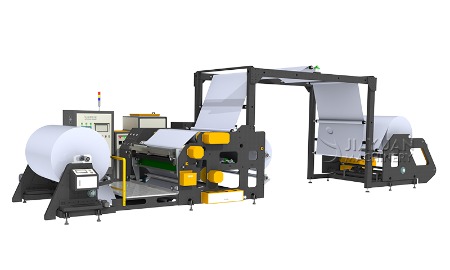
Adhesive coating machine
Weekly and monthly maintenance tasks are more comprehensive and often performed by the maintenance team. Weekly tasks include checking and cleaning filters in the adhesive supply system, inspecting the gear pump for unusual noise or vibration, verifying temperature sensor calibration, and checking the condition of the doctor blade (for gravure and roll coaters). Monthly maintenance includes a comprehensive inspection of all mechanical components: checking whether screws of various parts are loose, cleaning the coating knife head and roller shaft, cleaning the electric control box, and waterproofing and moisture-proofing of electrical parts. The slot die should be removed and thoroughly cleaned, with the die faces inspected for scratches or damage. The gear pump should be inspected for wear on gears and seals. Tension control systems (load cells, dancer rolls) should be calibrated. Monthly maintenance also involves lubricating all bearings and checking belt tensions. For PUR (reactive) hot melt systems, cleaning after every shift (8 hours) is mandatory to prevent curing and irreversible blockage.
Annual maintenance (every 2400 operating hours or yearly) involves a complete overhaul of critical components. The gear pump should be rebuilt with new gears, bearings, and seals. The slot die should be sent for professional re-lapping to restore lip flatness (typically required every 1-3 years depending on adhesive abrasiveness). All heated hoses should be inspected for degradation and replaced if necessary. The melt tank should be drained, cleaned, and inspected for corrosion or carbon buildup. All drive motors and gearboxes should be serviced with fresh lubricant. The control system should be backed up, and all sensors (thermocouples, pressure transducers, load cells) should be recalibrated or replaced. Annual maintenance may take 2-5 days; planning accordingly is essential to minimize production impact. By following a comprehensive maintenance checklist, manufacturers can achieve >95% uptime, extend equipment life to 15-20 years, and consistently produce high-quality coated products.
Cleaning is the most frequent and critical maintenance activity for coating machines. For hot melt systems, the cleaning procedure involves purging the melt tank, hoses, pump, and die with a commercial purging compound or low-viscosity wax/PE blend. Never use water or standard solvents, as they can flash to steam or damage seals. The melt tank is drained while hot (150°C), then purging compound is added, melted, circulated, and drained again, repeated until the drained material is clean. For stubborn carbon deposits, a brass scraper is used (never steel, which can scratch surfaces). The slot die is the most critical part to clean: reduce temperature to 150°C (EVA) or 120°C (PUR), remove the die, dismantle the die halves, remove the shim, and use soft brass scrapers and wooden sticks to remove softened adhesive. For carbonized residue, soak parts in a hot melt die cleaner or heat in an oven. Never use metal scrapers that can damage the precision-ground surface (roughness Ra <0.05μm). For solvent-based and water-based systems, cleaning involves flushing lines with appropriate solvents or water, and regular cleaning of the drying oven to remove accumulated residue. Proper cleaning procedures, documented in standard operating procedures (SOPs), are essential to prevent cross-contamination and ensure product purity.