coating machine price
The price of a coating machine is a major capital expenditure for manufacturers, ranging from tens of thousands of dollars for small laboratory coaters to several million dollars for high-speed, wide-web production lines. Understanding the cost factors, budgeting for ancillary expenses, and calculating return on investment (ROI) are essential for making an informed purchasing decision. This article provides a comprehensive technical overview of coating machine pricing, including cost drivers, price ranges for different types of equipment, hidden costs, and financial analysis for equipment acquisition.
Coating machine prices vary widely based on the type of coating method, line speed, coating width, level of automation, and the adhesive system (hot melt, solvent-based, or water-based). A basic pilot or laboratory coater (300 mm width, simple roll or knife coating, manual controls) can cost $20,000-$80,000. A mid-range production line (1000-1600 mm width, comma blade or gravure coating, 100-200 m/min, with drying oven) typically costs $200,000-$800,000. High-performance hot melt slot die coating lines (1600 mm width, 600 m/min, with full automation and profile control) range from $1,000,000 to $3,000,000. Solvent-based lines are generally 30-50% more expensive than hot melt lines of similar capacity due to the longer ovens, solvent recovery systems, and explosion-proof components. Used equipment can be 40-70% less than new, but condition and support are variable. Custom-designed machines or those with exotic materials (e.g., corrosion-resistant alloys for aggressive adhesives) can exceed $5,000,000.
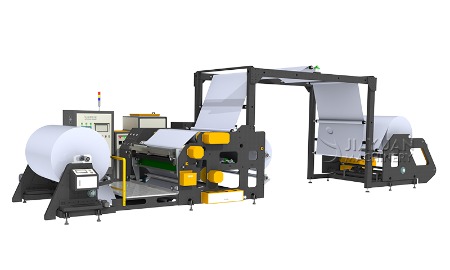
Adhesive coating machine
Several cost drivers influence the final price of a coating machine. Coating width and line speed are primary factors, as wider and faster lines require larger rolls, more powerful drives, heavier structural frames, and longer drying ovens. The coating head precision drives cost: slot die heads with thermal actuators for profile control are significantly more expensive than simple roll coaters. The drying or curing system is another major cost: thermal ovens with multiple zones, heat recovery, and solvent abatement (thermal oxidizers) add millions to the cost. UV or EB curing systems also add significant expense but reduce floor space and energy. Automation level, including PLC, HMI, closed-loop control, and data acquisition, adds 10-20% to the base cost. Additional modules like corona treaters, laminators, slitters, and inspection systems add to the total. The quality of materials (stainless steel vs. carbon steel, high-grade rubber vs. standard) and the reputation of the manufacturer also influence price. European and American suppliers typically charge more than Asian suppliers, but may offer higher precision and better support.
Beyond the machine itself, buyers must budget for significant ancillary costs. Installation and commissioning can cost 5-10% of the machine price, including foundation work, rigging, and electrical connections. Shipping and insurance, especially for international transactions, can add 5-15%. Operator training, often provided by the manufacturer, may be included or cost extra. Spare parts for the first year are typically recommended, costing 2-5% of the machine price. Utilities hookups (electrical, gas, compressed air, water) and ventilation systems may require modifications to the facility, adding tens of thousands to hundreds of thousands. For solvent-based lines, the cost of the solvent recovery or thermal oxidizer system, and its ongoing operation, is a major budget consideration. Maintenance contracts and software updates are recurring costs. The total installed cost can be 20-40% higher than the base machine price. A thorough cost analysis should include all these factors to avoid budget overruns.
Return on investment (ROI) is a critical financial analysis. The primary benefits of a new coating machine include increased production capacity, higher quality (reduced scrap), lower operating costs (energy, labor, material waste), and the ability to produce new products. Energy savings are particularly significant for hot melt vs. solvent-based lines. For example, a hot melt line can save $360,000 per year in energy costs compared to a solvent line of similar width. Material savings from improved coat weight uniformity (e.g., reducing average coat weight by 1 gsm on a high-volume tape line) can save hundreds of thousands of dollars annually. Labor savings from automation and faster changeovers also contribute. Payback periods for coating machines typically range from 2 to 5 years, depending on utilization and product margins. Manufacturers should perform a detailed financial model, including depreciation, tax benefits (e.g., Section 179 in the US), and potential financing costs. Leasing options are available to reduce upfront capital. In summary, while the sticker price of a coating machine is substantial, a comprehensive cost-benefit analysis that includes all operational savings and revenue generation opportunities can justify the investment, making it a strategic asset for long-term growth and competitiveness.