coating machine spare parts
Coating machine spare parts are replacement components that are kept in stock to enable quick repair of equipment in the event of failure or scheduled maintenance, minimizing production downtime. A well-managed spare parts inventory is essential for maximizing machine uptime, reducing the cost of emergency purchases, and ensuring that the coating line operates at peak performance. This article provides a comprehensive technical overview of coating machine spare parts, including critical components, inventory strategies, sourcing considerations, and best practices for spare parts management.
Critical spare parts for a coating machine vary by the type of coating system (hot melt, solvent-based, water-based) and the specific technology (slot die, gravure, roll, comma blade). However, a general list includes: the coating die (especially for slot die systems, the die lips or a full spare die), gear pump (complete unit or spare gears, seals, and bearings), heated hoses (for hot melt systems), doctor blades (for gravure and comma blade), filters (melt filters, screen packs, and cartridge filters), rolls (applicator, metering, backup, and chill rolls, or at least bearings and surface refinishing kits), seals, gaskets, and O-rings for fluid handling components, sensors (thermocouples, pressure transducers, load cells, proximity sensors), drive belts, chains, and gearbox components, electrical spares (contactors, relays, fuses, circuit breakers, and specific PLC modules or HMI touch screens), motors (or at least motor drive modules), and control system components like servo drives and power supplies. For solvent-based lines, additional spares include solvent pump seals, filters for solvent recovery, and exhaust fan bearings. The exact inventory should be based on the machine's bill of materials, failure mode analysis, and supplier recommendations.
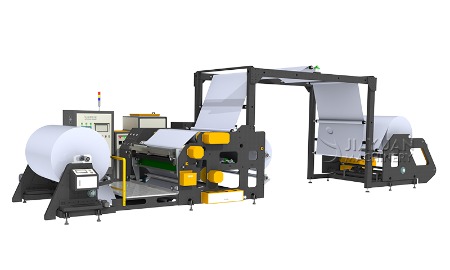
Adhesive coating machine
Inventory strategy for spare parts balances the cost of carrying inventory against the cost of downtime. A common approach is to categorize parts by criticality and lead time. "A" items are critical parts that, if failed, would stop production immediately, and they have long lead times; these should be stocked in sufficient quantity. Examples include the gear pump, die, and key sensors. "B" items are important but can be sourced relatively quickly (e.g., within a week); these may be stocked in smaller quantities or maintained through a vendor-managed inventory (VMI) program. "C" items are common consumables (e.g., seals, belts, filters) with short lead times; these can be replenished on a regular schedule. The inventory turnover should be monitored, and obsolete parts should be removed. Many suppliers offer a recommended spare parts list with the initial equipment purchase, often including a "starter kit" that covers the first year of operation. The buyer can build upon this list based on actual usage experience. For critical machines, some manufacturers keep a second complete coating head or key module as a "hot standby" to minimize downtime during major rebuilds.
Sourcing spare parts is a key consideration. OEMs are the preferred source for critical components that require precise tolerances and material specifications, such as the slot die, gear pump, and control system electronics. OEM parts guarantee compatibility and performance, but they may be more expensive and have longer lead times. Alternative suppliers, including aftermarket manufacturers, can provide equivalent parts (e.g., standard motors, bearings, seals) at lower cost and often with shorter delivery. However, the buyer must verify that aftermarket parts meet the same specifications (material, hardness, surface finish) to avoid compromising performance or safety. For consumables like filters and doctor blades, there are usually multiple suppliers offering comparable quality. The buyer should establish relationships with at least two suppliers for each key part to ensure competitive pricing and backup availability. Online marketplaces and machinery auctions can sometimes offer surplus parts at reduced prices, but buyer beware of quality and compatibility. The spare parts inventory should be reviewed quarterly to adjust quantities based on usage trends and obsolescence risks.
Best practices for spare parts management include: maintaining a detailed inventory database with part numbers, descriptions, storage location, quantity, reorder point, and supplier contact information. Parts should be stored in a clean, dry, and temperature-controlled environment to prevent degradation (e.g., rubber seals can harden, electronics can corrode). Lubricants and adhesives should be stored according to their shelf life. Regular inspection of stock for shelf life expiration (e.g., gaskets, O-rings) should be performed. The plant maintenance team should have access to the spare parts list and be trained on proper installation procedures to avoid damaging new parts. For large or heavy parts, appropriate lifting equipment and handling instructions should be available. A computerized maintenance management system (CMMS) can automate reorder alerts and track usage history. The buyer should also negotiate with the supplier for consigned stock, where the supplier holds parts at the buyer's site but the buyer pays only when used, reducing carrying cost. In summary, a proactive and well-organized spare parts inventory is a cornerstone of reliable coating machine operation. By investing in the right parts, maintaining appropriate stock levels, and ensuring quick sourcing, manufacturers can dramatically reduce unplanned downtime and maintain consistent product quality.