coating trial
A coating trial is a planned, systematic test of an adhesive coating process using a specific machine, materials, and operating conditions to evaluate performance, optimize parameters, validate equipment capability, or qualify a new product or formulation. Coating trials are essential steps in the development and commercialization of adhesive products, bridging the gap between laboratory-scale research and full-scale production. They provide critical data on coat weight uniformity, defect incidence, line speed capability, and adhesive performance, enabling informed decisions on process design and equipment investment. This article provides a comprehensive technical overview of coating trial objectives, planning, execution, data analysis, and best practices.
The objectives of a coating trial vary widely depending on the stage of development. For a new adhesive formulation, a trial may aim to determine the optimal coat weight range, drying or curing conditions, and line speed window that yields the required performance (peel, tack, shear). For a new substrate, the trial may assess the effect of surface treatment and coating method on adhesion and appearance. For a new coating line or a retrofit, the trial validates that the equipment meets the specified capabilities. For process improvement, trials can test the effect of parameters such as temperature, gap, and pump speed on coat weight uniformity and defect frequency. Regardless of the objective, a well-designed trial should have clear success criteria, a defined matrix of test conditions, and a plan for data collection and analysis. The trial is typically conducted on a pilot coater or on the production line itself, with appropriate safety and environmental precautions.
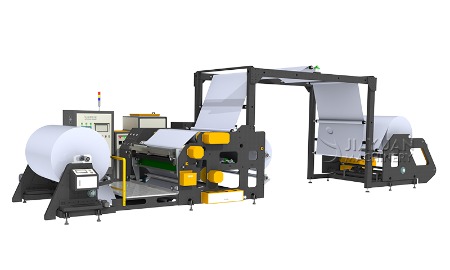
Adhesive coating machine
Planning a coating trial involves several critical steps. First, define the scope: which factors (variables) will be tested, and what are their ranges (e.g., line speed 50-200 m/min, temperature 140-180°C). Use a statistical design of experiments (DOE) approach to minimize the number of runs while maximizing information. For example, a full factorial or a central composite design can identify main effects and interactions. Second, prepare the materials: ensure sufficient quantities of the adhesive, substrate, and any cleaning solvents. The adhesive must be homogenous and within specification. Third, prepare the coating machine: clean the coating head, install the appropriate die or blade, set up the drying or cooling system, and calibrate all sensors (temperature, pressure, coat weight gauge). Fourth, define the measurement plan: what data will be collected (e.g., coat weight profile, web temperature, defect counts, peel adhesion) and at what frequency. Fifth, establish a safety protocol, including lockout/tagout, emergency stops, and solvent handling procedures. The trial should be documented in a detailed test plan, and all personnel should be briefed.
Execution of a coating trial typically follows a structured sequence: start-up, stabilization, test runs, and shut-down. After starting the line and reaching the desired temperature and speed, run the machine with the substrate and adhesive at the baseline condition until stable (e.g., 10-20 minutes). Then, change one parameter at a time (or as per DOE) and allow sufficient time for stabilization (e.g., 5-10 minutes or 100-200 meters of web) before taking samples and measurements. Collect samples for off-line testing (peel, tack, shear, thickness, optical) at each condition. Record all process parameters (speed, temperature, flow rate, gaps) continuously. Monitor the coat weight gauge and visual inspection for defects. After completing all test conditions, shut down the line and clean the equipment. If the trial reveals severe defects or machine limitations, additional runs may be needed to investigate the root cause. Throughout the trial, maintain a logbook with observations and any deviations from the plan.
Data analysis from a coating trial involves both statistical and engineering evaluation. Statistical analysis (e.g., ANOVA, regression) identifies which parameters have significant effects on coat weight, uniformity, and adhesive properties. Engineering analysis relates these results to the physical phenomena: for example, why higher speed increased air entrainment, or why temperature affected viscosity and coat weight. The data is used to define the operating window—the range of parameters that yield acceptable quality. This window is then used to set production target values and control limits. The trial may also reveal equipment limitations, such as insufficient drying capacity or poor tension control, which would require modifications or upgrades. Finally, the trial report summarizes the objectives, methods, results, conclusions, and recommendations. It serves as a vital document for process validation, quality assurance, and future reference. In summary, coating trials are indispensable for de-risking process development and ensuring that the coating line and parameters are correctly matched to the product requirements. A well-conducted trial saves time and money by preventing costly errors in full-scale production and provides the confidence needed to commercialize new adhesive products.