coating troubleshooting
Coating troubleshooting is the systematic process of identifying, diagnosing, and correcting defects that occur during adhesive coating operations. Common defects include streaks, pinholes, bubbles, orange peel, edge beads, missing coating, and contamination, each with specific root causes and corrective actions. Effective troubleshooting requires a structured approach combining visual inspection, process data analysis, and a deep understanding of the coating method, adhesive rheology, and equipment condition. This article provides a comprehensive technical guide to coating troubleshooting, covering defect identification, root cause analysis, and practical solutions for common coating problems.
Streaks are linear defects running in the machine direction, appearing as thin or thick lines on the coated web. They are among the most common and visible coating defects. The primary causes of streaks are mechanical damage to the die lip, doctor blade, or roll surfaces; localized flow disturbances due to die lip contamination or wear; and air entrainment. To troubleshoot streaks, first inspect the die lip visually under magnification for scratches, nicks, or adhesive buildup. If a scratch is found, the die must be reground or replaced. For contamination, stop the line, raise the die, and use a brass scraper or soft wooden stick to gently wipe the lip while the adhesive is still molten. If the problem recurs, perform a full die cleaning. For roll coaters, inspect the rolls for embedded particles or surface damage; regrind or replace as needed. Streaks can also be caused by pump pulsation; check the gear pump for wear and ensure the drive system is smooth.
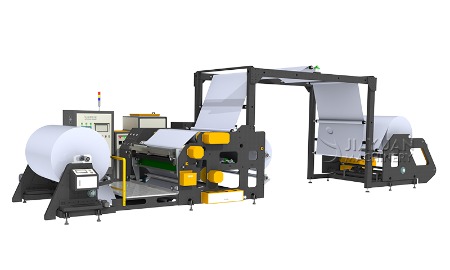
Adhesive coating machine
Pinholes are tiny circular voids where the coating is absent, often caused by air entrainment, bubbles in the adhesive, or particles that block the coating. Air entrainment occurs when the substrate moves too fast for the coating bead to displace the boundary layer of air, or when the die gap is too large. To troubleshoot pinholes, reduce the line speed or adjust the die gap to a smaller value. Ensure the adhesive is properly degassed before coating; for hot melt systems, check for air leaks in the pump inlet or hoses. For solvent-based and water-based systems, pinholes can be caused by solvent popping—when a slow-boiling solvent is trapped under the coating surface and bursts through. Reduce the drying rate by lowering the oven temperature or increasing the airflow to allow more gradual evaporation. Particles in the adhesive can also cause pinholes; ensure the filtration system (100-200 mesh screens or melt filters) is functioning properly and replace filters regularly.
Orange peel is a rough, wavy surface resembling the skin of an orange, caused by poor leveling of the coating due to high viscosity or rapid evaporation of solvent. To troubleshoot orange peel, reduce the viscosity by increasing the temperature (for hot melt) or adding solvent (for solvent-based). For water-based adhesives, adjust the solids content or add a leveling agent. Reduce the drying rate to allow more time for leveling before the surface sets. Edge beads are thicker coating at the edges of the web, resulting from surface tension effects or die geometry. To reduce edge beads, use edge air knives to blow away excess adhesive, or adjust the die lip relief at the edges. Missing coating (skips) are areas with no adhesive, often due to web flutter, gap variations, or pump pulsation. Stabilize the web tension, check the die gap for uniformity, and inspect the pump for pulsation.
Blisters (bubbles) are domed defects where gas is trapped under the coating, usually from solvent or water vaporization during drying. To troubleshoot blisters, reduce the drying temperature in the first oven zone to allow slower evaporation, and ensure the oven airflow is uniform. For hot melt coatings, blisters can be caused by trapped air in the adhesive; degas the adhesive and check for air leaks in the supply system. Contamination defects include particles, fibers, or gel particles that become embedded in the coating. To prevent contamination, maintain a clean production environment, use filtered air for drying ovens, and ensure the adhesive supply system is clean. Regular cleaning of the coating head and supply lines is essential to prevent contamination defects. A systematic troubleshooting approach should include documenting all defects with images and process conditions, using tools like fishbone diagrams (Ishikawa) to identify contributing factors, and implementing corrective and preventive actions (CAPA). Data from inline inspection systems (cameras, coat weight gauges) should be analyzed to correlate defects with process parameters, enabling root cause identification and continuous improvement.