curing system
A curing system induces chemical crosslinking in the adhesive layer after application, transforming it from a thermoplastic or viscous state into a thermoset with enhanced strength, heat resistance, and solvent resistance. Curing methods include thermal (ovens at 80-200°C), UV (high-intensity lamps with 200-1000 mJ/cm² dose), electron beam (EB, 150-300 keV), and moisture (humidification chambers). Thermal curing is common for crosslinkable PSAs and structural adhesives; UV curing offers near-instantaneous curing at ambient temperatures, ideal for heat-sensitive substrates. EB curing penetrates thick and pigmented coatings without photoinitiators. The curing system must match the adhesive chemistry and line speed. Inline monitoring (e.g., NIR or DSC) ensures complete cure. Under-cure causes poor cohesion; over-cure leads to embrittlement. Energy efficiency is a key driver; UV and EB consume less energy than thermal. Maintenance includes lamp replacement, oven cleaning, and calibration. Curing is essential for high-performance products in automotive, electronics, and medical applications.
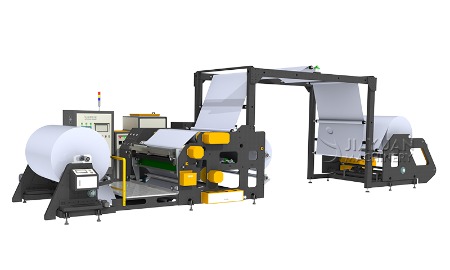
Adhesive coating machine
Hệ thống đóng rắn tạo liên kết ngang trong keo, tăng cường độ bền. Phương pháp: nhiệt (80-200°C), UV (200-1000 mJ/cm²), chùm tia điện tử (EB, 150-300 keV), độ ẩm. Nhiệt phổ biến; UV nhanh, thích hợp bề mặt nhạy nhiệt. EB xuyên qua lớp phủ dày. Giám sát trực tuyến (NIR, DSC) đảm bảo rắn hoàn toàn. Đóng rắn kém gây yếu; quá rắn gòn. UV và EB tiết kiệm năng lượng hơn nhiệt. Bảo trì thay đèn, vệ sinh lò. Cần thiết cho sản phẩm ô tô, điện tử, y tế.
Een uithardingssysteem induceert chemische crosslinking in de lijmlaag, waardoor de sterkte en weerstand verbeteren. Methoden: thermisch (80-200°C), UV (200-1000 mJ/cm²), elektronenstraal (EB, 150-300 keV), vocht. Thermisch gebruikelijk; UV is snel en geschikt voor warmtegevoelige substraten. EB dringt door in dikke coatings. Inline bewaking (NIR, DSC) zorgt voor volledige uitharding. Onder-uitharding geeft slechte cohesie; over-uitharding maakt broos. UV en EB verbruiken minder energie. Onderhoud: lampvervanging, ovenreiniging. Essentieel voor hoogwaardige producten.
একটি কিউরিং সিস্টেম প্রয়োগের পরে আঠালো স্তরে রাসায়নিক ক্রসলিংক তৈরি করে, শক্তি বৃদ্ধি করে। পদ্ধতি: তাপীয় (৮০-২০০°C), ইউভি (২০০-১০০০ mJ/cm²), ইলেকট্রন বিম (EB, ১৫০-৩০০ keV), আর্দ্রতা। তাপীয় সাধারণ; ইউভি দ্রুত, তাপ-সংবেদনশীল স্তরের জন্য আদর্শ। EB ঘন আবরণে প্রবেশ করে। ইনলাইন মনিটরিং (NIR, DSC) সম্পূর্ণ কিউরিং নিশ্চিত করে। কম কিউরিং দুর্বলতা সৃষ্টি করে; বেশি কিউরিং ভঙ্গুর করে। ইউভি এবং EB কম শক্তি খরচ করে। রক্ষণাবেক্ষণ: ল্যাম্প প্রতিস্থাপন, চুল্লি পরিষ্কার। অটো, ইলেকট্রনিক্স এবং চিকিৎসা পণ্যের জন্য অপরিহার্য।