label coating machine
A label coating machine is a specialized coating line designed for the production of self-adhesive labelstock, which consists of a face material (paper, film, or foil), a pressure-sensitive adhesive (PSA), and a release liner (silicone-coated paper or film). These machines combine high-speed coating, drying or cooling, and lamination to produce rolls of labelstock that are later converted into individual labels. This article provides a comprehensive technical overview of label coating machine configurations, coating methods, process control, and key considerations for producing high-quality label materials.
Label coating machines operate on the principle of transfer coating, where the PSA is first coated onto a silicone-coated release liner, dried or cooled, and then laminated to the face material. This method ensures that the adhesive is applied under optimal conditions on a stable liner, independent of the face material's properties. The machine typically includes an unwind for the liner, a coating station (slot die, comma blade, or gravure), a drying oven (for water-based or solvent-based PSA) or cooling section (for hot melt PSA), a lamination station where the face material is applied, and a rewind for the finished labelstock. Some lines also include silicone coating stations to produce the release liner inline, but many use pre-silicone-coated liners. The line speed for label coating is typically 100-400 m/min for hot melt, and 50-200 m/min for water-based or solvent-based systems. The coating width ranges from 300 mm for specialty labels to over 1600 mm for large-volume production.
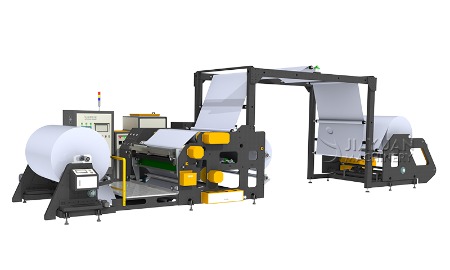
Adhesive coating machine
The coating method for the PSA in label coating machines is chosen based on the adhesive type and the required coat weight and uniformity. Slot die coating is the dominant technology for hot melt PSAs, providing exceptional precision (within ±1-2%) and high speed, making it ideal for volume label production. Comma blade coating is widely used for water-based and solvent-based PSAs, offering good uniformity and easy cleaning, suitable for shorter runs and varied face materials. Gravure coating is used for very thin adhesive coatings or for specialty low-tack labels. The coat weight for label PSAs typically ranges from 15 to 30 gsm, depending on the label application (e.g., permanent vs. removable). The coating head is equipped with closed-loop coat weight control using gauges (beta, X-ray, or NIR) to maintain target weight within tight tolerances, as label performance is highly sensitive to adhesive thickness. For hot melt systems, precise temperature control (within ±0.5°C) is maintained across the melt tank, hoses, and die to ensure consistent viscosity and coat weight.
The drying or cooling section is critical for label coating. For water-based PSAs, the drying oven must evaporate water efficiently without causing blistering or skinning; typical oven lengths are 10-20 m with temperatures up to 150°C. For solvent-based PSAs, longer ovens (30-50 m) with solvent recovery systems are required, and temperatures are carefully controlled to avoid substrate damage. For hot melt PSAs, cooling is achieved via chill rolls (5-15°C) that rapidly solidify the adhesive; the cooling section is much shorter than drying ovens. The lamination station then combines the coated liner with the face material (unwound from a separate stand). The nip pressure and temperature are adjusted to ensure complete transfer of the adhesive from the liner to the face, with no bubbles or wrinkles. The face material may be pre-treated (corona) to improve adhesive wetting. The laminated labelstock is rewound with precise tension control to prevent stretching or telescoping. Some lines include a slitting station to cut the wide web into narrower rolls for the converter.
Quality control in label coating machines focuses on coat weight uniformity, adhesive transfer, and release performance. Coat weight is monitored continuously; cross-web profile control (e.g., lip heaters on slot dies) corrects variations. The release force of the liner must be consistent; too low a release causes premature transfer, too high makes dispensing difficult. The labelstock is tested for peel adhesion, tack, and shear strength according to FINAT or PSTC standards. Visual inspection detects defects like streaks, pinholes, or contamination. The face material must be free of wrinkles and properly laminated. The rewind roll hardness is controlled to avoid blocking (adhesive sticking to the liner back) or telescoping. Advanced label coating machines include inline defect detection with cameras and automated rejection systems. Data logging of all process parameters ensures traceability and aids in troubleshooting.
Applications of label coating machines cover the vast label market, including beverage labels, food packaging labels, pharmaceutical labels, logistics labels, and promotional labels. The face materials range from paper (coated and uncoated) to films (BOPP, PET, PVC, and bio-based films). The adhesive type can be permanent, removable, freezer-grade, or high-temperature-resistant. The release liner is typically glassine paper or PET film with silicone coating. Trends in label coating include the shift to water-based and hot melt adhesives to reduce VOCs, the use of thinner and more sustainable face materials (e.g., recycled papers and biodegradable films), and the development of linerless labels (which require specialized coating and printing). Additionally, digital printing drives demand for labelstocks with specific surface characteristics. Label coating machines are increasingly modular, allowing quick changeovers between different label types and adhesive formulations. Automation and digital control have improved efficiency and reduced waste. In summary, the label coating machine is a highly specialized piece of equipment that combines precision coating, lamination, and quality control to produce the vast variety of self-adhesive labels used in everyday life and industry.