medical tape coater
A medical tape coater is a specialized coating line designed for the production of adhesive tapes used in healthcare applications, including surgical tapes, wound dressings, first-aid tapes, transdermal patches, and medical device components. These coaters must meet stringent requirements for biocompatibility, sterility, and precision, often operating in cleanroom environments. This article provides a comprehensive technical overview of medical tape coater configurations, adhesive types, process control, quality assurance, and regulatory considerations.
Medical tape coaters are typically roll-to-roll systems that apply a thin, uniform layer of medical-grade adhesive onto a backing substrate such as nonwoven fabric, film (e.g., PET, PU), or foam. The adhesive must be skin-friendly, non-irritating, and provide adequate adhesion while allowing easy removal. Common adhesives include acrylics, silicones, and hydrogels, each with specific coating requirements. The coating method is often slot die or comma blade, chosen for their precision and ability to produce very thin coatings (5-30 gsm) with excellent uniformity (±1-2%). The line speed is generally lower than industrial tape lines, typically 10-100 m/min, to ensure precise control and to accommodate cleanroom processes. The coating width ranges from 300 to 1200 mm, depending on the product. The machine includes a cleanroom enclosure with HEPA filtration, positive pressure, and controlled temperature/humidity to maintain product purity and process stability.
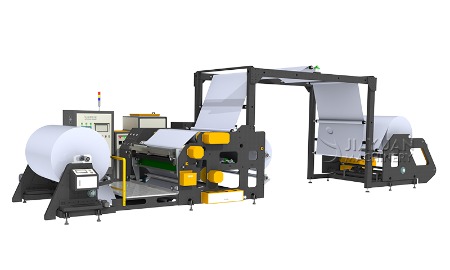
Adhesive coating machine
Medical tape coaters must handle a variety of adhesive formulations, many of which are sensitive to heat and shear. For silicone adhesives, which are used for gentle wound dressings, the coating is often solvent-based and requires specialized drying ovens with solvent recovery systems, as well as precise temperature control to avoid crosslinking during drying. Acrylic adhesives are commonly water-based or solvent-based, with drying ovens designed for low-temperature evaporation to preserve adhesive properties. Hydrogel adhesives require very low coat weights and often use slot die coating with chilled rolls to prevent skinning. Some medical tapes are coated with hot melt adhesives (e.g., SBC-based) that are processed at moderate temperatures to avoid degradation. The coating head must be designed for easy cleaning and sterilization to prevent cross-contamination between different adhesive types. Many coaters use disposable or easily replaceable die components to minimize cleaning downtime.
Process control in medical tape coaters is exceptionally stringent. Coat weight (GSM) is controlled within tight tolerances, often ±0.5 gsm, as even small variations affect adhesion and skin comfort. Closed-loop gauging (beta or NIR) is used, with frequent calibration using gravimetric samples. Temperature and humidity are regulated to ensure consistent adhesive rheology and drying kinetics. Web tension is carefully managed to avoid stretching of delicate nonwoven backings. The drying oven must provide uniform airflow and temperature to prevent defects like blistering or skinning. For UV-curable adhesives, an inline UV curing system with precise dose control is integrated. The cleanroom environment prevents particle contamination, which is critical for medical products that contact wounds or skin. All process parameters are recorded and tracked for each batch to ensure full traceability, a requirement for regulatory compliance (FDA, ISO 13485). In addition, the line includes inline inspection systems (cameras) to detect defects like streaks, pinholes, or contamination, and automatically reject non-conforming sections.
Quality assurance for medical tape coaters extends beyond in-process measurements. The coated rolls are tested for peel adhesion (to stainless steel and to skin), tack, shear, and aging stability. Biocompatibility tests (cytotoxicity, sensitization, irritation) are performed on the finished product, requiring validation that the coating process does not introduce contaminants or alter adhesive chemistry. Release liners are tested for consistent release force. The backing substrate must have adequate tensile strength and conformability. In addition, sterility may be required for certain products; some coaters are designed to be compatible with gamma or ethylene oxide sterilization processes. Validation of the coating process (IQ, OQ, PQ) is mandatory, including worst-case studies for coat weight and drying conditions. The coater and its supporting systems are maintained under strict cleaning and preventive maintenance schedules to ensure reproducibility.
Applications of medical tape coaters include surgical tapes (e.g., silk, paper, and synthetic cloth tapes), first-aid tapes, wound closure strips, medical dressing retention tapes, transdermal patches (for drug delivery), and adhesive electrodes for monitoring. The trend in healthcare is toward skin-friendly, breathable, and antimicrobial tapes, driving development of new adhesive formulations and coating techniques. Silicone adhesives are growing in popularity due to their gentle adhesion and easy removal. Additionally, the increasing use of wearable sensors and smart patches requires ultra-thin, precision-coated adhesives that can conform to skin movement. Medical tape coaters are becoming more automated, with robotic handling and advanced data analytics to ensure consistent quality. In summary, the medical tape coater is a highly specialized, precision-oriented machine that operates under rigorous quality and regulatory frameworks, enabling the production of safe and effective adhesive products for patient care.