tape coating machine
A tape coating machine is a specialized industrial coating line designed for the production of adhesive tapes, including pressure-sensitive tapes (PSA), masking tapes, packaging tapes, double-sided tapes, and specialty tapes for medical, electrical, and automotive applications. These machines combine precision coating, drying or cooling, and often lamination and slitting to produce finished tape rolls. This article provides a comprehensive technical overview of tape coating machine configurations, coating methods, process control, and key considerations for manufacturing high-quality adhesive tapes.
Tape coating machines are typically roll-to-roll systems that apply a uniform adhesive layer onto a backing material (e.g., film, paper, cloth, or foam) and then process it into tape rolls. The backing is unwound, coated with adhesive using methods such as slot die, roll, comma blade, or gravure coating, then dried (for solvent/water-based) or cooled (for hot melt), and finally rewound. For double-sided tapes, the coating is applied to both sides of a carrier, often using two coating stations or a transfer coating method. Some tape lines also include a lamination station to apply a release liner to the adhesive side, and a slitting station to cut the wide web into narrow tape rolls. The line speed for tape coating ranges from 100 to over 600 m/min for hot melt PSAs, while solvent-based lines are slower due to drying constraints. The coating width typically ranges from 500 to 2000 mm, depending on the end-use.
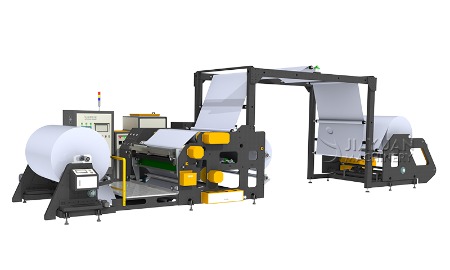
Adhesive coating machine
The choice of coating method in tape coating machines depends on the adhesive type and tape performance requirements. Slot die coating is the preferred method for high-precision hot melt PSAs, offering thickness uniformity within ±1% and enabling high speeds. It is commonly used for packaging tapes, masking tapes, and label tapes. Comma blade coating is widely used for water-based and solvent-based PSAs, especially for paper-based tapes and cloth tapes, providing good uniformity at moderate speeds. Gravure coating is used for very thin adhesive layers, such as for low-tack tapes or silicone coatings on release liners. Roll coating (including reverse roll) is versatile and used for various adhesives and backings. The coating head is often equipped with closed-loop coat weight control using beta or X-ray gauges to maintain tight tolerances. For hot melt lines, the system includes a melt tank, heated hoses, and temperature-controlled die to ensure consistent adhesive viscosity. Drying ovens for solvent/water-based lines are designed with multiple zones to control evaporation and prevent defects like blistering. Cooling chill rolls are used for hot melt to rapidly solidify the adhesive.
Process control in tape coating machines is critical to ensure tape properties such as adhesion, tack, and shear strength. Coat weight (GSM) is the primary control parameter, typically set to achieve the specified peel adhesion. The coat weight must be uniform across the width and along the length; profile control actuators adjust the die gap or roll gap to correct cross-web variations. Tension control is essential to prevent stretching of thin film backings (e.g., BOPP, PET) and to maintain flatness. The drying or cooling conditions must be optimized to achieve complete solvent removal or proper crystallization without degrading the adhesive. In addition, surface treatment stations (corona or flame treaters) are often included to increase the backing's surface energy for better adhesive anchorage. The line also includes edge trimming and scrap removal systems to produce clean edges. For double-sided tapes, two coating heads and a laminating station are integrated, with precise alignment to avoid misregistration.
Quality control in tape coating includes in-line gauging of coat weight, thickness, and width, as well as vision inspection for defects. Offline testing of peel adhesion, tack, shear, and aging is performed on samples to verify that the tape meets specifications. The tape backing properties (tensile, elongation, and tear strength) are also measured. Many tape coating lines are equipped with data acquisition systems that record all process parameters (speed, temperature, coat weight, tension) for each roll, enabling traceability and process optimization. The rewind station is designed to produce tight, uniform rolls without telescoping or blocking; lay-on rollers and tension profiles are used to achieve optimal roll hardness. For tapes with release liners, the liner must be properly aligned and laminated without wrinkles.
Applications of tape coating machines cover a vast range of tape products. Packaging tapes (such as BOPP tape) are produced on high-speed hot melt lines. Masking tapes use rubber-based or acrylic PSAs on crepe paper, often coated with water-based adhesives using comma blade coaters. Double-sided tapes have adhesive on both sides, with a carrier (film, foam, or tissue) and may use transfer coating. Electrical tapes (PVC or PET) require flame-retardant adhesives and precise coating. Medical tapes (surgical, first-aid) use skin-friendly acrylic or silicone adhesives on breathable substrates, often with lower coat weights and cleanroom conditions. Automotive tapes include foam mounting tapes and acoustic tapes requiring high shear adhesion. The trend toward thinner, high-performance tapes drives demand for advanced coating technologies such as slot die and precision roll coating. Additionally, environmentally friendly water-based and hot melt systems are replacing solvent-based lines in many regions. Tape coating machines are also increasingly integrated with downstream converting (slitting, rewinding) to produce finished tape rolls in a single continuous process, improving efficiency and reducing handling. In summary, the tape coating machine is a versatile, precision-driven system tailored to the specific adhesive, backing, and tape type, and its design and operation are central to the tape manufacturing industry.