turnkey coating line
A turnkey coating line is a complete, fully integrated coating system that is designed, engineered, supplied, installed, and commissioned by a single supplier, ready for immediate production upon handover. The term "turnkey" implies that the buyer simply "turns the key" and starts operation, without the need for additional engineering, sourcing, or integration efforts. This approach is highly attractive for manufacturers seeking to minimize project risk, reduce time-to-market, and ensure seamless integration of all components. This article provides a comprehensive technical overview of turnkey coating line solutions, including their scope, benefits, typical components, project management, and key considerations for buyers.
A turnkey coating line encompasses all equipment necessary for a complete coating process, from the unwinding of the raw substrate to the rewinding of the finished coated product. This typically includes: an unwind stand with automatic splicing, corona or flame treater, the coating head (slot die, comma blade, gravure, or roll), drying oven or cooling section (chill rolls), lamination station (if required), slitting station, and turret rewind with lay-on rollers. The line also includes all auxiliary systems: adhesive supply (melt tank, gear pump, heated hoses), temperature control units, ventilation and solvent recovery (if applicable), web tension control systems, edge guides, and a comprehensive control system (PLC, HMI, sensors, drives). The supplier is responsible for the integration of all these components, ensuring they work harmoniously to achieve the specified coating width, speed, coat weight, and quality. The turnkey supplier also provides the facility layout, foundation requirements, utility specifications (electrical power, compressed air, cooling water, exhaust), and full documentation.
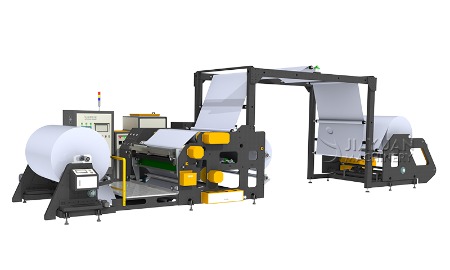
Adhesive coating machine
The primary benefit of a turnkey coating line is risk reduction. With a single point of responsibility, the buyer avoids the complexity and potential conflicts of coordinating multiple suppliers for different modules. The supplier takes full ownership of the project schedule, quality, and performance guarantees. This significantly reduces the buyer's internal project management burden, allowing them to focus on their core business. Turnkey solutions also accelerate time-to-market, as the supplier's experienced project management team can handle permitting, installation, and commissioning efficiently. Furthermore, turnkey suppliers typically offer process development support, helping the buyer optimize coating conditions and adhesive formulations before full production. Many suppliers also include operator training and after-sales support, ensuring the buyer's team can operate the line independently. The integrated control system in a turnkey line ensures all subsystems are synchronized, leading to better product consistency and fewer startup issues.
The project management for a turnkey coating line follows a structured phased approach. Phase 1: Definition and design, where the supplier works with the buyer to define requirements, conduct feasibility studies, and create detailed engineering drawings. Phase 2: Procurement and fabrication, where all components are sourced and built, often with factory acceptance testing (FAT) to verify performance. Phase 3: Delivery and installation, where the line is shipped, assembled on-site, and connected to utilities. Phase 4: Commissioning and start-up, where the line is run with the buyer's materials to achieve the specified performance, followed by site acceptance testing (SAT). Phase 5: Training and handover, where operator and maintenance training is conducted, and documentation is provided. The supplier usually provides a project manager as a single point of contact throughout these phases. Clear milestones and payment schedules are defined in the contract. The total project duration from order to handover can range from 6 months for a simple hot melt line to 18 months or more for a complex solvent-based line with custom features.
Key considerations when purchasing a turnkey coating line include the supplier's proven experience in turnkey projects, their ability to handle the specific adhesive and substrate, and their local support capabilities. The buyer should request references for similar turnkey projects and, if possible, visit a reference installation. The contract must clearly define the performance guarantees, including coat weight tolerance, line speed, yield, and energy consumption. It should also specify the scope of supply (including exclusions), payment terms, warranty period, and penalties for delays. The buyer must also provide timely site preparation, utility connections, and material availability. After handover, the supplier should offer a service agreement for ongoing support, spare parts, and potential upgrades. Turnkey lines are typically more expensive than piecemeal assembly, but the reduced risk and faster startup often justify the premium. In summary, a turnkey coating line is the optimal solution for manufacturers seeking a hassle-free, fully operational coating system that delivers consistent quality and high productivity, backed by the expertise and accountability of a single, experienced supplier.