used adhesive coater
A used adhesive coater is a pre-owned industrial coating machine that has been previously operated in a production environment and is offered for resale, either directly from a manufacturer liquidating assets, through machinery dealers, or via online marketplaces. Purchasing a used adhesive coater can offer significant cost savings compared to buying new equipment, often at 40-70% of the original price, while still providing reliable performance for many adhesive coating applications. However, buying used requires careful evaluation of equipment condition, history, compatibility with your production requirements, and the availability of technical support and spare parts. This article provides a comprehensive guide to the used adhesive coater market, including types of equipment available, key inspection points, common pitfalls, and strategies for making a sound investment.
The used adhesive coater market encompasses a wide variety of machine types, from laboratory-scale coaters for R&D and pilot runs, to high-speed production lines with coating widths up to 2000 mm and line speeds exceeding 500 m/min. Common types available include hot melt slot die coaters, solvent-based gravure and roll coaters, water-based comma blade coaters, silicone release coating lines, and multi-purpose units that can handle multiple adhesive chemistries. These machines come from various industries, including tape manufacturing, label converting, flexible packaging, medical products, and automotive materials. Many used coaters are sold as complete lines including unwind stands, coating heads, drying ovens or chill rolls, lamination stations, and rewind systems. Some are sold as individual modules, allowing buyers to build a custom line. The global market for used coating equipment is substantial, with major trading hubs in the United States, Europe, and Asia, particularly in regions with mature industrial bases.
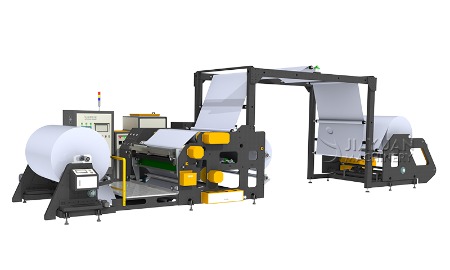
Adhesive coating machine
When evaluating a used adhesive coater, the first step is to assess its physical condition. Key components to inspect include the coating head (die lips, blade edges, engraved gravure cylinders, or roll surfaces) for scratches, wear, or corrosion. The die lip flatness and gap uniformity are critical; any damage here will cause streaks or coat weight variations. The backup roll and any rubber-covered rolls should be inspected for surface finish, hardness, and signs of compression set or chemical degradation. The drive system, including motors, gearboxes, and belts, should be checked for unusual noise, vibration, or excessive backlash. The control system, including PLC, HMI, sensors, and temperature controllers, should be tested for proper operation. For lines with drying ovens, inspect the heating elements, fans, insulation, and the condition of any solvent recovery or thermal oxidizer systems. Tension control components, such as load cells, dancer rolls, and brakes, must be verified for accuracy and response time. A physical inspection, ideally performed by an experienced coating engineer or a third-party inspector, is essential to identify hidden issues that could lead to costly repairs or downtime.
Documentation and operating history are equally important. Request maintenance records, including logbooks of routine cleaning, lubrication, part replacements, and any major repairs. The total operating hours or years of service provide a rough estimate of wear. Ask for the original manuals, electrical schematics, and PLC program backups, as these are crucial for future troubleshooting and modifications. Verify the machine's original specifications: coating width, speed range, coat weight range, temperature capabilities, and power requirements. Confirm that the machine has been used with compatible adhesive types (e.g., hot melt, solvent, water-based) and that any modifications or retrofits have been properly documented. If possible, request a demonstration or a trial run with your own adhesive and substrate to verify that the machine meets your quality and productivity standards. Inquire about the reason for sale—whether it is due to plant closure, line upgrade, or capacity change—as this can indicate potential issues.
Common pitfalls when buying a used adhesive coater include underestimating the cost of refurbishment, discovering that spare parts are obsolete, and finding that the machine is not compatible with your production requirements. It is essential to factor in the cost of transportation, installation, commissioning, and any necessary repairs or upgrades. Some sellers offer warranties or limited guarantees, but many used coaters are sold "as-is, where-is." Buyers should also consider the availability of technical support from the original manufacturer (OEM) or a third-party service provider. For older machines, spare parts may be difficult to source; checking the OEM's status and the availability of critical components (e.g., gear pump, die, sensors) is recommended. To mitigate risks, engage an experienced machinery dealer or broker who can provide inspection reports, condition assessments, and help with logistics. International buyers should also factor in import duties, customs clearance, and compliance with local electrical and safety standards. Despite these challenges, a well-chosen used adhesive coater can provide excellent value, especially for smaller companies or for applications with moderate speed and precision requirements, enabling entry into the adhesive coating market at a fraction of the cost of new equipment.